
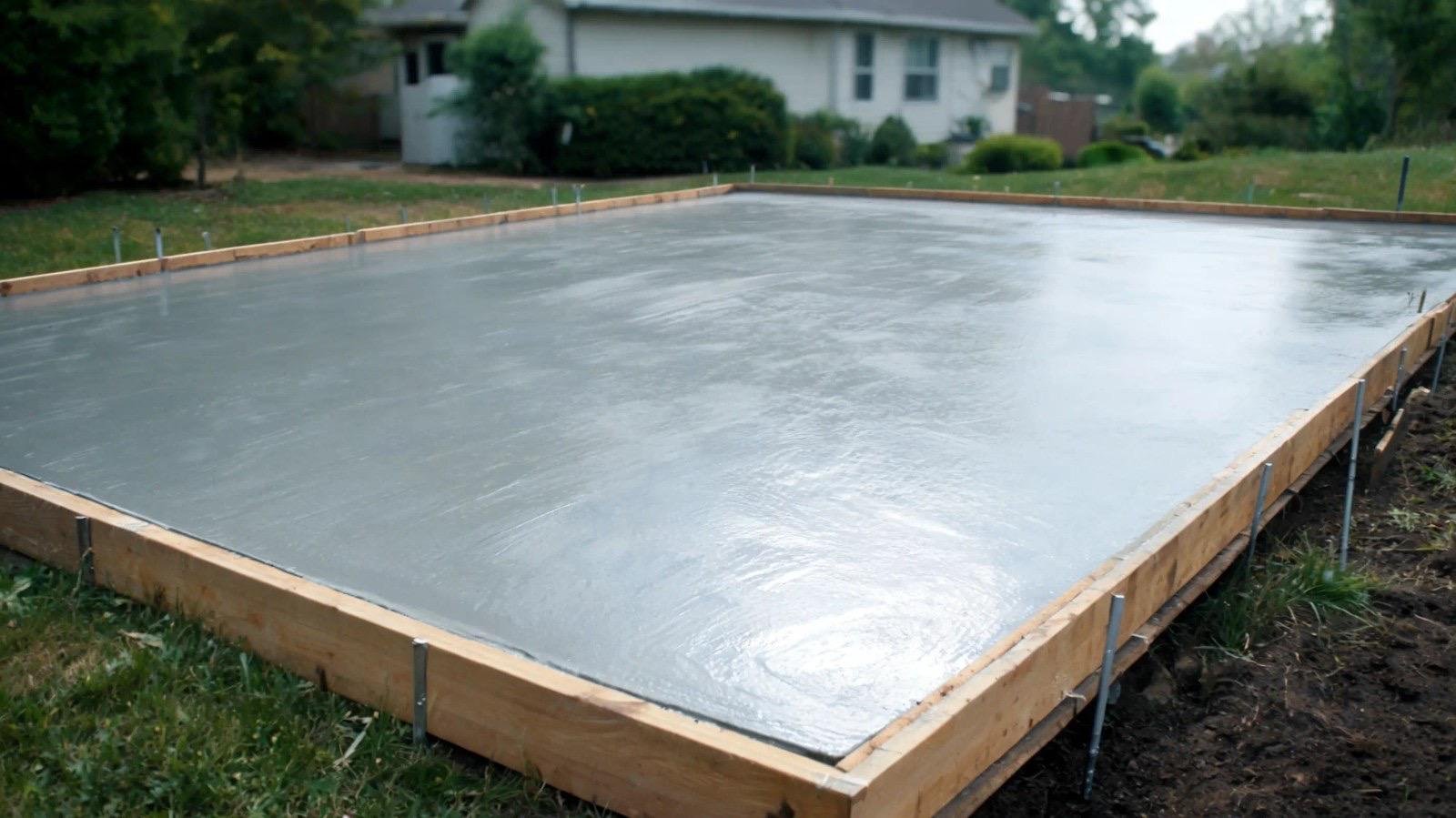
Concrete takes 24 to 48 hours to dry enough to walk on. Full strength takes about 28 days.
So how long it takes for concrete to dry really has two answers. One is a short wait for the surface to harden. The other is a month-long wait for the slab to fully cure.
There’s a twist worth knowing up front. Concrete doesn’t dry the way paint does.
It hardens through a chemical reaction called hydration. That reaction actually needs moisture to work.
Below is the real timeline, what changes it, and when your slab is safe to use.
How Long Concrete Takes to Dry
Drying isn’t one moment. It’s a series of stages, and each one lets you do something new with the slab.
Poured concrete passes a few clear milestones as it hardens. Here’s what each stage means for you in practice.
- 24 to 48 hours: firm enough for light foot traffic, and forms can usually come off.
- 7 days: about 70% of full strength; fine for light vehicles or garden furniture.
- 28 days: fully cured and strong enough for heavy vehicles, normal loads, and most sealers.
So you’re not waiting a month just to touch it. You’re waiting a month before it can carry real weight.
I’ve watched people worry when a fresh slab still feels cool and damp on day three. That’s normal. Cool and damp means hydration is still doing its job.
If you’ve just poured a driveway, respect the 7-day mark before you park on it. These numbers hold for a standard mix in mild weather.
Change the weather or the mix, and they shift. The next two sections show you exactly how.
Drying vs. Curing: Why the Difference Matters
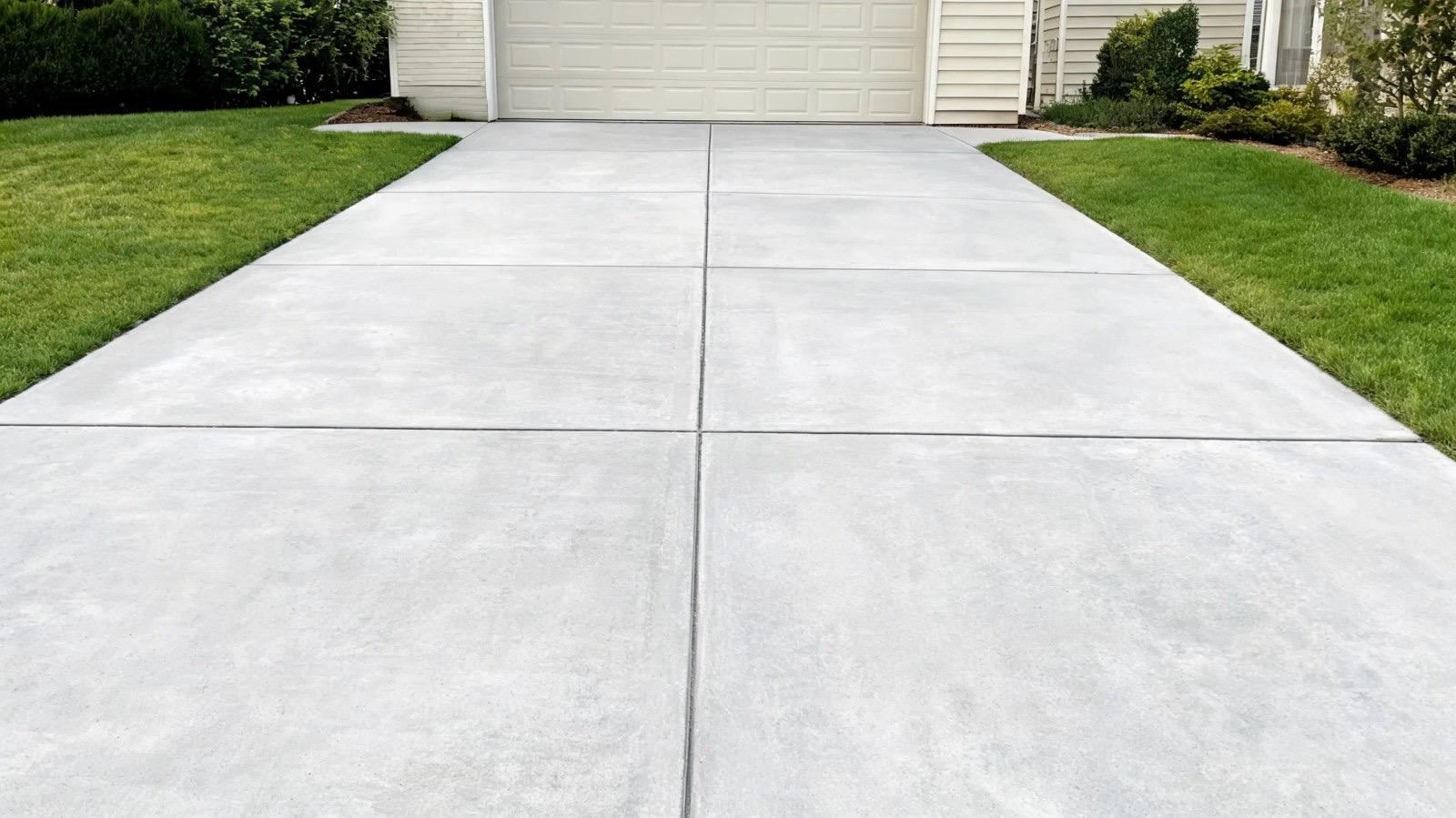
People use “drying” and “curing” as if they mean the same thing. They don’t, and that gap decides how strong your concrete ends up.
Curing is the chemical reaction. Water and cement react in a process called hydration, and that reaction is what builds strength.
Drying is just water leaving the surface. If concrete dries out too fast, hydration stops early.
You’re left with weaker, more crack-prone concrete. This is the mistake that costs the most strength: letting a fresh slab bake dry in full sun on day one.
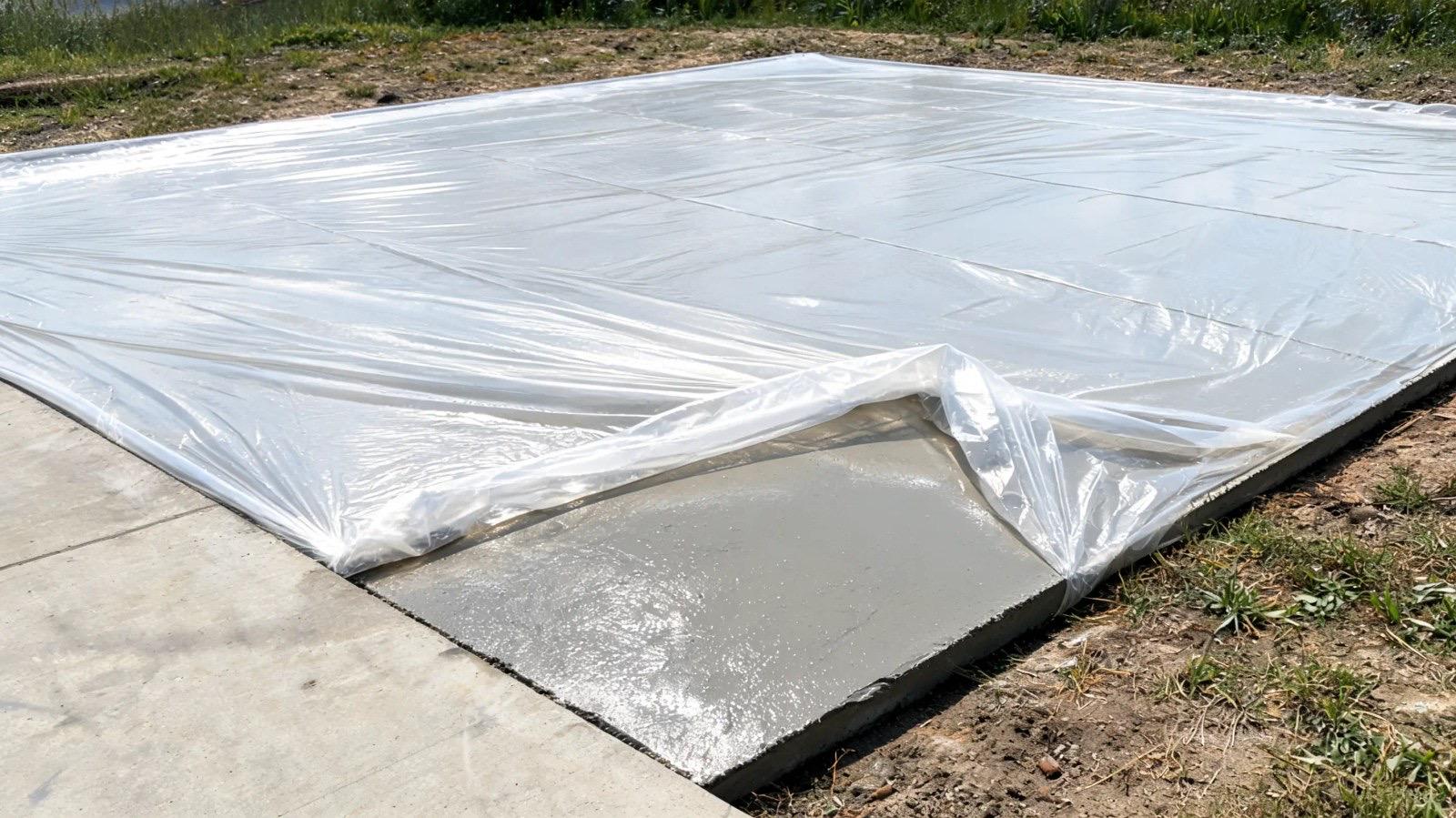
Odd as it sounds, adding water back helps. Misting the slab or covering it with plastic keeps hydration going.
That makes the concrete stronger, not weaker, in that first week. So if you want a slab that lasts, keeping it damp early matters more than getting it to “dry” fast.
That’s also why people ask how long concrete takes to cure, not just how long it takes to dry.
Why the Last 30% of Strength Takes So Much Longer
If you’re wondering how long it takes concrete to cure fully, the 70%-in-7-days number only tells half the story.
Concrete hits 70% of its strength in just 7 days.
But the remaining 30% takes three more weeks to show up. That’s not a typo, and it’s not a slow patch.
Hydration runs fast at the start, because there’s plenty of unreacted cement and water right next to each other. As the reaction continues, a hardened layer forms around each cement particle.
Water has to travel through that layer to reach the cement still waiting underneath. That takes longer with every passing day.
So the reaction keeps happening. It just happens slower and slower, which is why the strength curve flattens out instead of climbing in a straight line.
This is also why a wetter mix behaves differently. More water means a thinner layer forms around each particle at first, which can speed early hydration slightly.
But that extra water has to go somewhere eventually. Once it evaporates, it can leave tiny gaps behind, which is part of why wetter mixes often end up a little weaker overall.
Factors That Speed Up or Slow Down Drying
Those standard timelines assume decent conditions. Three things push the clock faster or slower than the textbook numbers.
Temperature and Weather
Warm weather speeds up the early set. The reaction runs faster, so the surface firms up sooner.
Cold does the opposite. Below about 50°F, hydration slows down hard.
Freezing temperatures can stop hydration completely. Water in the mix can freeze before it has a chance to react, which can damage the slab permanently if it happens too early.
I always tell people pouring in late fall to plan for extra days. A slab that firms up in one day in July can take two or three in cold weather.
Moisture and Humidity
Humid air slows surface drying, but it actually helps the cure. The slab stays damp longer, so hydration keeps running.
Dry, windy air is the real enemy. It pulls moisture out of the surface too fast.
If it’s hot and windy on pour day, I’d cover the slab within hours, not wait until the next morning.
Mix and Slab Thickness
More water in the mix means a longer wait to dry. A stiffer, low-water mix sets faster and ends up stronger.
Most residential mixes run a water-cement ratio between 0.40 and 0.60, and staying toward the lower end of that range is what gives you the faster set and the stronger slab.
Thickness matters too, and not just because thicker slabs hold moisture longer. A thick slab’s surface hardens faster than its core, since the outside is exposed to air and the inside isn’t.
That gap between surface and core is why thick slabs need extra time before you trust them with real weight. The water-cement ratio is the quiet factor most people never think about, and it affects both ends of that gap.
Where Does Concrete Drying Commonly Go Wrong?
Most concrete problems come down to one of three things. Load, moisture, or speed hitting the slab before it’s ready.
Here’s where that actually plays out.
Early load: rain or foot traffic in the first 24 to 48 hours can mark or weaken a surface that hasn’t hardened enough to resist it.
Trapped moisture: sealing in hardwood, tile, or vinyl before the slab has fully dried inside can trap that moisture underneath.
The 28-day cure covers strength, not moisture, full drying runs closer to 30 days per inch of slab thickness, so a 4-inch slab can take months longer to dry all the way through.
Before installing flooring, test the slab with a relative-humidity probe or calcium chloride test rather than guessing from how the surface looks or feels, since the surface dries long before the core does.
Rushed drying: hot, windy conditions can dry the surface faster than the inside can keep up, which cracks the slab before hydration finishes.
Each of these comes back to timing. The slab was asked to do something before the right stage of hydration was ready for it.
The Bottom Line
Concrete dries enough to walk on in 24 to 48 hours and fully cures in about 28 days. The short wait is for the surface. The long wait is for strength.
Remember that curing isn’t drying. Keep a new slab damp early, respect the 7-day and 28-day marks for weight, and you’ll get concrete that holds up for decades.
Frequently Asked Questions
How long does 4 inches of concrete take to harden?
A 4-inch slab is the standard thickness for driveways and patios, which is why it follows the baseline timeline almost exactly: firm enough for foot traffic in 24 to 48 hours, and full design strength around 28 days.
Go thicker than 4 inches and that core-to-surface gap discussed above starts to matter more, stretching out the safe-load wait. Warmer weather speeds the surface set up slightly; colder weather slows it down.
Is it okay if it rains 5 hours after pouring concrete?
Rain five hours after pouring is risky. The surface hasn’t hardened enough yet to resist water damage. Heavy rain at this stage can wash out cement paste and weaken the top layer. If rain is forecast that soon, cover the fresh slab with plastic sheeting.
Can I walk on concrete after 12 hours?
Twelve hours is early for most mixes. Walking on it risks leaving footprints or disturbing the surface before hydration has progressed enough. Most concrete needs 24 to 48 hours before it’s firm enough for light foot traffic. A quick-set mix or warm weather can shorten that window.
What is the 4-2-1 rule for concrete?
The 4-2-1 rule is a rough guideline relating slab thickness to curing time. For every inch of thickness, allow roughly 4 days before removing forms, 2 weeks before heavy use, and about a month before full strength. It’s a simplified rule of thumb, not an exact formula.
How long does it take for concrete to cure?
Concrete reaches about 70% strength in 7 days, but full cure takes roughly 28 days as hydration continues to slow and strengthen the slab from the inside out.