Here’s your number: 28 days. That’s the whole job, start to finish, before a slab is at what it’s rated for. Pour it, finish it, and it looks done the next morning hard, dry, ready. It isn’t.
Concrete keeps gaining strength for weeks, not days, and a curing time chart is just the schedule for what percentage you’ve got at each point along the way.
That gap between looking hard and actually being strong is where I see the costly mistakes happen. So here’s the timeline, laid out straight.
Below you’ve got the strength at each stage, what’s safe to put on the slab at that point, and where curing usually goes wrong on a real job.
Concrete Curing Time Chart
Curing is the chemical reaction that builds strength, nothing mysterious about it, just time and water doing their work. The chart below maps time to strength to what you’re allowed to do.
These numbers are for a standard slab in average weather. Thickness, mix, and temperature all shift them, I get into that further down.
Most residential slabs are specified for 3,000 to 4,000 PSI at 28 days, that’s the number on your mix ticket the chart above is tracking toward.
| Time Elapsed | Approx. Strength | What You Can Do |
| 24 to 48 hours | Initial Set | in soft shoes; protect from rain and direct sun. |
| 3 – 7 days | 50% – 70% | Light patio furniture or gentle use. |
| 7 days | 70% | Passenger cars and light vehicles |
| 14 days | 85% | Heavier equipment, with caution |
| 28 days | 100% | Full design strength; heavy loads |
Read it top to bottom. Every row buys you a little more use of that slab, nothing more.
The big move is in the first week you’re at 70% by day 7. But that last 30%, the part that gets you to full strength, takes three more weeks on top of that.
That’s not a flaw in the chart. That’s just how hydration works, and here’s why.
What the Curing Timeline Actually Means

Those percentages track hydration, the reaction between water and cement that hardens the slab from the inside out. Nothing arbitrary about the numbers.
Hydration runs fast early, then slows down hard. That’s the whole reason this isn’t a straight line on a graph.
Here’s the part that catches people: the surface can look bone-dry on day two while the slab underneath is still soft. I’ve put my hand on plenty of them that fooled the customer standing right next to me.
That’s why the chart tracks strength, not dryness. A dry-looking top doesn’t mean it’s ready for weight, don’t go by the look of it.
If you only remember one number off this whole page, make it 28 days for full design strength. I’ve seen early loads crack slabs that looked perfect the day they went down.
And the crack doesn’t show up that day. It shows up weeks later the load’s been sitting on it the whole time, doing the damage quietly.
How Slab Thickness Changes Curing Time
Thickness matters more than people expect. A thin slab and a thick one aren’t on the same clock, and the chart above is written for the thin one.
A standard 4 inch slab tracks that chart pretty close, right on schedule.
Go to 6 inches and the timeline stretches out by a week or more at the core, more moisture sitting deep in that slab means the core takes longer to reach full cure, even though the surface looks the same as the thin one.
So here’s the rule I go by: the deeper the pour, the more patience it needs. On a thick slab, I lean toward the far end of every stage on that chart, not the near end.
What Slows Down or Speeds Up Curing
That chart assumes close to ideal conditions. On a real site, three things push the timeline earlier or later.
Temperature
Ideal curing temperature is 50°F to 80°F. In that window, hydration runs close to what the chart says.
Below 50°F,hydration slows down sometimes by days. Build in extra time before you trust any stage on that chart.
Freezing is worse than slow. It can damage fresh concrete for good, not just put it behind schedule.
Hot weather speeds up the initial set, which sounds good on paper. But it’ll pull moisture out of that slab too fast if you let it, and you end up with a weak, dusty surface instead.
Moisture
Concrete has to stay damp to keep hydrating. Let it dry out too soon and that chemical process just stalls, unfinished.
A few ways I keep a slab damp through that first week:
- Water misting: spraying the slab on a schedule to replace surface moisture
- Wet burlap: damp fabric over the slab, holds moisture a lot longer than misting alone
- Curing compounds: sprayed-on membrane, seals the moisture in and you don’t have to babysit it
Any one of these does the job. What matters is keeping hydration running. I don’t care which method gets you there.
Skip this step in hot or windy weather and you’re the one most likely to end up with a weak, cracked surface later on.
Mix Design
A wetter mix takes longer to hit strength. Less extra water in the mix means a faster, stronger cure; that’s just how it works.
Standard mixes, fly ash, slag blends all of them cure a bit slower. High-early-strength mixes exist specifically to speed that timeline up.
Most standard residential mixes run a water-to-cement ratio around 0.45 to 0.50, if yours comes in higher than that, expect the chart’s timeline to run a little long.
Where Concrete Curing Goes Wrong

Most curing problems I see don’t come from waiting too long. They come from losing moisture or heat too early.
Two situations cause most of the damage I run into on real pours.
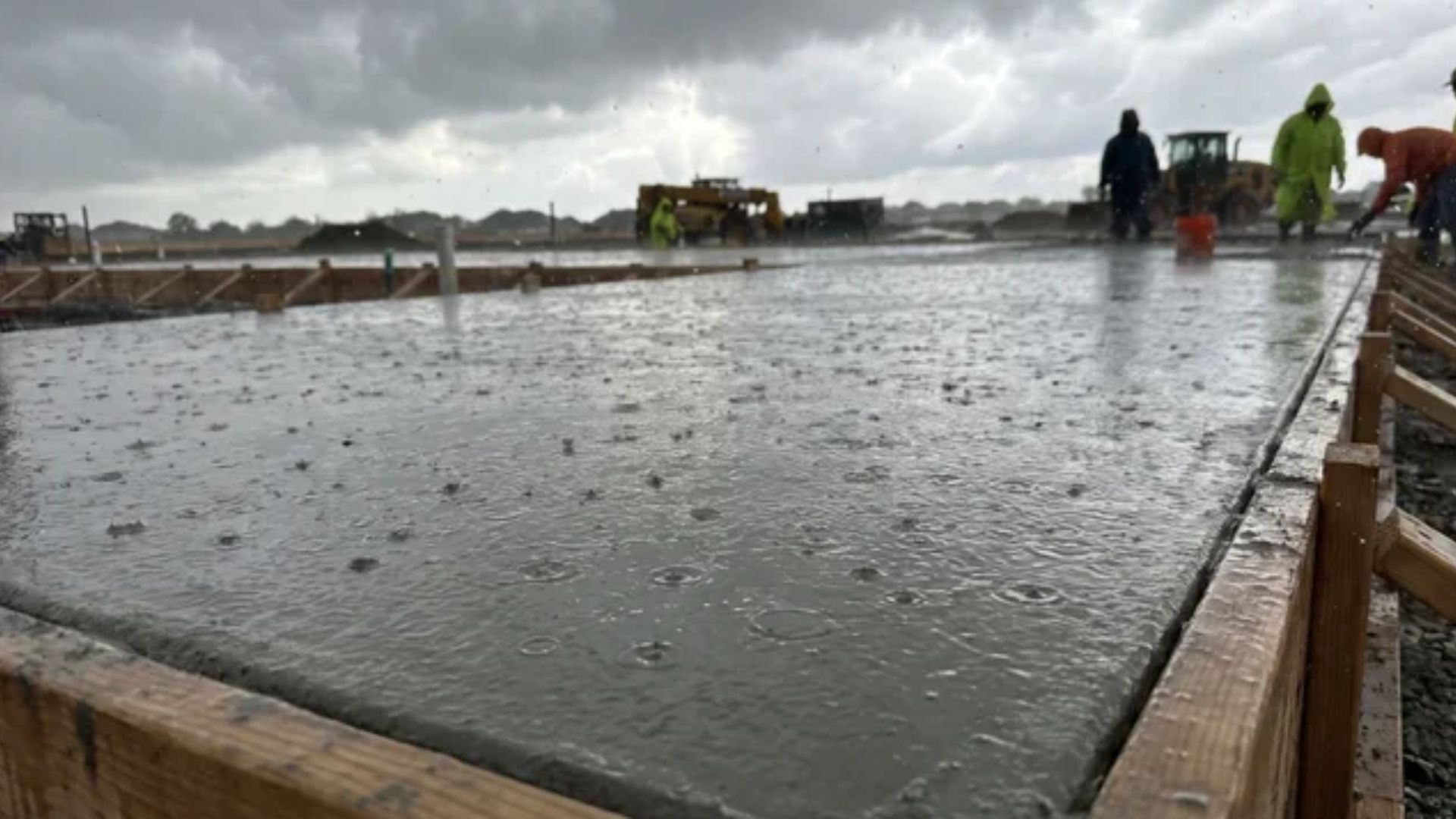
Rain within the first 24 hours. Before the slab hits the initial set, rain can wash the surface paste right out. That leaves a pitted, weakened top layer that never comes back.
After the initial set, usually 24 to 48 hours in light rain isn’t a problem. It can even help keep the surface damp.
Loading the slab too early. Driving equipment or parking a vehicle on it before it’s hit the required strength for that stage causes cracking. Every time.
That crack doesn’t show up right away either. It shows up days or weeks later, after the load’s already done the damage.
Both of those trace back to the same thing: rushing the slab past where the chart says it actually is.
The Bottom Line
A curing time chart turns guesswork into a plan. Light foot traffic at a day or two, vehicles at a week, full strength at 28 days. That’s the whole thing.
Match your use to the slab’s age, give a thick pour extra time, and keep it damp while it cures. Read the chart, respect it, and that concrete holds up for decades.
Watch for the two mistakes that cause most of the damage: rain in the first 24 hours, and loading the slab before it’s ready.
Frequently Asked Questions
How Long Does a 4 Inch Concrete Slab Take to Cure?
A 4 inch slab is around 70% strength at 7 days, 100% at 28. You can walk on it light after 24 to 48 hours. Give it a week before light vehicles, and the full 28 days before anything heavy.
Is it okay to pour concrete without gravel?
You can, but I wouldn’t do anything load-bearing. Gravel gives the slab a stable, well-draining base that’s what stops it shifting and cracking down the road. Skip it on soft or uneven soil and you’re looking at settling cracks within a year or two.
What is the enemy of concrete?
Water, in the wrong amount at the wrong time. Too much mixing water weakens the cured slab. Too little moisture during curing stalls hydration before it’s done. Freeze-thaw and early loading do their own damage too, but inconsistent water is behind most of what I see.
Does Concrete Cure Faster in Hot Weather?
The early set firms up faster in warm weather, sure. But hot and dry can pull moisture out too fast and weaken the slab. Keeping it damp matters most exactly when it’s hot, that’s when hydration needs the help to finish right.