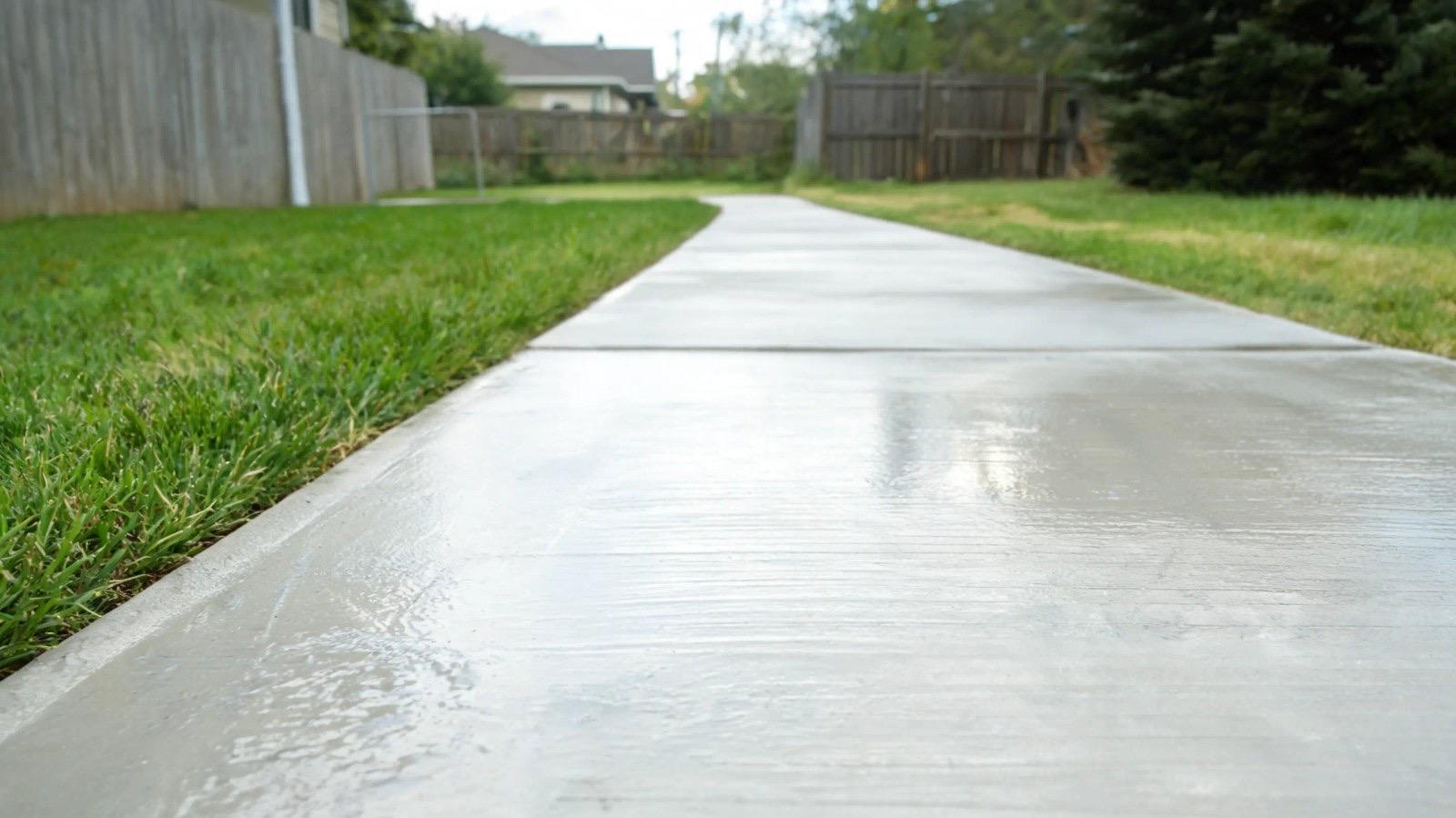
Here’s your answer up front: 24 to 48 hours before you put any weight on it, and even then, light only. Soft-soled shoes, no pivoting, nothing dragged across it.
That’s not one number though it moves with the finish and what you’re doing on the slab. A plain sidewalk and a stamped patio don’t cure on the same clock, and I don’t want to be the guy who gave you one number for both.
How Long Before You Can Walk on Concrete?
Concrete goes through stages as it sets up, and each one means something different for your feet.
- First 24 hours: stay off it completely. The surface is still soft enough to take a mark.
- 24 to 48 hours: light walking’s fine in soft soles. No running, no twisting, nothing dragged.
- 7 days: normal foot traffic, pets, even a passenger car.
- 28 days: full design strength that’s when it’s rated for everything it’s going to see.
On a stamped or decorative finish, I push that window out further. Give it3 to 7 days before anybody walks on it, even lightly that texture holds a mark a lot easier than a broom finish does.
I tell customers thefirst 24 hours is a look-don’t-touch window. It’ll look set, but trust me it isn’t.
That gap between looking hard and being hard is where I get the callback: somebody’s kid cuts across it on hour six, and now there’s a shoe print in a slab that’s been there for forty years.
Why Concrete Needs Time Before You Can Walk on It
Concrete doesn’t get hard by drying out; it’s a chemical reaction, hydration, water and cement locking together. That’s not the same thing as drying, and it’s why a slab can look bone-dry on top in a few hours and still be soft an inch down.
The surface sheds water fast. The strength underneath builds a lot slower than that.
Here’s the test I actually use: press a thumb into an edge somewhere out of the way, first day. Leaves a mark, it’s not there yet. Simple as that, I don’t trust a calendar over the slab.
Temperature’s the variable that moves everything. Heat speeds the reaction up. Cold slows it down, sometimes a lot, which is why “24 to 48 hours” can mean two different things on two jobs with the identical mix.
What Happens If You Walk on It Too Soon?
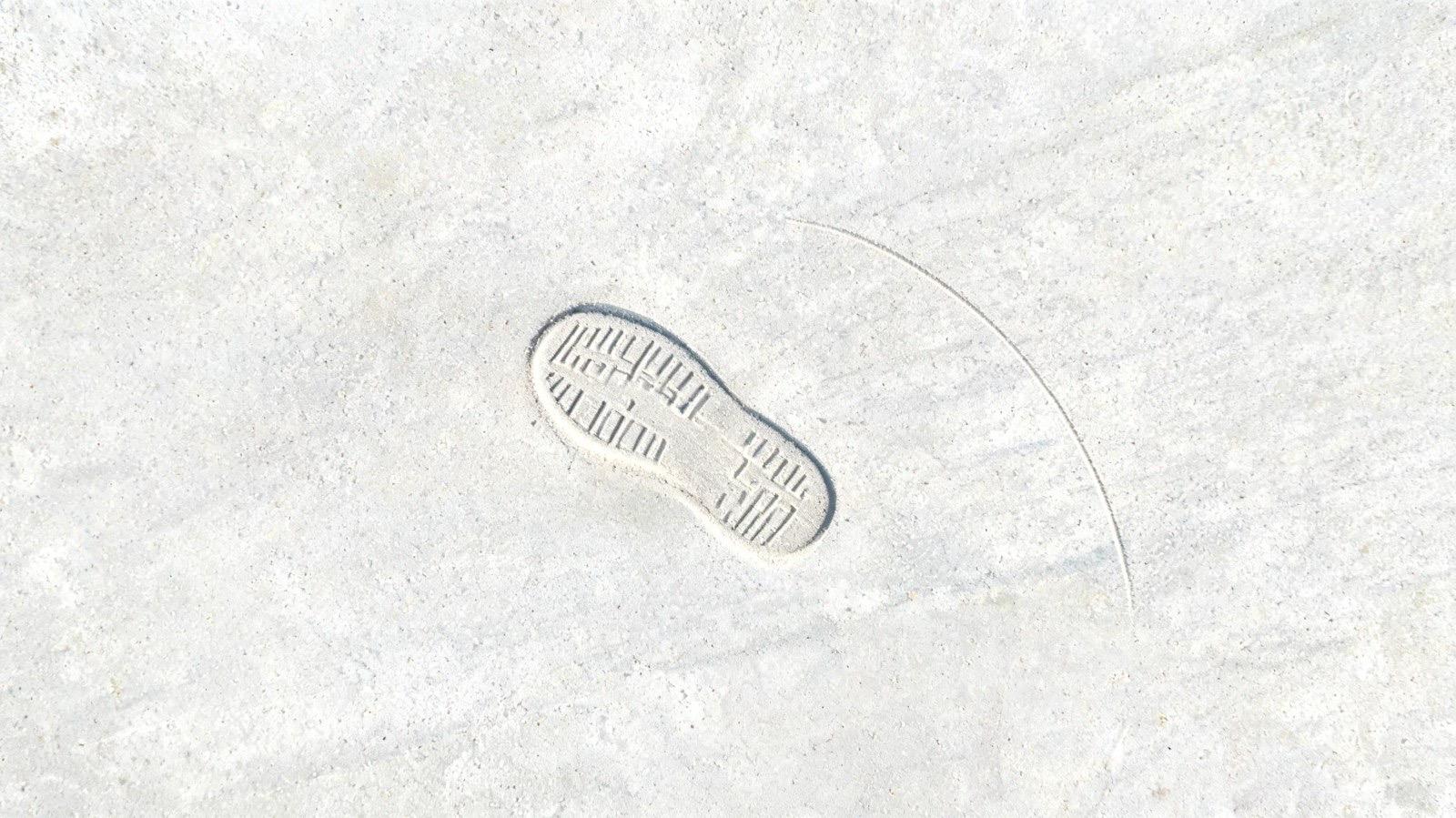
Early concrete’s softer than it looks. Step on it day one and the surface just gives under you. You’ll leave a shoe print pressed right into the finish.
Twist a foot on it and you can gouge or scuff the whole surface. Neither one buffs out. Once that slab cures, whatever’s in it is in it for good.
And here’s the part that catches people even once the top feels firm, a hard heel strike or a ladder dragged across it on day two can still dent it.
Next time you see odd scuffs near the edge of a driveway, that’s usually exactly what happened. Somebody tested it a few hours early.
Why Walking Safe Comes So Long Before Driving Safe
People lump these together, but they’re not close.
It always comes down to pressure.
- Walking: spreads your weight over a small footprint and lifts off fast concrete only needs a little strength to handle that.
- Driving: presses down a lot harder, in one spot, for a lot longer. That needs real strength under it.
That’s the whole reason light foot traffic is fine at 24 to 48 hours and a car still waits a full week. The slab hasn’t built the strength yet to carry that kind of load.
By day 3 to 7, you’re looking at 50 to 70 percent of final strength. That’s usually when I’ll pull forms off the edges, too. Strong enough for feet and light use a long time before it’s strong enough for wheels.
What Changes the Wait Time
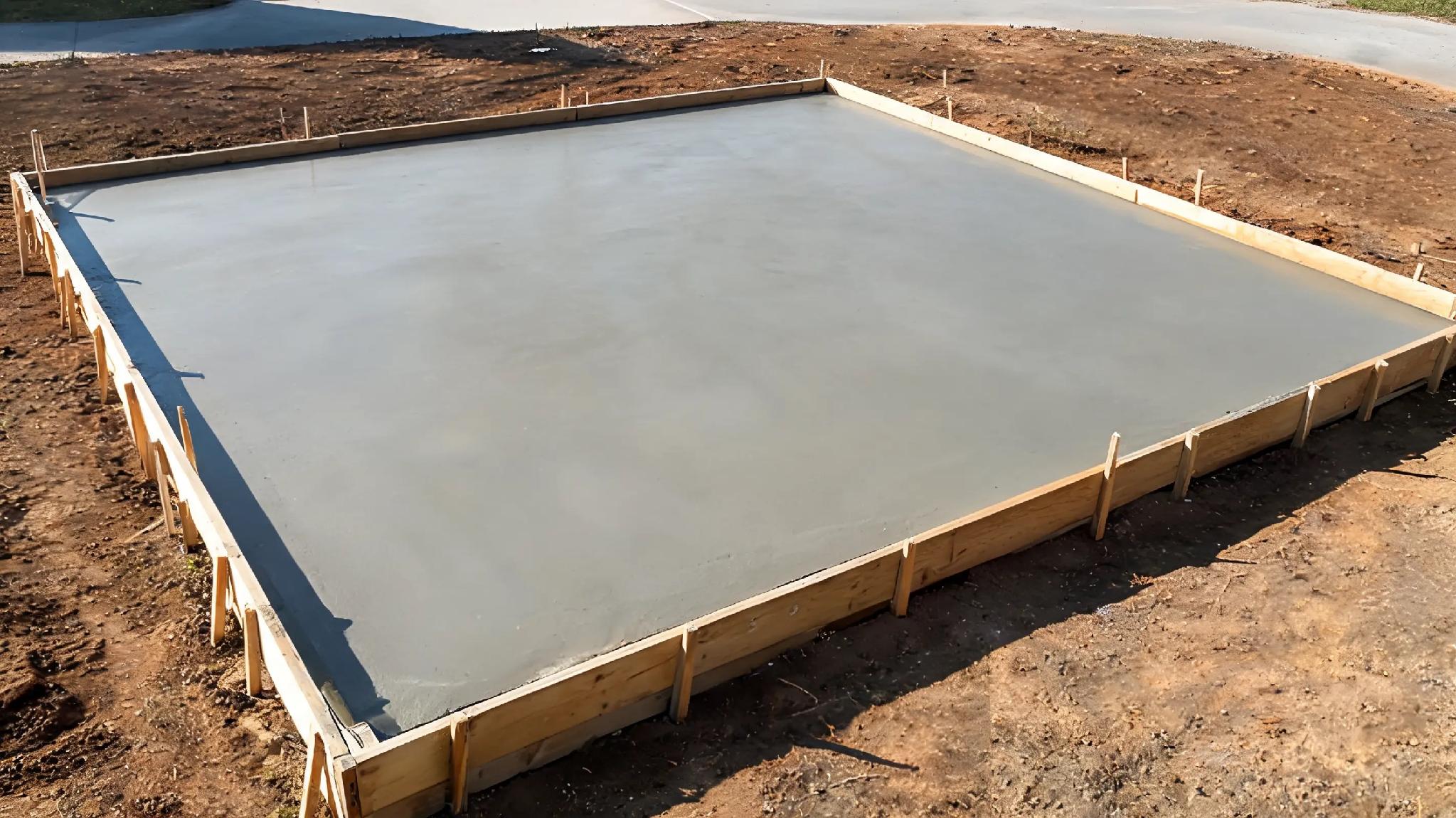
Those 24-to-48-hour numbers assume mild weather. Real jobsite conditions move that clock either direction.
Hot, dry weather speeds up the early set; you might hit the light-traffic stage closer to the 24-hour side. Cool or humid weather drags it out.
Get below about 50°F and hardening slows down enough that you’re looking at the full 48 hours, maybe more.
Mix matters too, a wetter mix and a thicker slab both hold moisture longer, and that stretches the wait right along with it.
Some mixes get help from admixtures, too. Accelerators speed the set up for cold-weather pours, retarders slow it down when a crew needs more working time before it firms up.
If your contractor used either one, that changes the clock from what a standard mix would give you, so it’s worth asking which one went into your pour.
So that’s what that coin test’s for. Press a coin into an out-of-the-way spot. You see any dents, it’s not ready. I don’t care what the calendar says.
Walking on Concrete Safely: Do’s and Don’ts
Once you’re past 24 hours, a few rules keep that finish clean while it’s still gaining strength underneath. This matters most in the first week.
- Soft-soled shoes. Sneakers spread your weight out heels and cleats put it all in one spot.
- Don’t pivot or twist. That’s what scuffs a fresh surface.
- Keep pets off. Claws scratch soft concrete easily the first couple days.
- Don’t drag anything. Slide a bench or a ladder across it and you’ve cut a line in it.
- Keep it covered or damp. Plastic sheeting or a light misting the first week helps it cure even and get to full strength.
Follow that and you keep the finish you paid for. Skip it, and the slab remembers.
The Bottom Line
24 to 48 hours before you walk on new concrete, and gentle only at first. Normal foot traffic waits about 7 days. Full strength is 28.
Match your steps to the slab’s age, keep pets and pivoting off it early, and test it before you trust it. A day or two of patience is what keeps a finish looking right for years instead of showing a mistake on day one.
Frequently Asked Questions
What Is the 90-Minute Rule for Concrete?
That one’s about placing and finishing, not walking on it. Ready-mix needs to be poured and finished within about 90 minutes of batching, before it starts setting up in the truck. Go past that window and it can affect how the slab sets once it’s down.
Is It Okay If It Rains 3 Hours After Pouring Concrete?
That’s a rough spot to be in. At 3 hours most slabs haven’t hit the initial set yet, so rain can wash out cement paste and pit the surface. If rain’s coming, get plastic sheeting over it right after finishing that’s the move.
Can I Pour Concrete Over 2 Days?
You can, but you need a planned joint where the two pours meet a cold joint, done on purpose, not by accident. Roughen the edge of the first pour before the second goes down, or those two sections won’t bond anywhere near as strong as one continuous pour.
Does Spraying Water on Concrete Help It Cure?
Yes, keeping it damp the first week gives you stronger, more even curing. That’s moist curing, and it keeps the surface from drying out faster than the concrete underneath it. Light misting or plastic sheeting both do the job, as long as the slab stays damp the whole time.