
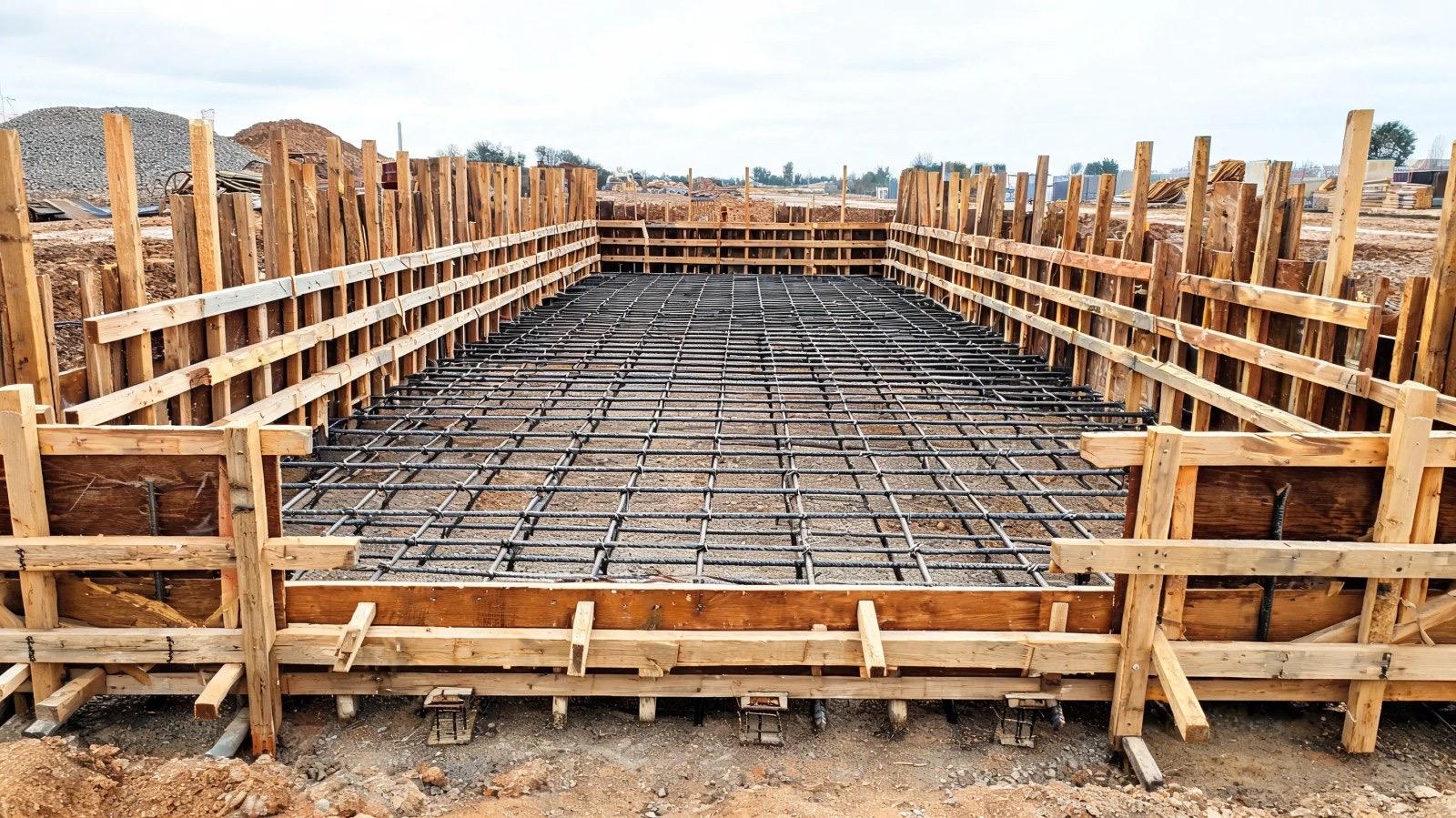
Plain concrete handles get squeezed just fine. Try to bend it or stretch it and it cracks fast, every time.
So that's the whole reason reinforced concrete exists. You add steel inside the concrete to cover the one thing concrete can't do on its own.
Here's your everyday proof of it: a driveway, a foundation, a high-rise downtown. Almost everything you walk past is leaning on this pairing in some form.
Here's what reinforced concrete actually is, how the two materials split the work, and where it can still go wrong on you.
What Is Reinforced Concrete?
Reinforced concrete is a composite material. Concrete's strength under compression, steel's strength under tension, put together in one material.
Builders embed steel bars, mesh, or fiber inside the concrete to make that happen.
Neither one does the job alone. Concrete cracks under bending or stretching, and steel bends and buckles without something around it holding its shape.
Put the two together, and each one covers the other's weak spot. That's the whole concept.
How Reinforced Concrete Works
Two kinds of stress, and each material takes one of them.
Concrete handles compression well. Stack weight on it, squeeze it, push it down, it holds.
Concrete handles tension badly. Bend it, pull it, stretch it, and it cracks almost right away.
Steel rebar takes on the tension concrete can't. It absorbs the pulling and bending stress while the concrete around it keeps handling compression.
Now, two things make this partnership actually last, and both get overlooked a lot.
Concrete and steel expand and contract at nearly the same rate with temperature swings. That's what lets them move as one unit instead of fighting each other every time it heats up or cools down.
Cured concrete is naturally alkaline. That alkalinity forms a protective layer around the steel, called passivation, and it shields the rebar from rust under normal conditions.
That same layer is the reason corrosion becomes such a problem down the line. Once it breaks down, the steel underneath has got nothing left protecting it.
Types of Reinforced Concrete
Not every job gets the same reinforced cement concrete mix. The method changes based on the load and how much strength the structure actually needs to carry.
- Steel-reinforced concrete – standard steel rods or rebar cages, your go-to for structural work: beams, columns, foundations.
- Fiber-reinforced concrete – small steel, glass, or synthetic fibers mixed right through the concrete to control shrinkage cracking.
- Mesh-reinforced concrete – welded wire mesh laid inside slabs, common on patios, walkways, and flatwork carrying foot traffic only.
- Pre-stressed and post-tensioned concrete – high-strength steel cables stretched either before or after the pour hardens, used on long spans like bridges and parking structures.
Pre-stressing works differently from the other three. Instead of just adding steel to resist tension as it comes, you stretch the cables first.
Pre-tensioning stretches the cables before the pour, then releases them once it cures.
Post-tensioning runs cables through ducts and stretches them after the concrete's already hardened.
Either way, that steel stays under tension permanently. It squeezes the concrete into constant compression, so it carries a lot more load over a lot more distance than standard rebar is ever going to manage.
The type you use comes down to the job. A foundation or beam needs the load-bearing strength of rebar cages.
A driveway slab typically needs rebar rather than mesh, since it’s carrying vehicle weight. A bridge span needs pre-stressing or it’s going to sag.
Pros and Cons of Reinforced Concrete
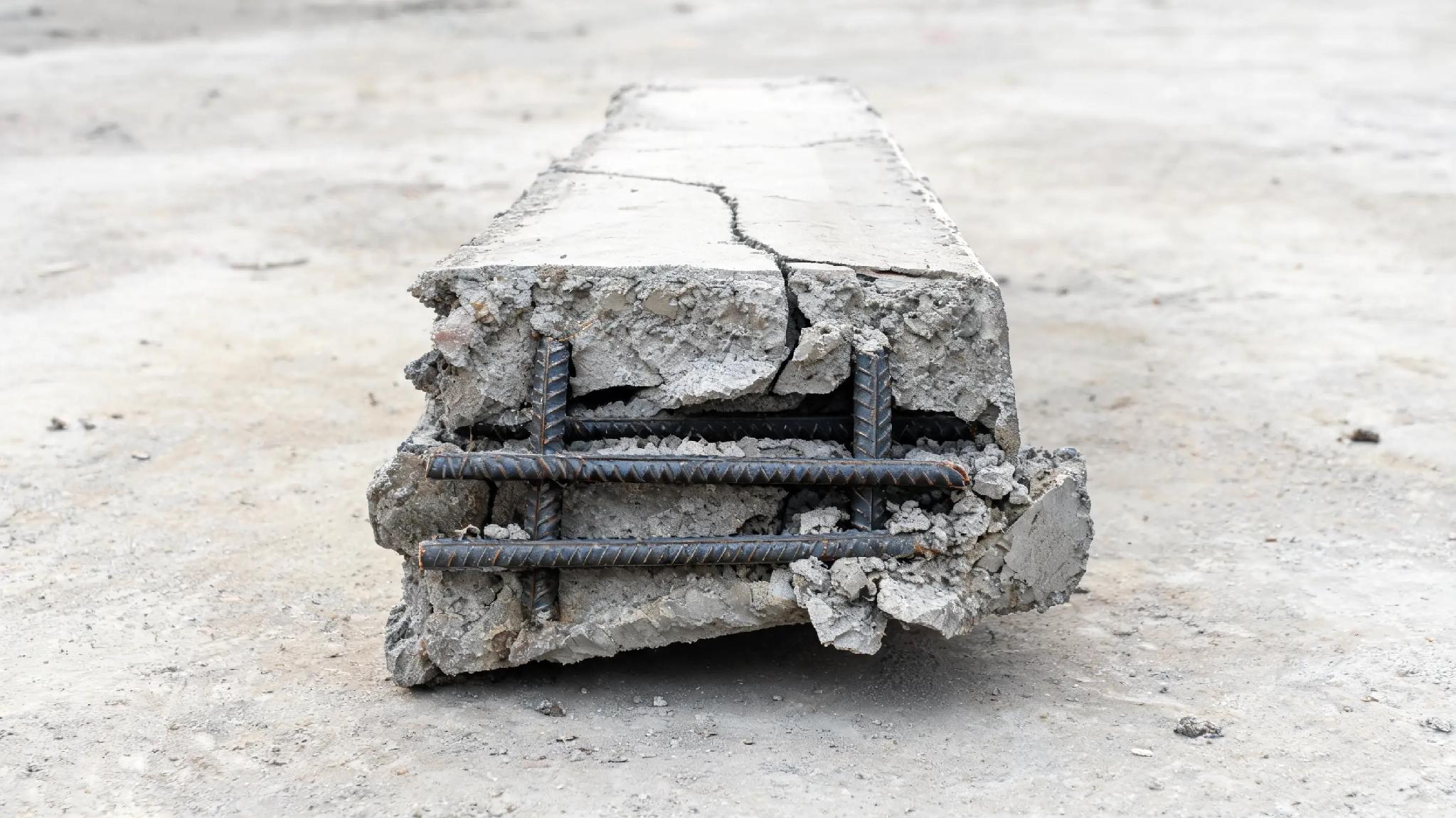
It's a strong combination, but there's real trade-offs on cost, timeline, and upkeep down the road.
Pros:
- Strength, durability, and fire resistance, all in one material
- Can be molded into pretty much any shape before it cures
- Handles compression and tension both, which plain concrete can't do
Cons:
- Heavy. That adds cost and headache to transport and handling
- Formwork for pouring and shaping it is complex and it costs you
- Takes 28 days to hit full strength which slows the whole project down, usually strong enough for light use within the first week
- Steel inside can corrode if moisture breaks down the concrete's protection over time
That last one's worth stopping on, because it's the one that costs the most when it finally shows up.
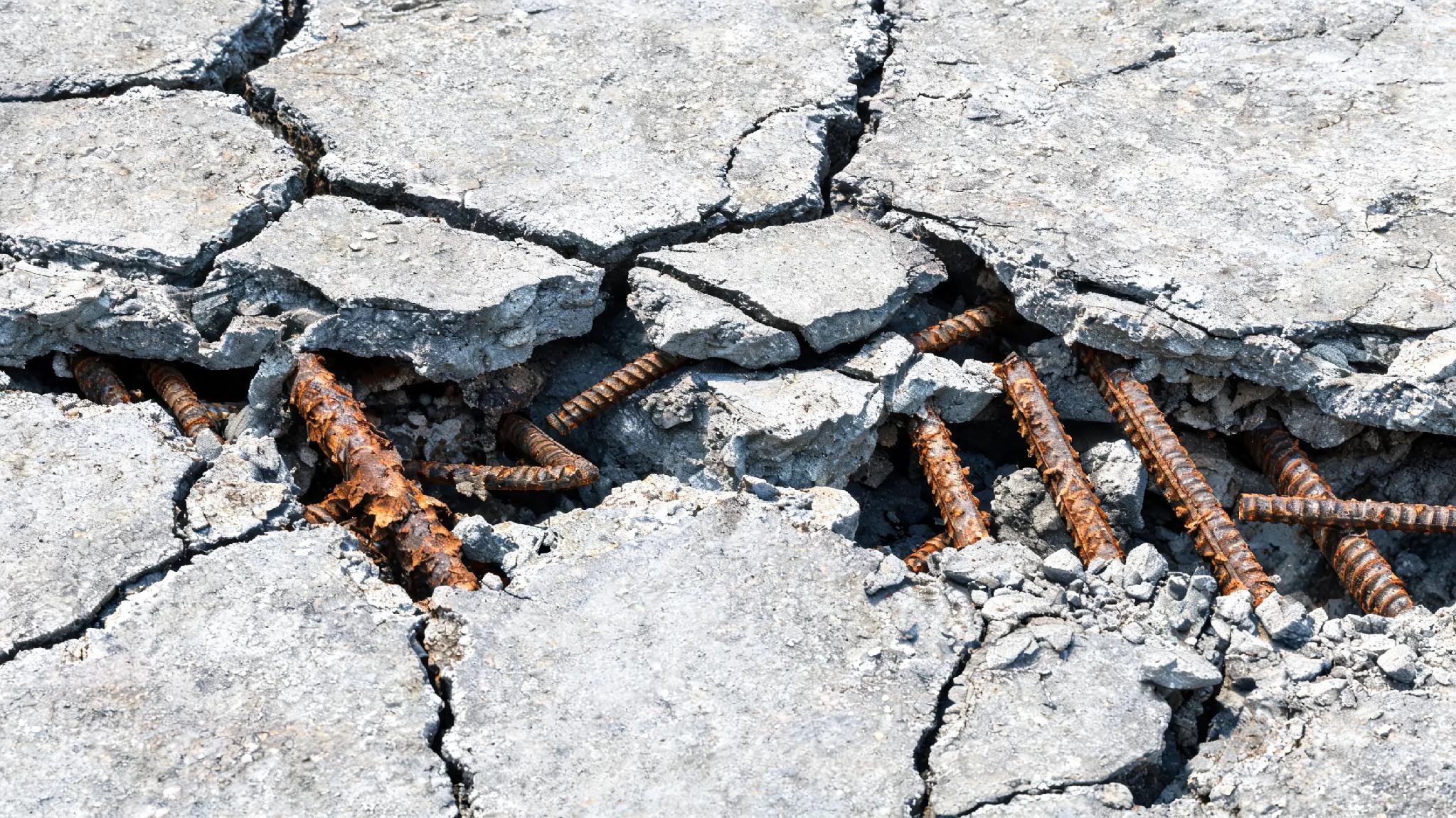
Rust doesn't just weaken the steel. Rusted steel expands out to several times its original size.
That expansion pushes outward against the concrete around it from the inside. The pressure cracks the concrete and eventually you get spalling, where chunks break clean away and the rebar's sitting there exposed.
By the time you're seeing rust stains or cracking on the surface, the damage underneath's already well underway. That's just how it goes.
The Bottom Line
Steel and concrete split the work, compression to one, tension to the other, and that split is why the material holds up at all.
Keep moisture off the steel and this stuff is still standing in a hundred years. Let it in and you’re looking at spalling inside twenty.
Frequently Asked Questions
How Long Will Reinforced Concrete Last?
Depends more on exposure than age. A structure sitting dry inland can easily outlast one near saltwater or industrial runoff, even if they're the same number of years old.
Does Reinforced Concrete Need Rebar?
An engineer decides that for any reinforced cement concrete structure by calculating the actual load it’s going to carry. Math shows real bending or tension stress, rebar goes in. If not, mesh or fiber covers it fine.
What Is the Cheapest Way to Reinforce Concrete?
Fiber, mainly because it cuts labor, not material cost. You skip the time and the skilled hands it takes to place rebar cages or tie mesh by hand.