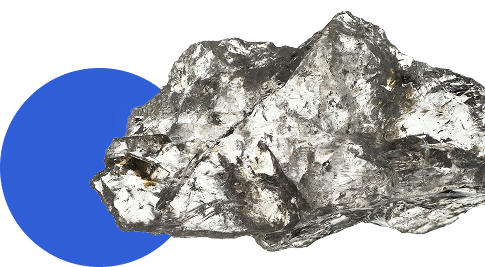


I hear people say “cement” when they mean “concrete” probably once a week on a job site, and it’s not just a word thing. Order the wrong one and you get a bag of glue powder instead of a driveway.
Concrete has four ingredients: cement, water, sand, and gravel or crushed stone. That’s it. Cement’s job in there is just to be the binder, the part that locks everything else together, it’s not the whole material.
Get those four in the right proportion and you get something that holds up for decades.
Get the ratio wrong, even a little, and you’re looking at cracking and spalling a lot sooner than you should be.
Here’s what concrete is made of, what each part is doing, and how it all comes together into a slab.
What Is Concrete Made Of?
Concrete is a mix of four main ingredients: cement, water, sand, and gravel or crushed stone. Combine them in the right amounts and you get rock-solid concrete.
Here’s the part people skip past. Cement is not concrete. Cement is the binder, one ingredient out of four.
A bag of straight Portland cement has no sand, no gravel, nothing to carry the load. Mix it with just water and you get a weak, brittle paste that’ll crack under its own weight. It’s not concrete until the other three ingredients are in there with it.
So that difference matters at the counter when you’re buying material, not just on paper.
The Main Ingredients of Concrete

Each ingredient has one job, and the mix only works when all four show up in the right balance.
The exact amounts shift from project to project, but aggregate’s always doing most of the lifting by volume, cement’s a much smaller slice than people guess, and water’s measured by what the batch needs, not by a fixed percentage.
Aggregate carries most of the bulk there. But cement is what makes that bulk actually hold together instead of just sitting in a pile.
1. Cement
Cement is the glue. Most jobs run on Portland cement, a fine grey powder made by heating limestone and clay in a kiln and grinding the result down.
On its own, cement does nothing. No strength, no structure, nothing. Mix it with water and it reacts and hardens.
That reaction is the whole ballgame. It’s what bonds everything else into one solid piece.
2. Water
Water activates the cement. It kicks off a reaction called hydration, and hydration is what actually hardens the concrete. It’s not drying out like paint, it’s a chemical change, and it only happens once.
So the amount of water you use matters a lot, probably more than people think.
Too much water and you’re thinning out the cement paste, so it cures weaker than it should. Too little and some of that cement never reacts at all, the mix gets hard to work, and the bond stays incomplete.
That’s why the water-to-cement ratio is the number that decides final strength, not just whether water’s in there. I’ve got the full ratio breakdown by job type over in my concrete mix ratio guide.
Most structural mixes aim for a ratio around 0.45 to 0.50; meaning roughly half a pound of water for every pound of cement.
Go lower and you get higher strength but a stiffer mix that’s harder to place. Go higher and placing gets easier, but you’re trading away strength to do it.
3. Sand
Sand is a fine aggregate. It packs into the small gaps between the bigger stones, which is what makes the mix dense instead of full of voids. No sand, no density, it’s that simple.
Sand is what makes the mixture smooth, dense, and workable enough to actually place and finish.
4. Gravel or Crushed Stone
Gravel and crushed stone are the coarse aggregate, and they’re most of the volume in the mix.
These stones are the skeleton. They give concrete its bulk and its raw strength.
Most mixes run coarse aggregate anywhere from 3/8 inch up to about 1.5 inches, depending on the job; smaller stone for thin slabs and finish work, larger stone for foundations and heavy structural pours.
The cement paste coats every one of them and locks them in place as it cures.
How the Ingredients Work Together
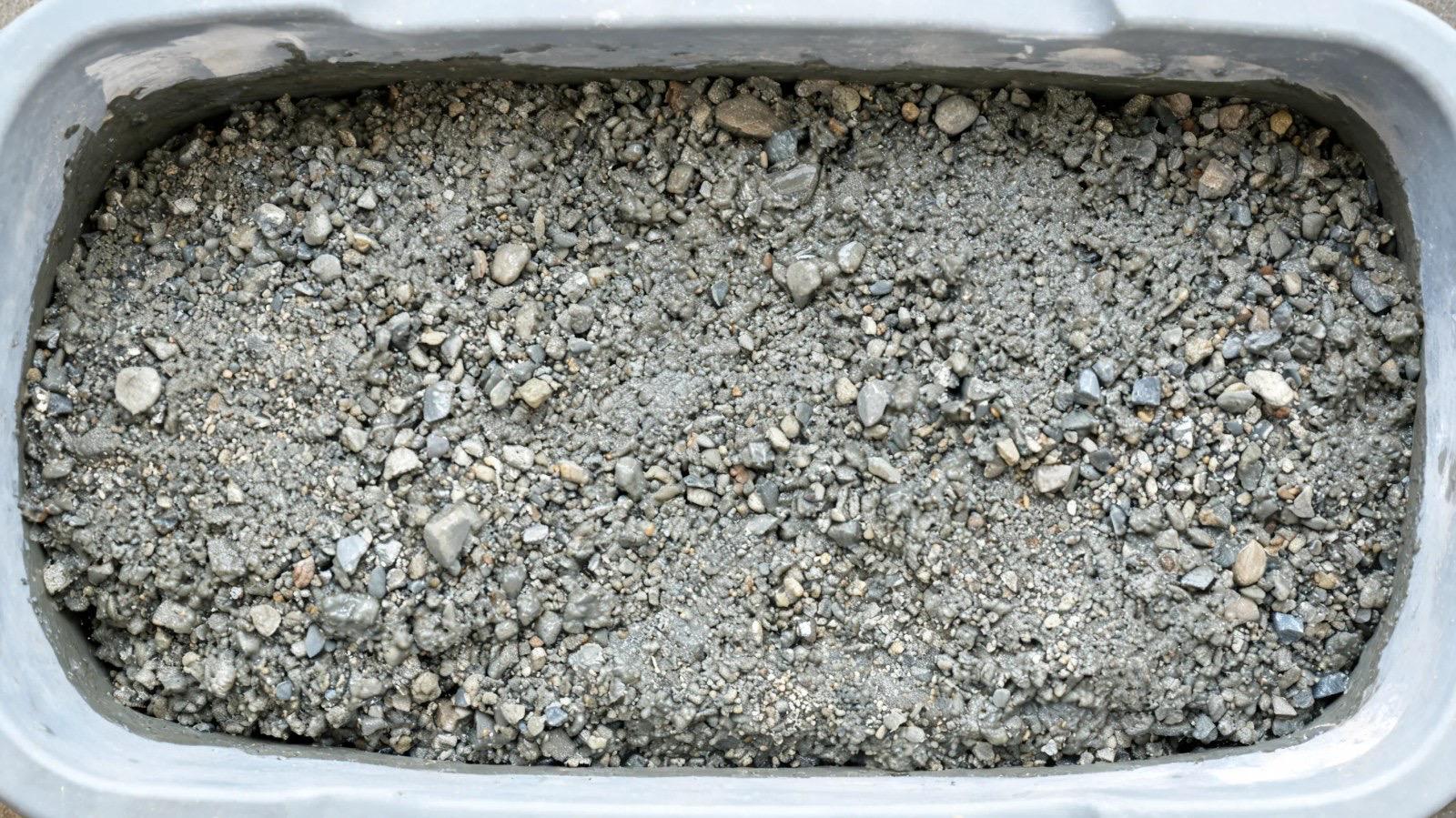
The real strength here comes from the reaction, not from four materials just sitting next to each other in a pile.
Water meets cement, hydration kicks off, and that paste coats every grain of sand and every piece of stone in the mix. As it cures, that paste locks the whole thing into one solid piece, sand and stone included.
Rush that process, or throw the ratio off, and the final strength takes the hit for it.
Proportions decide the outcome. Water-to-cement ratio is the single biggest factor in how strong that finished slab ends up.
This is where a mix gets won or lost on a job.
A little extra water makes pouring easier, I get why guys reach for it. But that same water quietly cuts your final strength, because it thins out the cement paste doing the binding.
Optional Additives
Beyond the four basics, a lot of concrete includes admixtures, chemicals added in small amounts to fine-tune how the mix behaves.
Some speed up or slow down set time. Others boost strength, improve workability, or help the concrete fight off freezing and cracking in cold weather.
They’re optional, but they show up on real jobs all the time. The right admixture is what lets a crew pour in conditions that would otherwise wreck the batch.
Common Types of Concrete
Same four base ingredients, different proportions and add-ins depending on the job. A few you’ll run into regularly:
- Normal strength concrete: the standard 1:2:4 mix (cement, sand, aggregate) used for driveways, sidewalks, and most residential slabs.
- Reinforced concrete: regular concrete poured around steel rebar, used anywhere the structure needs to handle tension, not just compression, like beams and foundations.
- Lightweight concrete: made with lighter aggregates such as pumice or expanded clay instead of regular stone, used where reducing structural weight matters.
- High-density concrete: mixed with heavy aggregates to block radiation, mostly seen in nuclear facilities and shielding walls.
- Precast concrete: poured and cured in a factory, then shipped to the job site, used for beams, wall panels, and bridge sections where consistency matters more than on-site flexibility.
The ingredients don’t change. What changes is the ratio and what gets added to the mix for the job at hand.
The Bottom Line
So what’s concrete made of? Four ingredients, cement, water, sand, and gravel or crushed stone, with admixtures optional on top of that.
Cement is the glue. Water starts the reaction that hardens it. Sand and stone give the mix its body and its strength.
Get that balance right and those four plain ingredients add up to one of the most durable materials we build with.
Frequently Asked Questions
What Is the Difference Between Cement and Concrete?
Cement is one ingredient. Concrete is the finished material. Cement’s a fine powder acting as the binder, concrete’s what you get once you mix that cement with water, sand, and gravel. So every batch of concrete has cement in it, but cement by itself is never concrete.
What Is Concrete Powder Made Of?
“Concrete powder” usually means dry-mix concrete. Same core ingredients as the wet stuff, minus the water: Portland cement, sand, and gravel or crushed stone, sometimes with admixtures already in there. Water gets added on-site when it’s time to pour, and that’s the moment hardening actually starts.
What Is the Lifespan of Concrete?
A well-mixed, properly cured slab runs 50 to 100 years in standard residential use. Some structures go a lot longer than that. Lifespan comes down to the original mix, how well it was cured, and what it’s been exposed to over the years.
Can You Make Concrete Without Gravel?
You can, but you’re not making concrete anymore. Cement and sand with no coarse aggregate is mortar, and mortar’s weaker, good for bonding brick or block, not for carrying structural load. True concrete needs that gravel or crushed stone for the strength and the volume.