
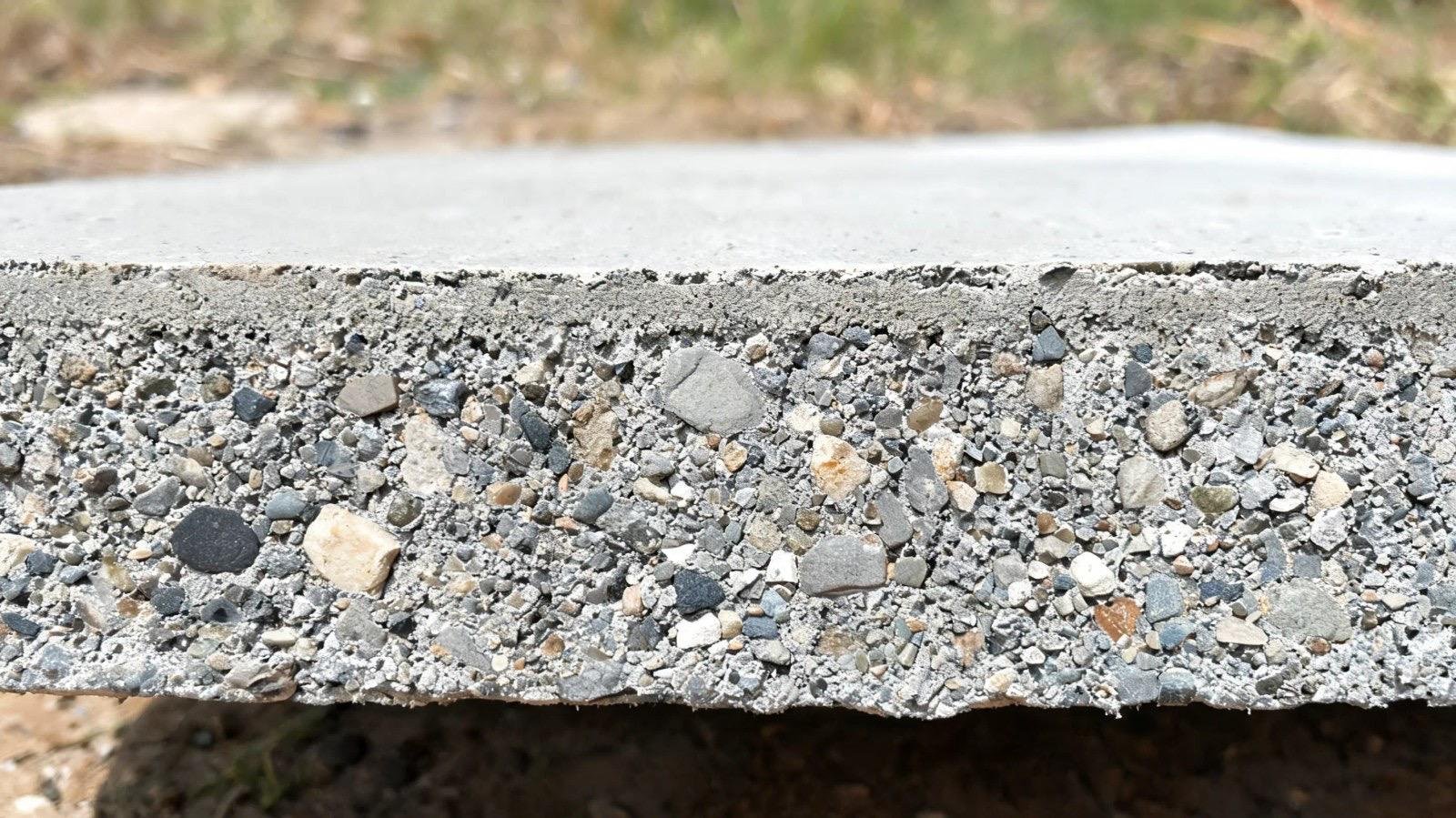
Crack an old slab open with a sledgehammer sometime. Look at the broken edge. You’re going to see chunks of gravel sitting in grey paste, not one solid material all the way through.
That’s your answer. Concrete is a mixture.
It’s not one substance and it’s not a chemical compound. It’s several ingredients combined, and each one is still doing its own job inside the finished product, same as the day it went in.
Here’s what’s actually mixed in, and why it matters more than most people think.
Why Concrete Is Not a Chemical Compound
Yes. Concrete is a mixture, not a compound. It’s also what’s called a composite material, separate parts working together, not one blended substance.
A compound forms when elements bond chemically into something new. Water’s a compound. Hydrogen and oxygen bond, and you get something completely different out the other end.
Concrete doesn’t work that way. Now, here’s the part most people miss: cement and water do react chemically. That reaction’s called hydration, and it’s real chemistry happening inside the mix.
But hydration only happens between the cement and the water. The sand and gravel sitting in that paste never bond to anything. They just get trapped in place.
That’s the whole reason concrete’s a mixture and not a compound. A real chemical reaction’s happening inside it, sure, but it only involves two of the four ingredients. The rest just ride along for the mix.
I’ve broken up plenty of old slabs, and that’s the tell every single time. You can see individual pieces of gravel sitting inside that hardened paste, same shape and size they went in as.
A true compound wouldn’t let you do that. The ingredients would be gone, replaced by something new entirely.
If you want the fuller picture of how cement and concrete relate as materials, not just the mixture-versus-compound question, see my Cement vs Concrete guide.
What’s Actually Mixed Together

Four main ingredients, combined in specific proportions depending on the mix design:
- Cement: usually around 10 to 15%. The binder… holds everything together.
- Water: usually 15 to 20%. Triggers hydration, the reaction that hardens the cement.
- Aggregates (sand, gravel, crushed rock): the biggest share by far, often 60 to 75%.
- Entrained air: smaller amount, sometimes 5 to 8% in certain mixes. Tiny air bubbles, and they’re what let the concrete handle freeze thaw cycles without breaking apart.
That aggregate number is the part people get wrong. Most of what you’re looking at in a slab isn’t cement at all, it’s sand and rock, held in place by a pretty thin layer of paste around it.
Is Concrete a Homogeneous or Heterogeneous Mixture?
Heterogeneous. The ingredients aren’t blended down to a molecular level. You can physically see them, and you can physically separate them.
Cut a piece of concrete or break it, and you’ll spot distinct sand grains and gravel chunks sitting right there inside the cement paste. That’s heterogeneous, plain and simple.
From a few feet back, a finished slab can look pretty uniform, almost like one solid material.
Zoom in, or break it open, and the mixture shows itself right away. Scale’s changing what your eye picks up. It’s not changing what’s actually there.
Why This Matters for Strength
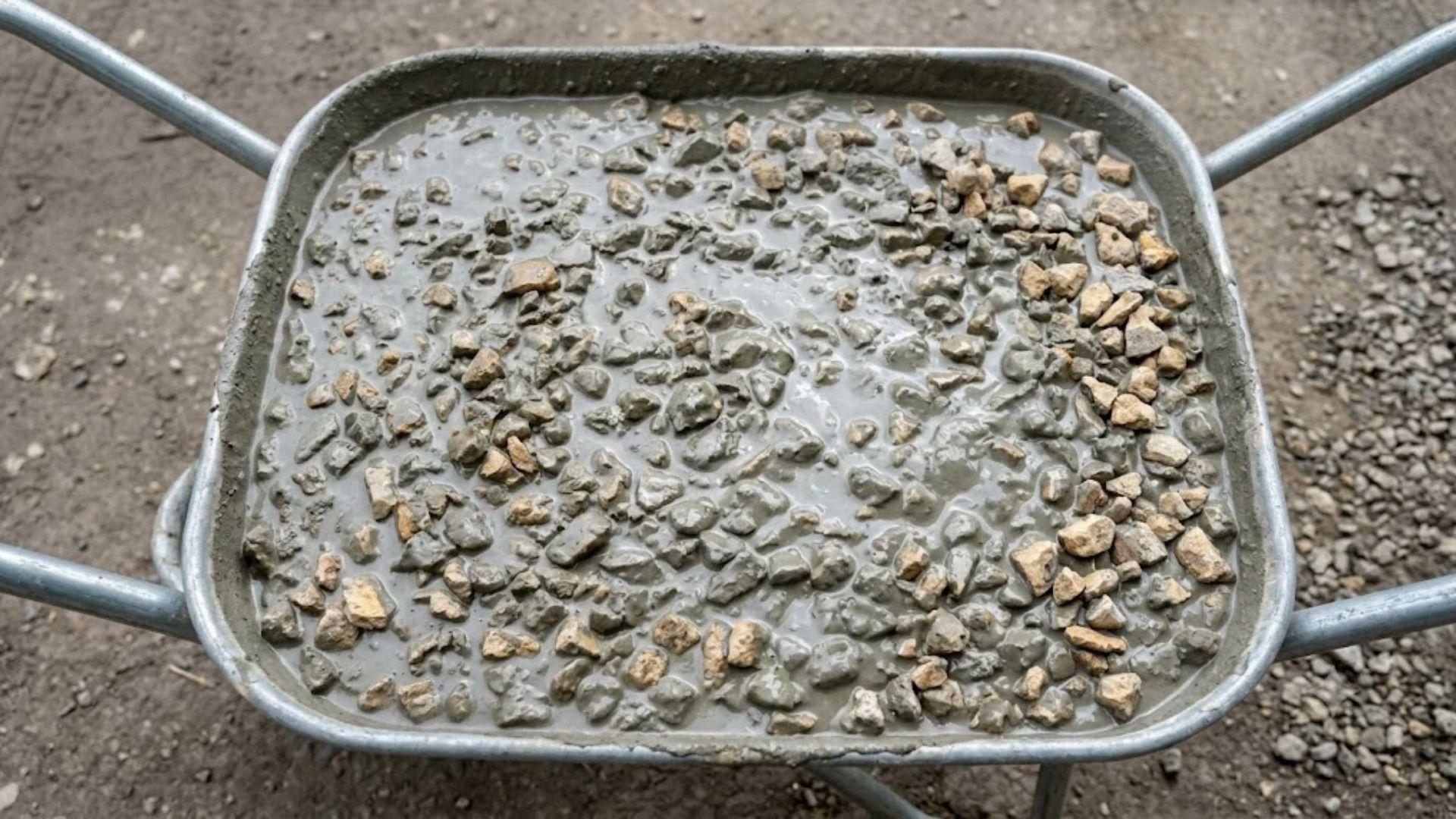
The mixture ratio isn’t some technical detail you can skip past. It’s the entire reason concrete works as a building material in the first place.
Because concrete’s a mixture and not a fixed compound, you can change how it performs by changing the ratio of ingredients. There’s no locked in formula you’re stuck with.
That’s exactly why mix ratios matter so much in a real job. Too much cement paste and not enough aggregate, and the mix shrinks more as it cures. That raises your odds of cracking down the road.
Too much water relative to cement, and the finished concrete ends up weaker, even though it was easier to pour that day.
The extra water that never reacts with the cement has to go somewhere, it leaves behind tiny voids as it evaporates, and those voids are where cracks start.
DIY pours get caught out by this constantly. Adding a little extra water to make the mix easier to work feels harmless at the moment.
It directly cuts the strength of the slab you end up with. Get the ratio close to right, and the aggregate does what it’s there to do.
It bears the load. The cement paste just holds it all in place around it.
The Bottom Line
Concrete’s a mixture, not a compound, and a heterogeneous one at that. It’s also a composite material, built from separate parts that keep their own identity the whole way through.
Cement paste binds sand and gravel together without dissolving that identity.
That mixture ratio decides whether your concrete holds up or cracks early. Get the proportions right, and the aggregate does the heavy lifting it’s built for. That’s what you want to see out of a pour.
Frequently Asked Questions
Is Concrete a Pure Substance?
No. Pure substances have a fixed composition all the way through. Concrete combines several distinct materials, cement, water, sand, and gravel, in proportions that vary by mix design, and they stay visibly separate inside the hardened structure.
Is Cement the Same Thing as Concrete?
No. Cement’s one ingredient in concrete, the binder that holds everything together. Concrete’s the finished mixture, cement, water, sand, and gravel, mixed in specific proportions. People use the two words interchangeably all the time. They’re not the same material.
Does Concrete Count as a Rock?
Not technically. Concrete’s a manufactured mixture, not a naturally formed rock. It behaves like one once it’s cured, hard, dense, load bearing, but it’s built from a paste and aggregates, not formed by natural geological processes.