Learning how to mix concrete by hand is a simple job: a bag of concrete mix, a wheelbarrow, no truck, no mixer. Small pour, hand mix, that’s it.
Nothing complicated about it. But the details are what decide whether this holds up or cracks on you in a year.
Too much water, that’s the one mistake that ruins a batch every time. I’ve seen a whole afternoon of work go soupy because somebody kept splashing water in to make it easier to push around.
Get the ratio right and work it thoroughly, and a hand mix performs just fine on a small job. Comes down to adding water slowly and turning the mix until it’s even, nothing more to it.
So here’s the walkthrough, tools first, then the steps, then the consistency you’re actually aiming for.
What You’ll Need to Mix Concrete
Before you crack the bag open, get your tools laid out. None of it’s fancy.
Materials and the Right Water-to-Mix Ratio
Check the ratio printed on your bag before you touch any water. An 80-pound bag usually runs around 3 quarts, but that number moves depending on the brand and the mix type.
Structural work, anything reinforced, wants a stiffer mix than a flat pour does. Less water relative to the dry mix, not more.
Don’t eyeball that number. Read it off the bag before the first scoop of water goes in.
Tools and Containers: Hand Mixing vs. Mixer
Get these staged ahead of time. You don’t want to be hunting for a shovel once the clock’s running on you.
- A bucket,for small batches or for measuring water.
- A wheelbarrow or mortar tub to mix in.
- A garden hoe or shovel to turn the mix.
- Safety gear: glasses, rubber gloves, a dust mask.
That’s the full list for a basic hand mix. The only real decision left is which container matches your job.
Bucket’s plenty for a small patch. Wheelbarrow gives you the room a bigger pour needs.
For a job this size, you don’t need a mixer. Hand mixing gets you there just as well.
Hand mixing is cheaper, and it’s fine for a bag or two. Just costs you more muscle and more attention to keep it even all the way through.
A mixer costs more, or it’s a rental trip. But run several bags, or do this often enough, and it saves your back and gives you a more consistent mix every time.
Safety gear isn’t a maybe. Dry mix is dusty, hard on your skin and your lungs, and wet concrete is caustic. Skip it and you’ll regret it by the end of the day.
How to Mix Concrete by Hand: Step by Step
The whole process is adding water in stages and turning the mix until it’s even. Work steady, because concrete starts setting up the moment it’s wet.
Follow these in order.
Step 1: Prepare the Dry Mix

Gear on first. Then dump the bagged mix into your wheelbarrow or mortar tub.
Break up the clumps, spread them out. Push it into a mound, then scoop a well into the center to hold the water.
Step 2: Add Water Gradually
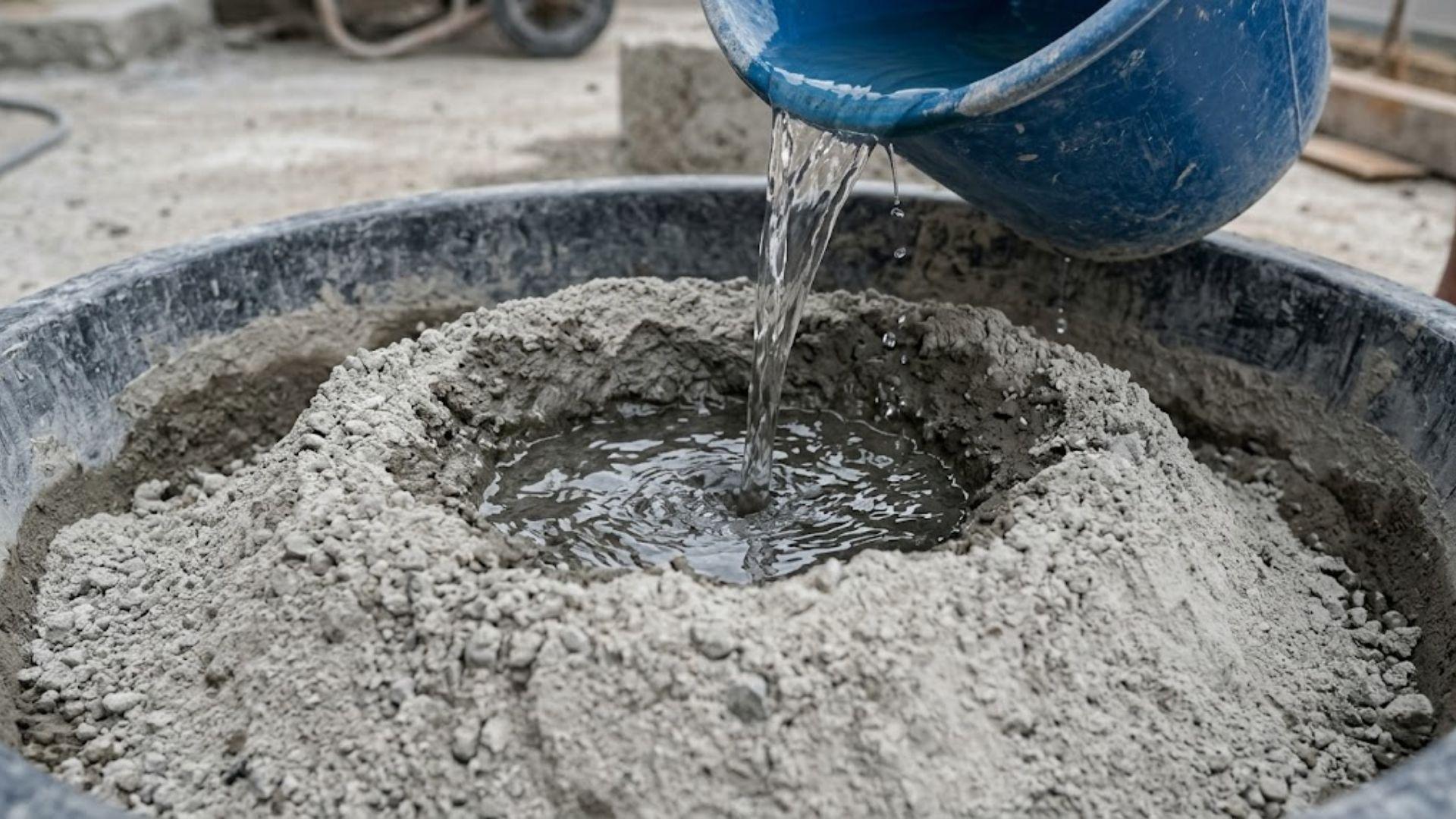
Pour about two-thirds of your measured water into the well. Hold the rest back.
Slow is the whole trick here. You can always add more water. You can’t take it back out once it goes soupy.
Step 3: Mix Thoroughly
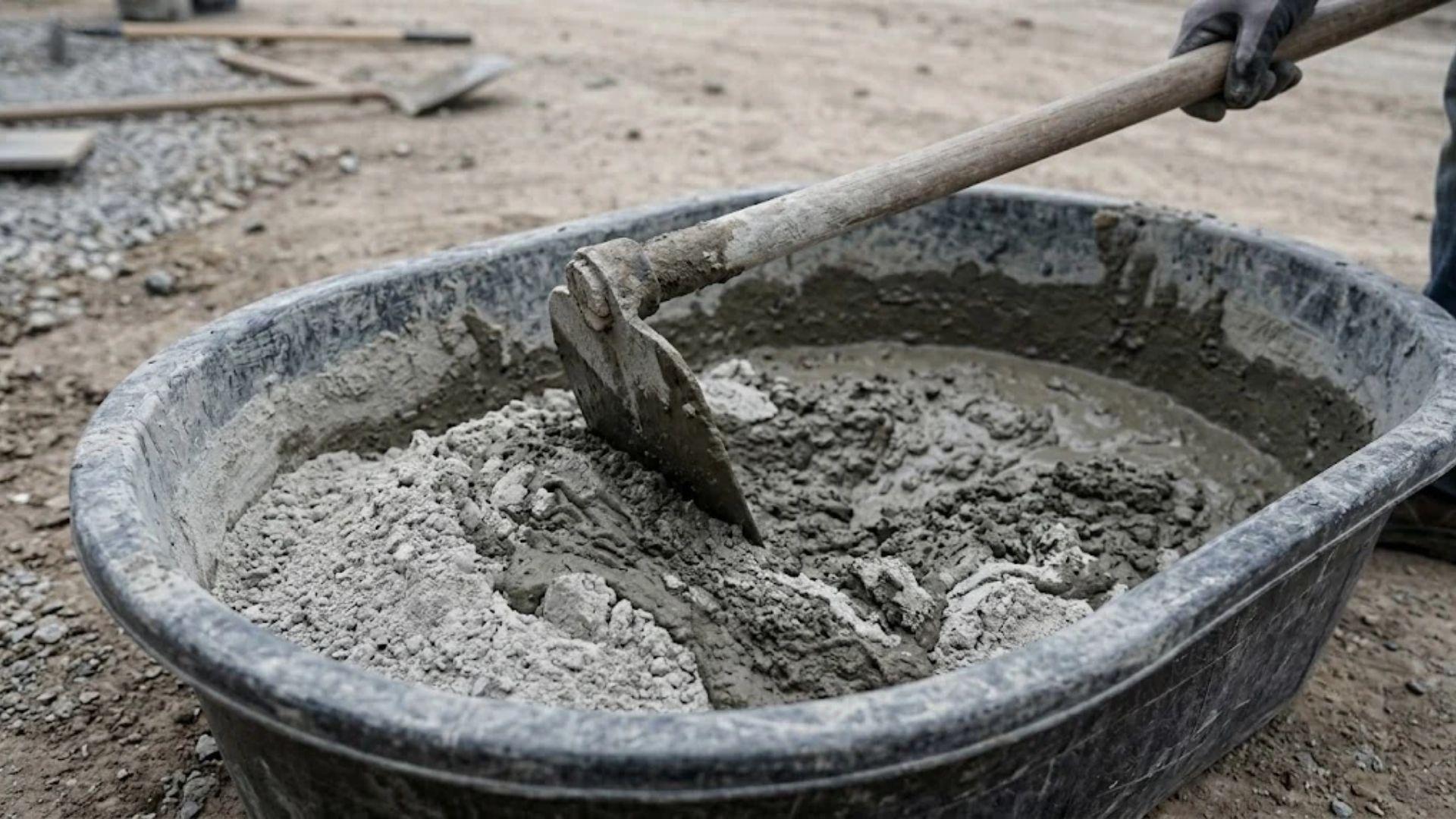
Pull the dry mix in from the edges with your hoe, into the water. Keep folding and turning until the water’s worked all the way through.
Chase down every dry pocket you can find. A patch of unmixed powder is a weak spot sitting in your finished concrete.
Step 4: Check the Consistency

Add the rest of the water now, a little at a time, mixing between pours. Stop the second it looks right.
You’re aiming for a mix that holds its shape but still works easy, not runny. The next section tells you exactly what that looks like.
Getting the Right Consistency
This is where most hand mixes go wrong. Target is a thick, even mix, close to oatmeal or peanut butter.
Good test: drag your hoe through it.
Should leave a ridge that holds its shape. If the ridge slumps and fills back in, it’s too wet.
Second check, just as reliable: grab a gloved handful and squeeze.
Right consistency holds its shape in your fist but breaks loose easy when you toss it back in. Falls apart in your hand, too dry. Oozes between your fingers, too wet.
Don’t add extra water just to make it easier on yourself. One extra quart in an 80-pound bag can cut the cured strength by up to 40 percent. That little bit of convenience is quietly draining the strength right out of the mix.
Here’s why. Water reacts with the cement, that’s what binds the mix together as it cures.
Add more water than it needs and you dilute that reaction. Concrete still hardens up fine on the outside, but the bond underneath is weaker.
Stiffer mix is harder to push around with a hoe, I won’t pretend otherwise. It’s also stronger once it cures. That’s the trade worth making every time.
For the same reason structural or reinforced work needs that stiffer mix I mentioned earlier. A flat walkway tolerates a slightly looser pour. A footing or a post base, it can’t afford that.
Common Concrete Mixing Mistakes
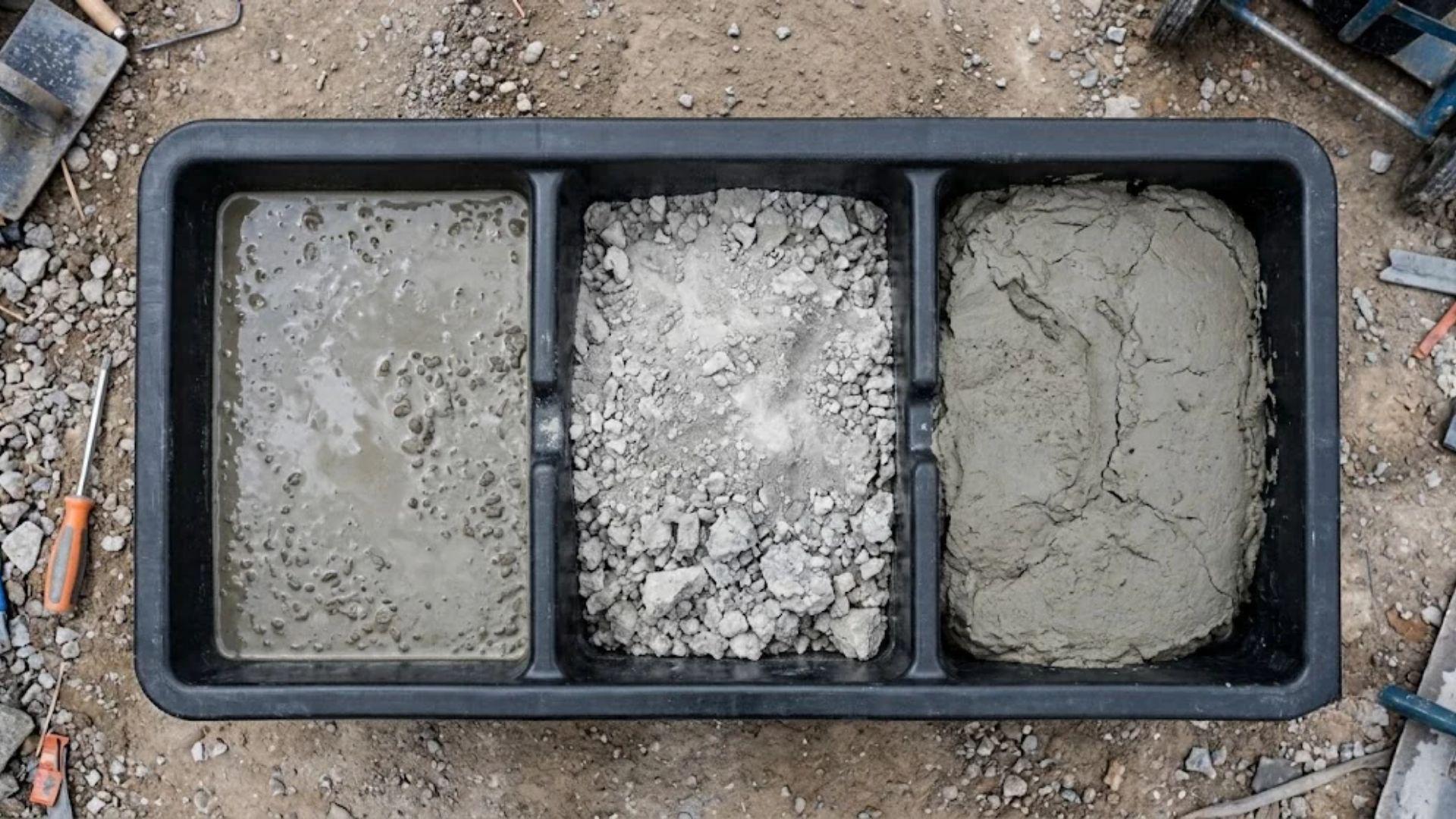
A handful of mistakes cause most of the weak, crumbly batches I’ve seen out there. Knowing them going in, saves you a redo.
Getting the Water Ratio Wrong
Number one cause of weak concrete, hands down. Too much water weakens the cured mix. Too little leaves dry pockets that never bond.
Stick close to the ratio on the bag. Add water in stages so you can stop at the right point instead of guessing your way there.
Ignoring Heat and Humidity
Hot, dry air pulls moisture out of your mix faster than you’d think. Humid, cool conditions do the opposite, slows everything down.
On a hot day, you might need a touch more water to keep it workable. Humid day, go easy, use less.
Mixing More Than You Can Pour
Concrete starts setting the second it’s wet. Batch sits in the tub too long, it stiffens up and gets hard to place right.
Mix only what you can pour and finish inside your working time. Smaller batches, worked quick, beat one big batch you can’t keep up with.
Tips for Mixing Concrete
Few habits that make hand mixing cleaner and stronger. Keep them in mind on every batch you run.
These small moves are the difference between a solid pour and a crumbly one.
- Add water slowly, in stages, never all at once.
- Mix in small batches you can pour before they start to set.
- Work quickly once the water’s in, you’ve got limited working time.
- Rinse your tools right after. Dried concrete is brutal to get off.
Do these and your mix stays strong and manageable. Skip them and you’re fighting the clock and a weak batch both at once.
The Bottom Line
Mixing concrete by hand comes down to two things: add the water gradual, mix it until it’s completely even. Oatmeal-thick consistency holds its own shape.
Gather your tools, gear up, and don’t give in to the urge to over-water. Mix small, work quick, and a hand mix holds up just as well as anything off a truck.
Frequently Asked Questions
Can You Mix Concrete in a Bucket?
Yes, for small amounts. A sturdy bucket and a mixing paddle or a small shovel does it. Anything more than a bag or two, a wheelbarrow or mortar tub is easier and lets you turn the mix right without spilling it everywhere.
How Long Do You Have to Work With Mixed Concrete?
Usually 30 to 60 minutes, depending on the mix, the heat, the humidity. Hot, dry conditions shorten that window fast. Mix only what you can place and finish in that time, and work small batches so nothing sets up in the tub on you.
Is It Cheaper to Mix Your Own Concrete or Buy Bags?
Mixing from separate cement, sand, and aggregate usually runs cheaper on large jobs, bulk materials cost less per unit. Small projects, bagged mix wins once you count your own time and the risk of getting the ratio wrong.
Can you add too much cement when mixing by hand?
Yes. Extra cement relative to the aggregate increases shrinkage and cracking risk as it cures, even though the mix feels “stronger” going in. Stick to a measured ratio instead of tossing in extra cement for insurance.