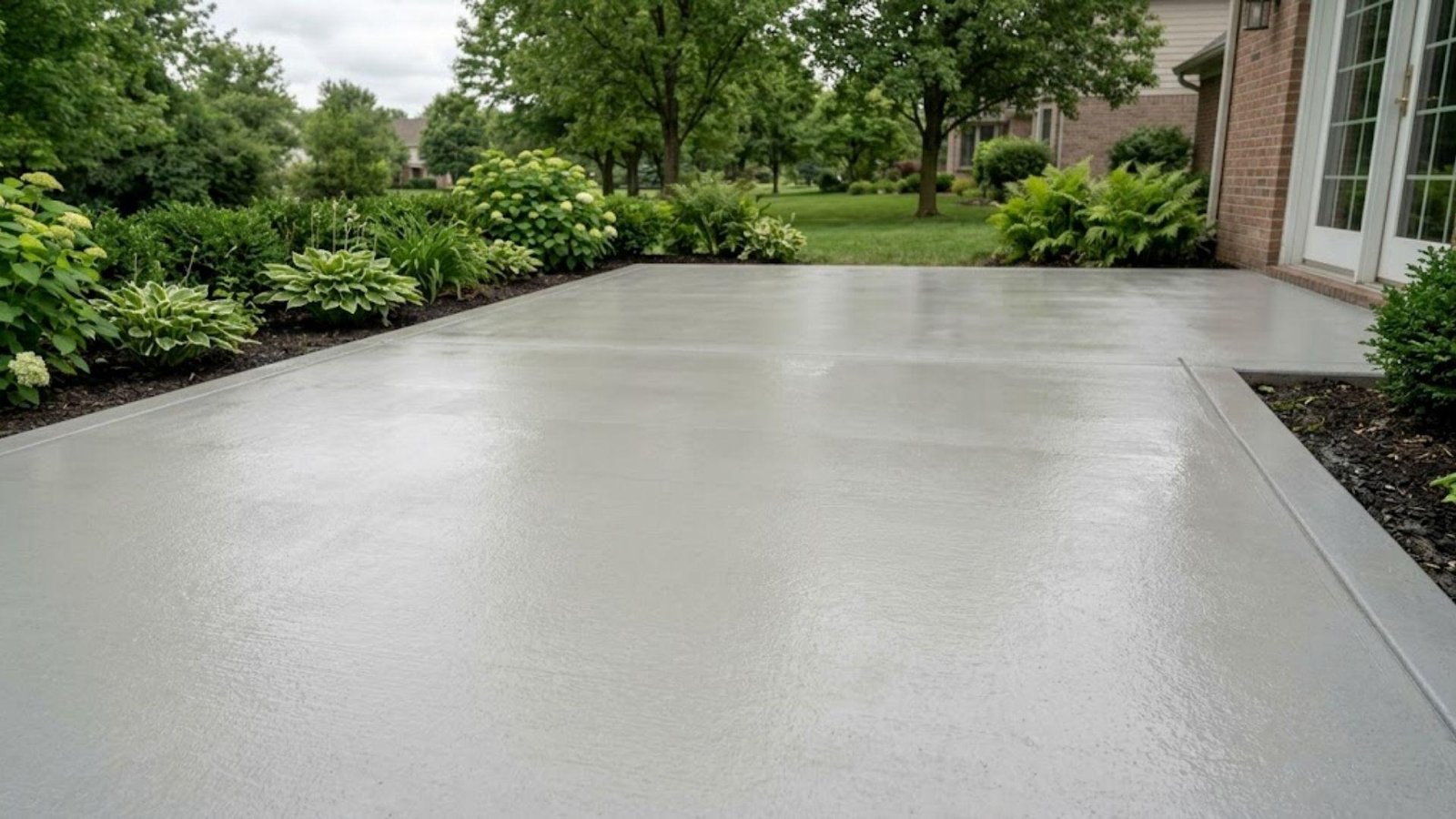
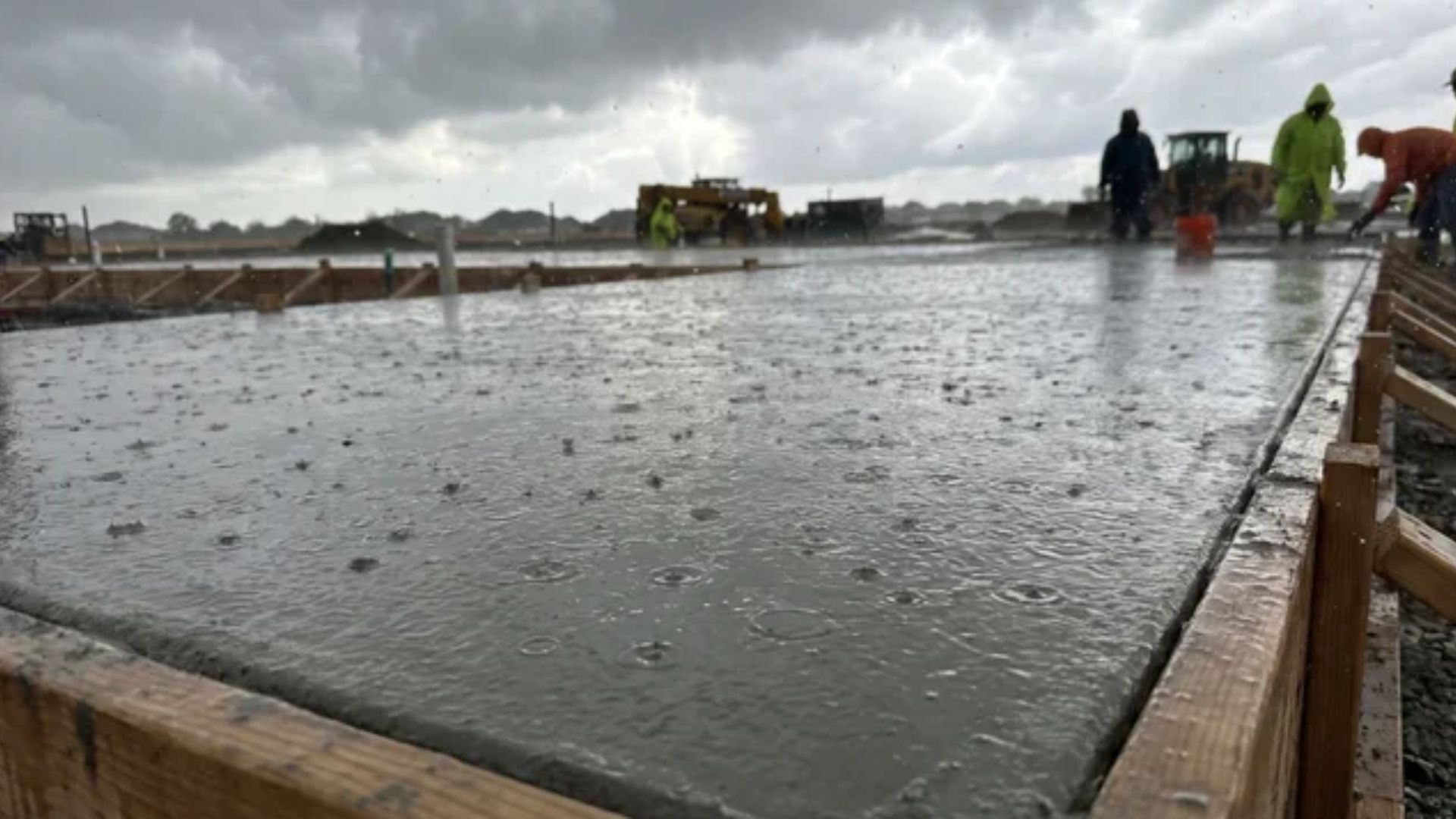
Here’s your job once the pour’s done: keep that slab wet, or keep it sealed, long enough for the cement to finish reacting with the water already in the mix.
That reaction is called hydration, and it’s the only thing building strength in that slab. It doesn’t stop the day the surface looks hard. It keeps running for days, sometimes weeks, as long as there’s water available to it.
Let the surface dry out early and hydration stalls. You get a weaker slab, a dusty top layer, more cracking down the line.
Curing isn’t about protecting the concrete while it dries. It’s about stopping it from drying before the reaction’s actually done.
I’ve poured two slabs side by side, same mix, same day, and had one come out noticeably harder than the other. The only difference was curing. So yeah, that’s not a small thing to skip.
Why Concrete Needs Curing
Most of a slab’s 28-day strength gets built in the first week, and that window is exactly when hydration is most sensitive to moisture loss.
Cut water off on day two instead of day seven, and you’re not just slowing the reaction down, you’re locking in whatever strength it had reached at that point.
The surface takes the worst of it, since that’s where moisture leaves first, which is why a poorly cured slab often tests fine structurally but dusts and spalls right at the top.
That’s the part people get backwards. Curing isn’t about protecting wet concrete from the weather. It’s about buying hydration enough time to finish the job it already started.
Water Curing Methods

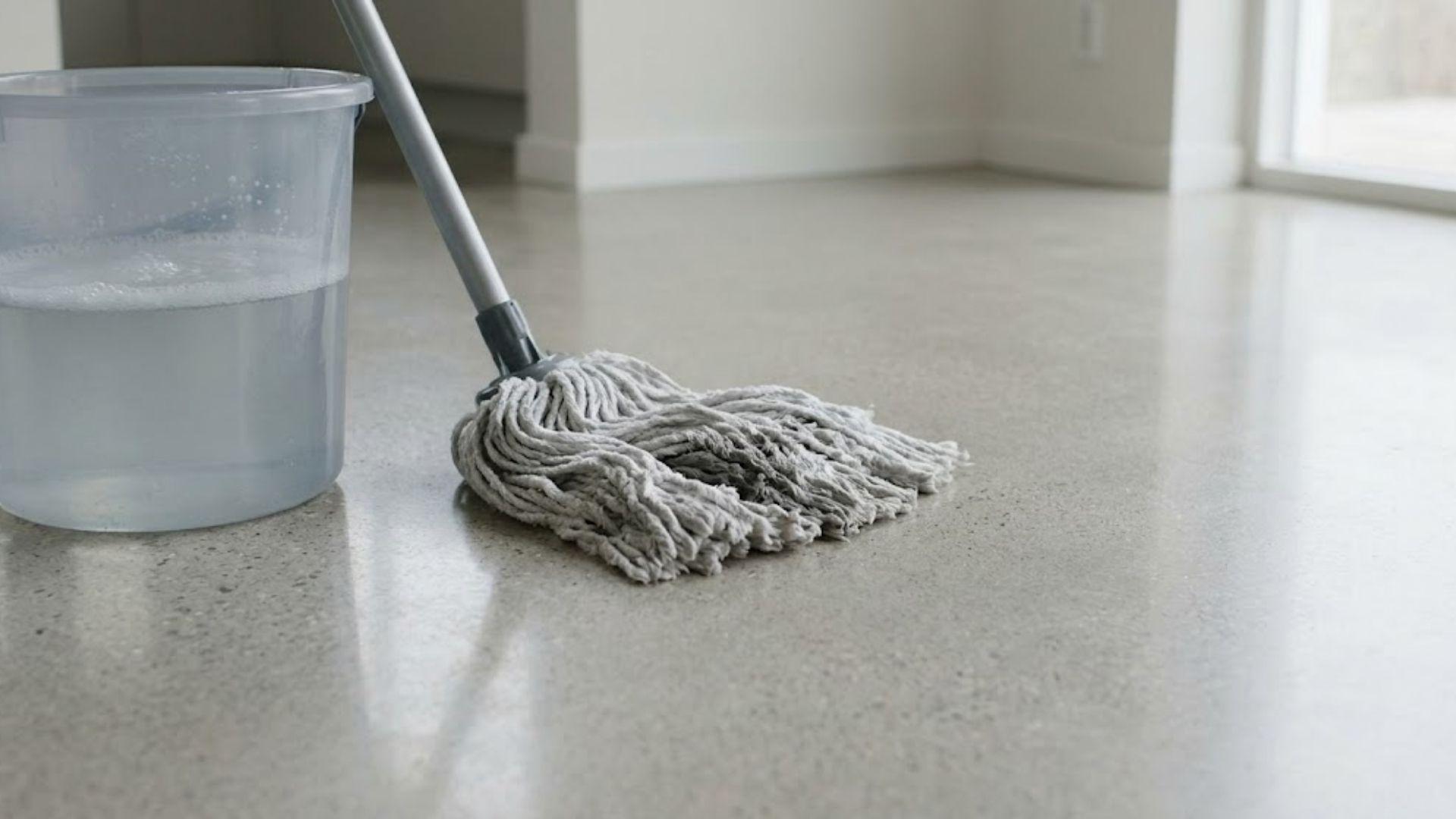
Water curing means adding moisture back into the slab instead of just holding onto what’s already there. Best in hot, dry weather, where a bare slab can flash-dry in an hour.
Ponding: dike the edges with soil or sand and flood the top. Cheap, works well on flatwork, but it’s messy and burns through water fast.
Sprinkling and fogging: a hose or fine spray running continuously over the slab. Fogging works on vertical pours too, but you’ve got to stay on it. Walk off too long and the surface dries anyway.
Wet coverings: burlap or cotton mats, kept damp, laid over the slab. You’re re-wetting them as they dry out, which holds moisture a lot longer than a bare surface would on its own.
Fogging’s my pick in hot weather. I’ve watched a slab go from wet to dry in under an hour without it.
Moisture-Retention (Sealing) Methods

Sealing’s the opposite approach. You’re not adding water, you’re trapping what’s already in the mix.
Plastic sheeting: lay it over the slab, weight the edges. Fast, cheap, stops evaporation cold. Wrinkles in the plastic leave light and dark blotching on the finished surface, so lay it flat.
Curing compounds: a sprayed-on liquid, usually wax-based, that dries into a thin membrane. One pass covers a big slab fast. Check it against whatever coating or flooring’s going down later, some compounds don’t play well with adhesives.
Leaving forms in place:keep the wood or metal forms on an extra day or two past your normal strip time. Edges dry first on any pour, so this costs nothing and protects the part of the slab that’s most at risk.
Sealing works in calm, moderate weather. Apply a membrane after the surface has already started drying and you’re trapping almost nothing. Timing’s what makes this method work or fail.
Thermal and Steam Curing

Water and sealing both assume you’re working in a normal temperature range. Thermal curing’s for when you’re not.
Hydration slows down hard in cold weather, and it stops outright once things freeze. Thermal curing keeps the reaction running, or keeps it from freezing before it’s had the chance to start.
Steam curing: live steam applied straight to the concrete. Common in precast plants, where they need the molds turned around fast.
Heating coils: embedded or surface-run heat that keeps the slab warm enough to keep reacting.
Insulating blankets: no equipment needed, just trap the heat the hydration reaction’s already generating.
This one’s not optional on a cold-weather pour. Skip it and you can lose the slab’s strength before it ever gets the chance to build any.
How to Choose the Right Curing Method
Depends on your slab, your weather, and how much time you’ve got to babysit it.
Small DIY slab: plastic sheeting or wet burlap. Cheap, forgiving, hard to mess up.
Hot and dry: active water curing, fogging especially. Sealing alone can’t keep pace with that kind of evaporation.
Cold weather: flip the priority. Insulating blankets, forms left on, thermal curing on precast and winter pours.
Big commercial job: curing compounds win on labor. One pass, no ongoing attention needed.
Match it to the conditions you’re actually pouring in, not just the size of the slab.
The Bottom Line
Three jobs, three approaches: water curing adds moisture, sealing locks in what’s there, thermal curing keeps the reaction warm enough to keep going. Pick the one that matches your weather and your schedule.
7 days minimum on a standard mix. Confirm the exact number against your mix design and your conditions.
Don’t let that surface dry out early. That’s the whole ballgame.
Frequently Asked Questions
How Long Should You Cure Concrete?
7 days minimum for a standard mix. That’s where most of the strength gain happens. ACI 308 ties the minimum curing period to strength gain too, usually around 70% of the specified compressive strength before you stop curing. Push it closer to 28 days if the schedule allows it, for the strongest, most durable result.
What Is the 4-2-1 Rule for Concrete?
A rough guideline some contractors use for minimum curing time against design strength. The numbers aren’t standardized across codes, so treat it as a reference point, not a fixed spec. Confirm against your actual project documents.
Can You Walk on Concrete While It’s Curing?
Light foot traffic, usually fine after 24 to 48 hours. It’s still gaining strength well past that point though. Vehicle traffic needs 7 to 10 days. Heavy equipment, give it the full 28 days, and confirm against your mix.
What Is the Most Effective Method of Curing Concrete?
No single best answer. Water curing, ponding or fogging, gives you strong results but needs steady attention. Plastic sheeting and curing compounds are lower-effort and work fine for most jobs. Match the method to your weather, your slab, and the time you’ve actually got.