I had a client text me three quotes for the same pool deck last month: same square footage, same coating type on paper, and they ranged from $2,200 to $6,800. Her first question was which contractor was ripping her off. Mine was: probably none of them.
Concrete coating runs anywhere from $0.50 to $15 a square foot installed, and that gap is exactly why her three quotes looked nothing alike. The coating type you pick is basically the whole story.
A basic sealer sits way down at the bottom. A metallic epoxy with decorative flakes sits way up at the top. Those two numbers are so far apart from each other that a single price tag, by itself, doesn’t actually tell you anything useful yet.
Here’s what actually narrows it down: knowing which coating type you’re even pricing, knowing what pushes your quote up or down inside that type, and knowing what gets tacked on before the job’s really done. I’ll walk through all three, then show you what a typical garage project costs in real numbers.
How Much Does Concrete Coating Cost per Square Foot by Type?
Installed concrete coating runs about $0.50 to $12 or more per square foot, and the exact number comes down to coating type. Each one has its own price band, and honestly, they don’t overlap much at all.
And I want to be clear on this part: these are material and labor together, not the shelf price of a coating product. A gallon of epoxy at a hardware store is cheap. What a contractor charges to prep the slab, mix it right, and actually apply it is a completely different thing.
I’ll admit the first time a client showed me a rock-bottom quote, I almost told her to take it. Good thing she asked me to double-check the scope first, it was missing the moisture barrier entirely.
I’ve seen people get excited about a quote that looks way below market, and then find out later it’s material-only, or it skips prep altogether. If a number looks too good, ask what it’s leaving out before you celebrate.
1. Concrete Sealer / Paint
Sealers and basic concrete paint run about $0.50 to $5.00 per square foot installed. Least durable option on this whole list, and the one you’ll probably redo soonest.
Mike covers how to actually apply one right in a separate guide. Worth keeping in mind once you start comparing it against pricier options that last years longer.
2. Standard Epoxy
Standard epoxy runs about $3.00 to $10.00 per square foot. For a typical two-car garage, that’s roughly $1,200 to $4,250.
It’s the most commonly quoted coating out there, and it holds up fine for normal home use. But it can yellow over time, and it gets brittle if the slab underneath shifts or cracks on you.
3. Polyurea / Polyaspartic
Polyurea and polyaspartic coatings cost about $5.00 to $12.00 per square foot. They cure in as little as a single day, which still catches people off guard when I mention it.
I go into why they outperform standard epoxy outdoors in the outdoor coating options guide. Short version: that’s exactly why this tier costs more.
4. Decorative Quartz, Flake & Metallic Finishes
Quartz or flake systems run $5.50 to $12.00 per square foot. Metallic swirled finishes often start around $8.00 to $10.00 and climb from there.
These cost more because they take more time and more skill.
Broadcasting flakes evenly, or working metallic pigment into a coat without it going blotchy, is genuinely not a quick job.
5. DIY Kits
DIY kits work differently than everything else on this list. They’re priced as one flat total, not per square foot, usually $200 to $800 for the whole kit. The catch is lifespan.
Most DIY jobs last only 3 to 5 years, because getting a strong bond without pro-grade prep is genuinely hard to pull off, no matter how careful you are about it. Ask me how I know.
Here’s roughly what I’ve seen jobs land at:
| Coating Type | Cost per Sq. Ft. (Installed) | Typical Lifespan |
| Sealer / Paint | $0.50 – $5.00 | 2–3 years |
| Standard Epoxy | $3.00 – $10.00 | 5–10 years |
| Polyurea / Polyaspartic | $5.00 – $12.00 | 10+ years |
| Decorative Quartz / Metallic | $5.50 – $12.00+ | 8–10+ years |
| DIY Kits | $200 – $800 total | 3–5 years |
What Determines Where Your Price Falls Within Each Range?
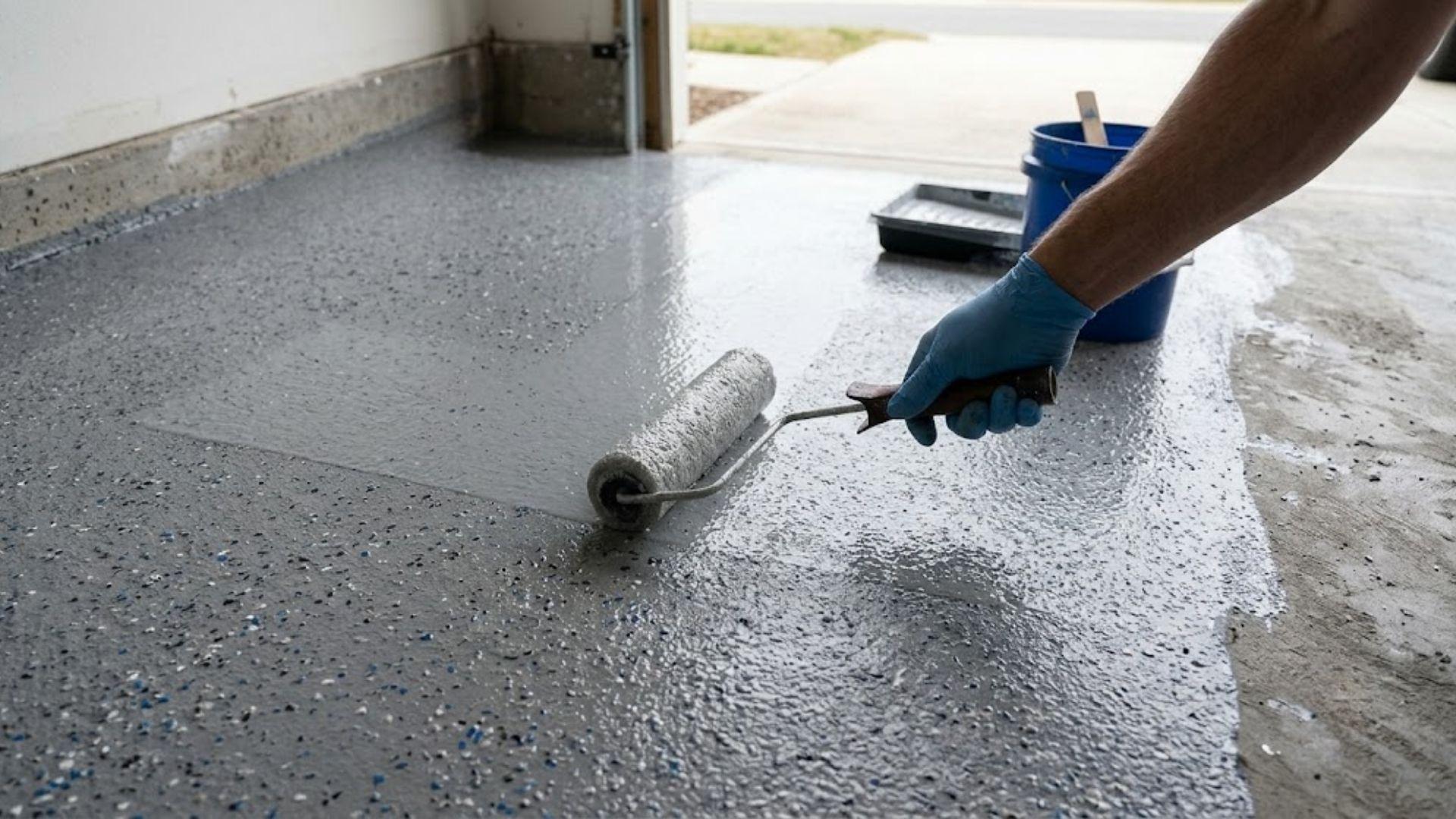
Here’s the thing most quotes just don’t explain: the same coating type can cost two or three times more per square foot depending on your specific project. Once you know why, a lot of confusing quotes suddenly make a lot more sense.
Three things move your price around inside a coating type’s range:
1. Project Size
Labor and setup costs are mostly fixed. A contractor has to load equipment, mix material, and set up containment whether the floor is 200 square feet or 2,000.
That fixed cost gets spread across however much floor is actually there.
A small single-car garage or a basement nook often lands near the top of a coating type’s range. A big shop floor or warehouse with the exact same coating lands near the bottom.
I’ve seen two homeowners both get “standard epoxy” quotes that look nothing alike per square foot, and both of them were completely fair once you factor in size.
2. System Complexity
A single-coat epoxy job costs less than a system with a primer coat, a color coat, and a clear topcoat stacked on top. Both get called “epoxy” on the invoice, which is a little misleading if nobody tells you to ask.
More layers means more cost, no matter what the square footage is.
3. Location
Labor rates aren’t the same everywhere, and that alone can shift your per-square-foot price by 15% or more compared to the national average.
A contractor in a high-cost metro area isn’t padding your bill just because their quote runs higher than some price you saw online from somewhere else entirely.
| Factor | What It Does to Your Price |
| Smaller project | Pushes you toward the top of the range (fixed costs spread over less floor) |
| Larger project | Pushes you toward the bottom of the range (fixed costs spread over more floor) |
| More coating layers | Raises price within the range, independent of square footage |
| High-cost labor market | Can add 15%+ over the national average |
If your quote looks way off from a price range you read online, don’t jump straight to assuming you’re being overcharged. Check your square footage first, how many coats you’re actually getting, and your local labor rates before anything else.
What Conditions Add to the Final Cost?
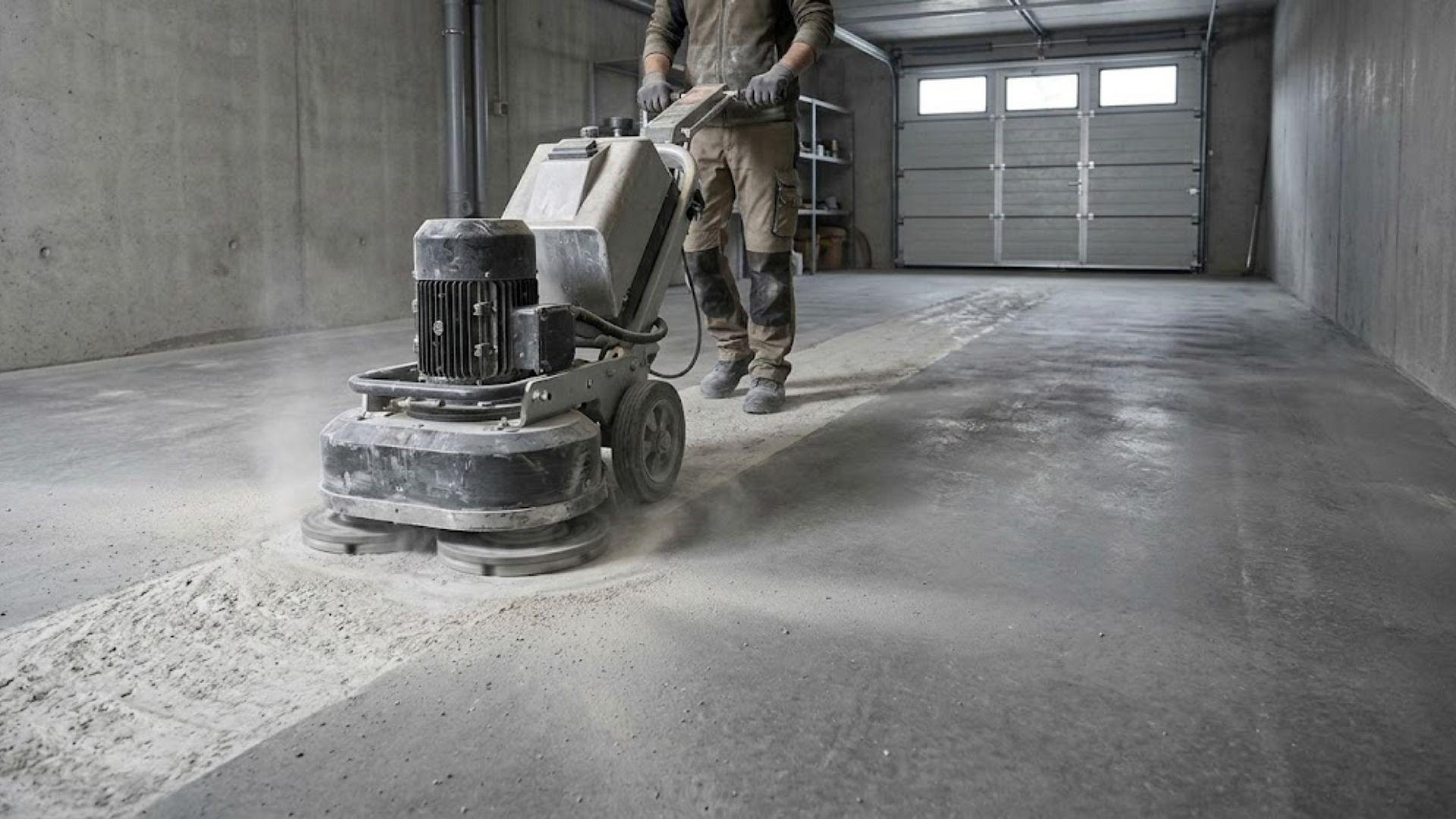
Prep work, moisture conditions, and add-ons all get billed separately from the coating itself. That’s exactly why two quotes for the “same” coating can still land far apart, and it trips people up constantly.
Here’s what typically gets added on top of the base coating price:
| Add-On | Cost | When It Applies |
| Surface prep (grinding, degreasing, crack patching) | $2.00 – $5.00 per sq. ft. | Almost always, coatings won’t bond to a dirty or uneven slab |
| Moisture barrier | $1.00 – $3.00 per sq. ft., or a flat $1,000 – $2,000 | Only if the slab tests high for moisture vapor |
| Vertical surfaces, steps, stem walls | Varies by area | If you want more than just the floor coated |
| Non-slip texture (shark-bite finish) | Varies | Optional, for safety |
| Custom logo or color blend | Varies | Optional, cosmetic |
Skipping a moisture barrier on a slab that actually needs one is one of the most common reasons coatings fail early.
Moisture pushes up from underneath and lifts the coating no matter how well that top layer was applied, so this honestly isn’t a step to shop around on if your slab tests high. Don’t. Just don’t.
The smaller add-ons at the bottom of that table aren’t required on their own, but they stack fast. Pick two or three and they can add up to more than the moisture barrier line, easily.
For scale: a 20×20 garage is 400 square feet. A standard epoxy job on that footprint, before any add-ons, runs about $1,200 to $4,000. Prep, moisture work, or extras push it higher from there.
Which Concrete Coating Is Worth the Cost?
Whether a coating’s worth the money comes down to one thing, and it’s not what most people assume: does it match how you actually use the space? Not whether it’s the cheapest option on the list, and not whether it’s the fanciest one either.
| Coating Type | Best Fit | Cost per Sq. Ft. | Lifespan | Why It’s Worth It |
| Sealer / Paint | Low-traffic areas, tight budget | $0.50 – $5.00 | 2–3 years | Cheapest upfront, as long as you stick to the reapplication schedule |
| Standard Epoxy | Most home garages | $3.00 – $10.00 | 5–10 years | Handles daily traffic, tools, and spills without premium pricing |
| Polyurea / Polyaspartic | Garages that can’t be out of use for days | $5.00 – $12.00 | 10+ years | Fast cure, stays flexible, holds up better against UV and heavy use |
| Decorative / Metallic | Finished garages, showroom-style floors | $5.50 – $12.00+ | 8–10+ years | Worth it when looks matter as much as durability |
A few things worth knowing before you pick one:
- A sealer is only cheap if you actually stay on schedule. Skip a reapplication cycle and you’re right back to a bare, worn slab, which erases the savings completely.
- Polyurea and polyaspartic cost more than epoxy for a reason beyond speed; already covered that above, and it’s reflected straight in the price tag.
- Decorative finishes are charging for labor as much as material. Broadcasting flakes evenly, or working metallic pigment without it going blotchy, just takes more time on the job. That’s a big part of why that tier costs what it does.
- Judge by cost per year, not the sticker price. An $800 DIY kit that needs replacing in four years, and a $4,000 epoxy job that lasts eight, can land at a pretty similar yearly cost. But the pro job holds up evenly the whole time, where the DIY floor tends to wear unevenly near the end.
Wrapping Up
That client ended up going with the $4,100 quote in the middle, not because it was cheapest, but because it was the only one that actually listed the moisture barrier by name. That’s usually the tell.
Price out your own job the same way: coating type, what’s actually driving the number up or down inside that type, and what your slab needs in prep before any of this even starts. Anchor on that instead of one square-foot figure you saw online, and you’ll spot the quote that’s quietly missing something it shouldn’t be.
Frequently Asked Questions
Are concrete coatings worth it?
For most garages and high-traffic floors, yes. A mid-range coating like epoxy or polyaspartic usually outlasts paint or sealer by several years, which makes up for that higher upfront cost. For low-traffic spots or tighter budgets, a basic sealer still works fine, as long as you reapply it on schedule instead of letting it wear through on you.
How much does it cost to epoxy a 20×20 garage floor?
A 20×20 garage is 400 square feet. At standard-epoxy rates of about $3 to $10 per square foot, that’s roughly $1,200 to $4,000 for the coating alone. Surface prep, a moisture barrier, or add-ons get priced separately on top of that.
How long does concrete coating last?
Depends on the type. Basic sealers or paint often need redoing within 2 to 3 years. Standard epoxy usually holds up 5 to 10 years with normal home use. Polyaspartic or polyurea systems can last 10 or more years, thanks to better flexibility and UV resistance.
What is 20 times stronger than epoxy?
This usually points to polyurea or polyaspartic coatings, which some brands market as far tougher than standard epoxy thanks to their flexible, fast-curing makeup. That “20 times” figure usually comes from one specific product’s marketing, not some industry-wide lab test, so I’d take exact multipliers like that with a grain of salt.