
Grab the wrong cleaner and you can ruin a concrete floor in one pass. I’ve seen it happen. The label on your go-to spray doesn’t care what kind of concrete you’ve got, but your floor does.
A sealed, polished, or painted floor needs a totally different approach than a raw slab or an outdoor patio. Mix that up and you’ll either dull a finish that took years to build, or waste your afternoon scrubbing with something too weak to touch garage grease.
Here’s how to clean concrete floors the right way: tell your floor type apart, use the correct method, dodge the mistakes that cause real damage, and protect the floor once you’re done.
How Do You Prepare a Concrete Floor for Cleaning?
Not all concrete cleans the same way. The method depends on your floor’s finish, and figuring that out comes before anything else.
Start by clearing the space. Move furniture, rugs, storage bins, anything sitting on the floor needs to go. Then sweep it with a soft-bristle broom, or run a vacuum or dry dust mop over the whole thing.
I know sweeping feels like the step you can skip. Don’t skip it. Loose grit turns into sandpaper the second it gets wet.
Drag a damp mop over unswept dust and sand, and you’ll grind tiny scratches right into the surface. On polished or stained concrete, those scratches show up clear under direct light.
Once it’s clear, figure out what you’re actually dealing with:
- Sealed, polished, stained, or painted concrete has a protective layer on top. That layer’s what you’re cleaning, not the raw concrete underneath.
- Unsealed, raw concrete, plus most outdoor slabs and garage floors, has no layer like that. It can take a lot more punishment.
This is the whole reason that bottle of cleaner working great in your garage can wreck a sealed basement floor. Acidic or harsh products, vinegar, bleach, strong degreasers, chemically eat away at sealers and polish over time.
The damage shows up as a dull, etched, or patchy spot that no amount of mopping ever fixes. On raw concrete, there’s no finish to protect, so those same harsh products aren’t just safe. They’re often exactly what you need.
What Are the Steps to Clean a Concrete Floor?
Your next move depends on which situation matches your floor. Find yours below and stick to it instead of mixing steps from different ones.
1. General Indoor Floor Cleaning
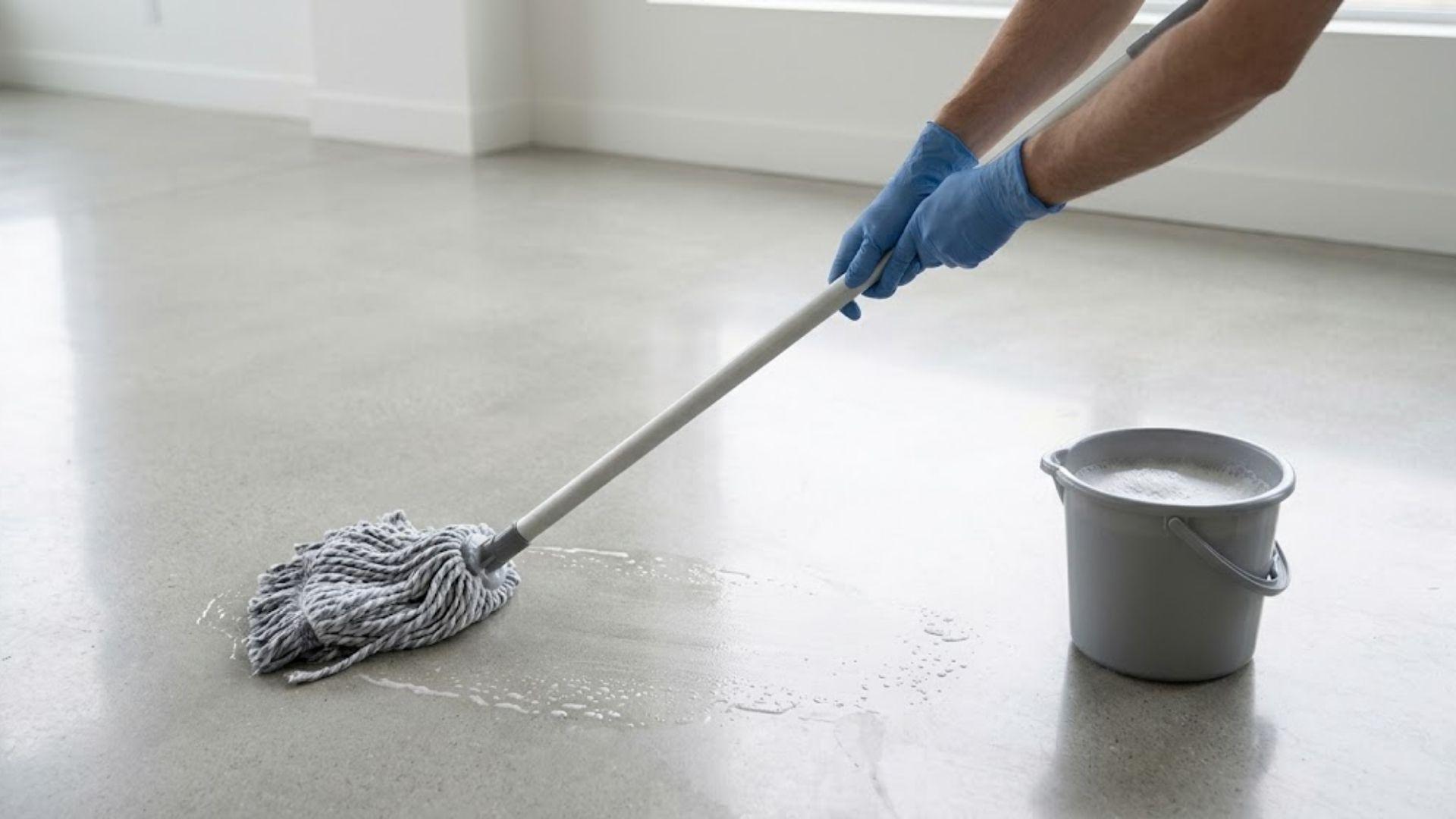
Floor’s sealed, polished, stained, or painted… mix warm water with a mild, pH-neutral cleaner. Dish soap or Castile soap both work fine, and so do pH-neutral concrete cleaners made for this exact job.
Work in sections instead of flooding the whole room. Use a well-wrung mop or a microfiber mop so you’re not leaving standing water sitting on the finish.
Rinse your mop often and don’t let water pool in one spot too long. Even a mild cleaner left sitting can leave a faint film on polished concrete if you don’t pick it back up fast enough.
2. How to Clean Unsealed Concrete Floors Indoors: Removing Oil, Grease, or Rust Stains
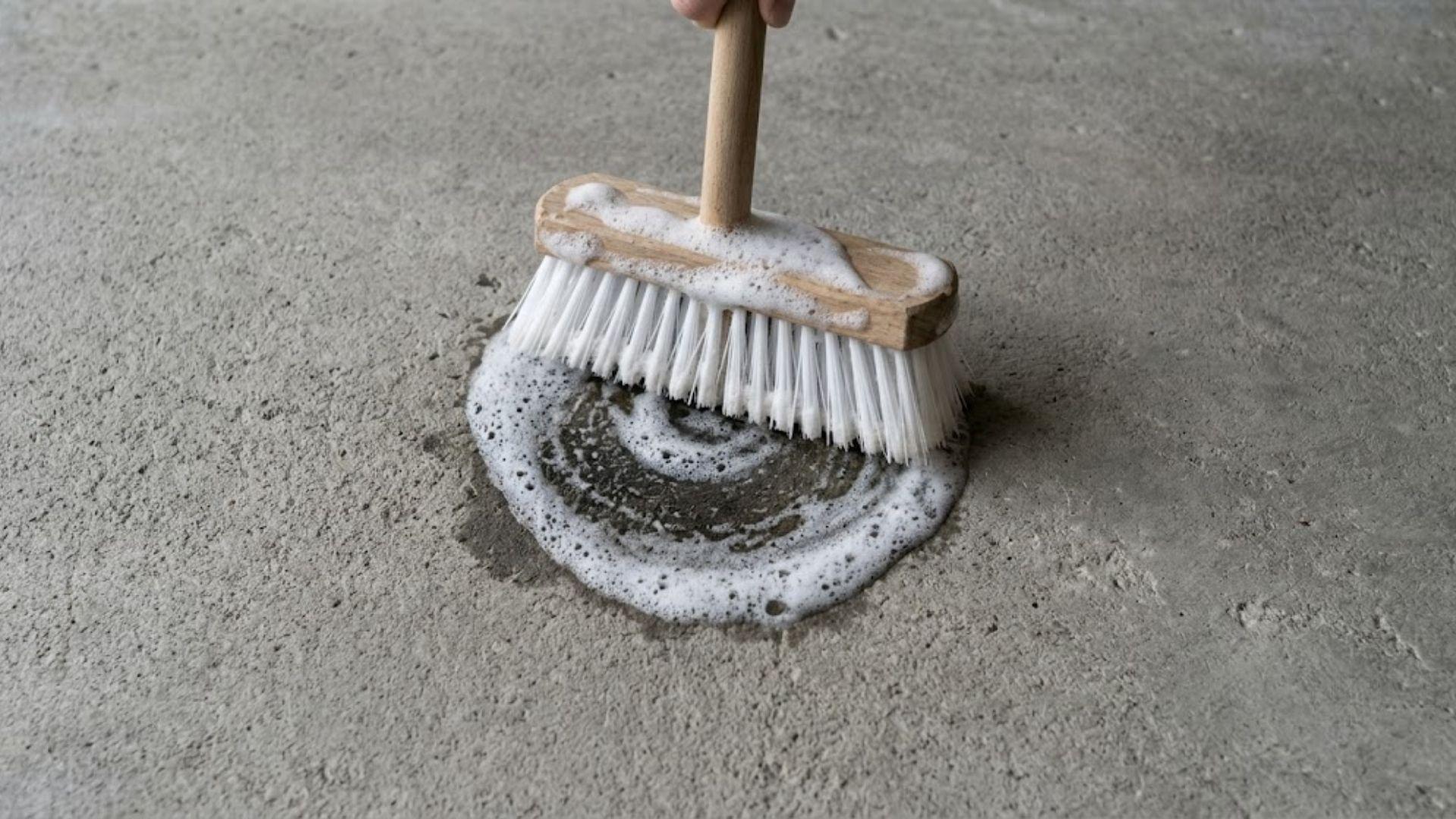
For most stains, grab a stiff nylon scrub brush and hot water mixed with dish soap or a concrete degreaser. Work it in small circles right over the stain instead of scrubbing the whole area.
This is where floor type matters again. Only on raw or unsealed concrete, you can bring out hydrogen peroxide, a baking soda paste, or diluted bleach for the tougher stains.
For heavier buildup on raw or unsealed concrete, trisodium phosphate, TSP, mixed with water is another one worth keeping in the garage. Cuts through grease faster than dish soap alone, but it’s strong enough that it stays off any sealed or finished floor, same reason as bleach.
Use those same stronger treatments on a sealed or stained floor and you’re asking for trouble. I’ve seen this leave a permanent light patch right where the stain used to be, because the chemical’s reacting with your sealer, not just the stain.
3. Cleaning Outdoor Slabs or Garage Floors
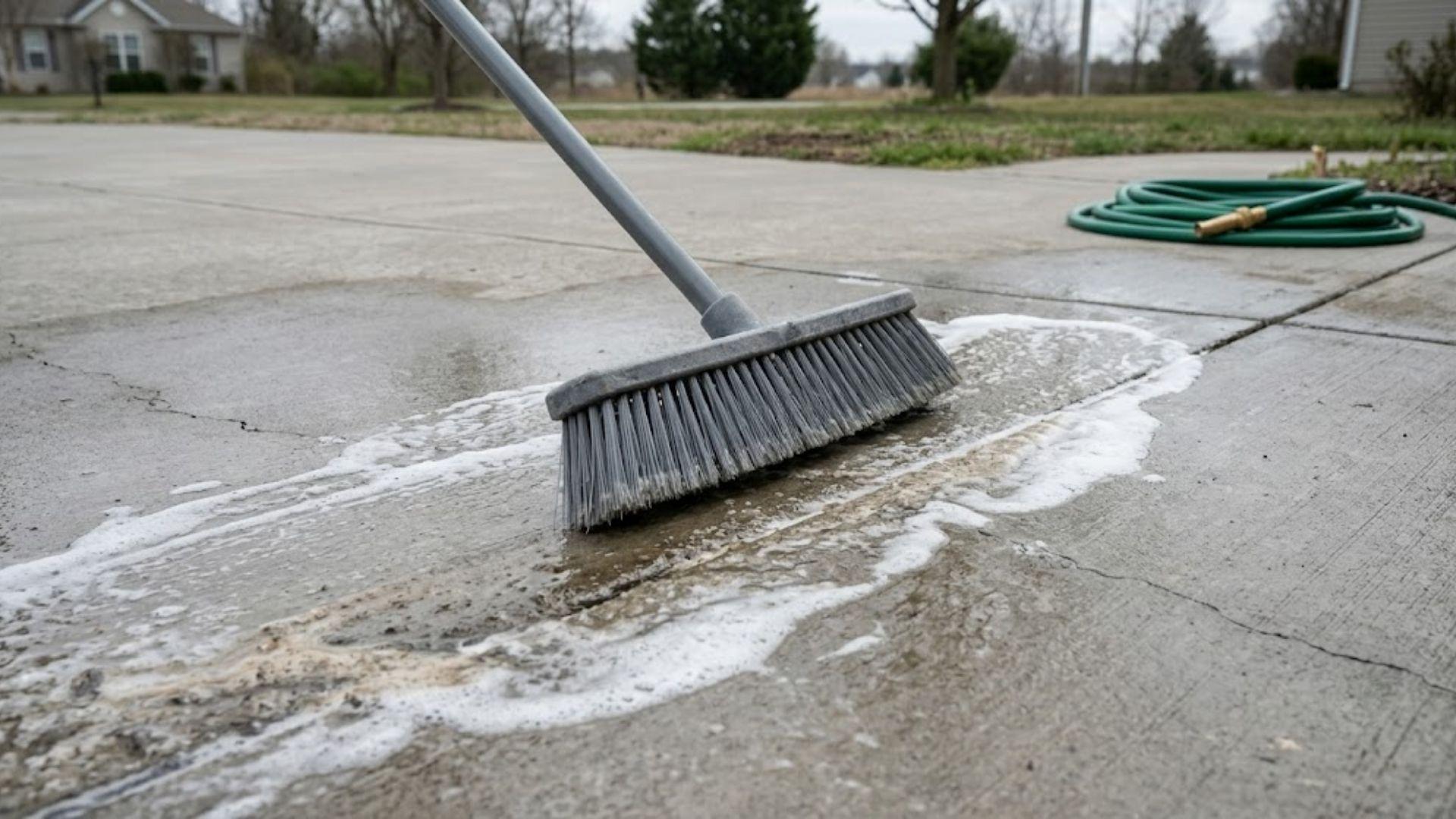
Wet the slab light first. Then apply an outdoor concrete cleaner or an oxygen bleach cleaner and let it sit 15 to 20 minutes so it’s got time to break the grime down before you scrub.
Work the surface with a stiff nylon-bristle push broom or a deck brush. Rinse it thoroughly with a garden hose, or a pressure washer if you’ve got one.
Pressure washer, keep the pressure moderate and the nozzle moving. This is the part that trips up most people doing garage floors. Hold that nozzle too close in one spot, and you’ll carve thin lines into the concrete that show up obvious the second it dries.
What Mistakes Ruin a Concrete Floor While Cleaning It?
A handful of mistakes cause almost all the damage I’ve seen people do to their own concrete. They apply no matter what kind of floor you’ve got.
| Mistake | What Happens |
| Harsh cleaners on sealed concrete | Vinegar, bleach, and heavy degreasers attack the finish layer. The damage isn’t instant, it shows up gradually as a dull patch or faint etching once the floor dries and catches light different than the rest of the room. |
| Mixing ammonia with bleach | Both get recommended separately for stubborn residue, and that’s exactly the trap. Combined, they produce . Keep them out of the same bucket, or even the same closed-up room back to back. |
| Going too hard with the pressure washer | Hold the nozzle too close or run the pressure too high, and you’ll etch raw concrete the same way a harsh chemical etches a sealed one. On a sealed floor, too much pressure can physically strip the sealant right off. |
You only remember one of these, make it the ammonia-bleach rule. That one’s not about your floor. It’s about you breathing safe in the room while you clean it.
How Do You Dry and Protect the Floor After Cleaning?
Drying your floor right is what makes the whole job actually stick. Rush this part and you’ll undo a lot of the work you just put in.
Right after rinsing or mopping, squeegee off the standing water or go over it with a clean towel or dry mop. Pull up as much moisture as you can before you walk away.
Then let it air-dry completely. For a deep scrub, give it a full day or two. Closer to 48 hours if the room’s humid or doesn’t get much airflow..
That full window matters more than it looks like it should. Put furniture back or slap on a sealant too early, and you trap moisture underneath, which invites back exactly the kind of staining you just spent an hour scrubbing out.
Speaking of sealant: reapply a concrete sealer every 2 to 5 years, this may depend on foot traffic and the sealer type, so keep an eye on it rather than marking a calendar.
A well-sealed floor resists oil and stains before they ever set in, which means less scrubbing and fewer stain-specific treatments next time you’re down here doing this again.
Wrapping Up
Cleaning concrete well isn’t about finding one magic product. It’s about matching your method to your floor.
Figure out whether you’ve got sealed or raw concrete before you touch a cleaner. Follow the steps for your situation. Steer clear of the mistakes that cause lasting damage. Then dry it right and keep up with sealant every few years.
Do that, and you’re not just cleaning the floor once. You’re setting yourself up to make every cleaning after this one a lot easier.
Frequently Asked Questions
What’s the best thing to clean a concrete floor with?
A mild, pH-neutral cleaner like dish soap or Castile soap mixed with warm water works for most sealed, polished, or painted concrete. Raw, unsealed, or outdoor concrete, go with a dedicated concrete cleaner or degreaser. Handles tougher dirt without damaging the surface.
What should you avoid using on concrete floors?
Skip vinegar, bleach, and other acidic or highly alkaline cleaners on sealed, polished, or stained concrete. They can etch or dull the finish. And never mix ammonia with bleach. That combination creates a dangerous reaction no matter what floor you’re cleaning.
Will Dawn dish soap clean concrete floors?
Yes. Dawn or any mild dish soap diluted in warm water is a safe, solid everyday cleaner for sealed, polished, or painted concrete. Gentle enough to protect the finish while still cutting through everyday dirt and light grime.
Can I use a Swiffer WetJet on concrete floors?
Yes, for light, routine cleaning on sealed or finished concrete floors. Raw, unsealed, or heavily soiled concrete, it’s not bringing enough scrubbing power. You’re better off with a mop and a dedicated cleaner for those.