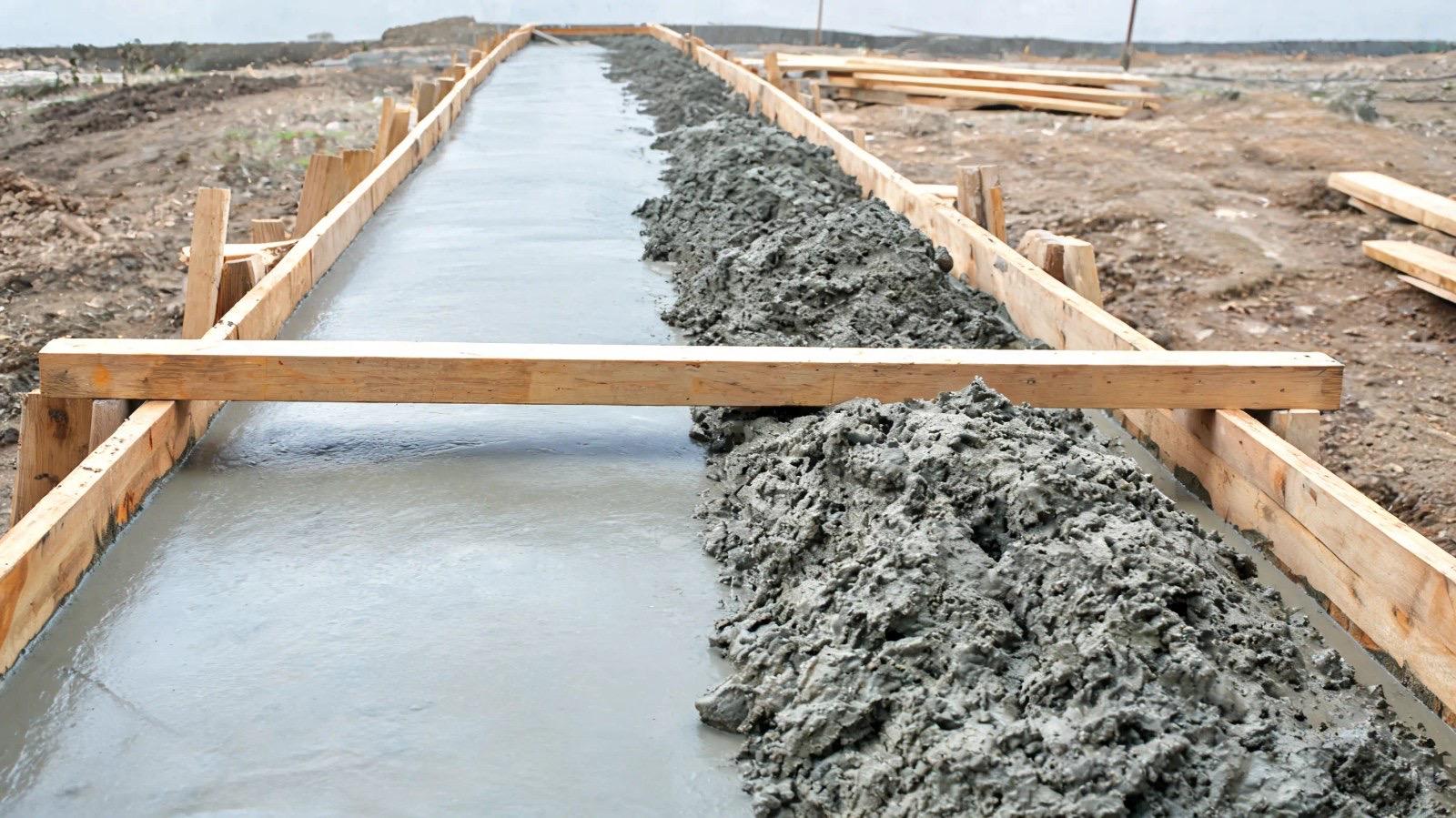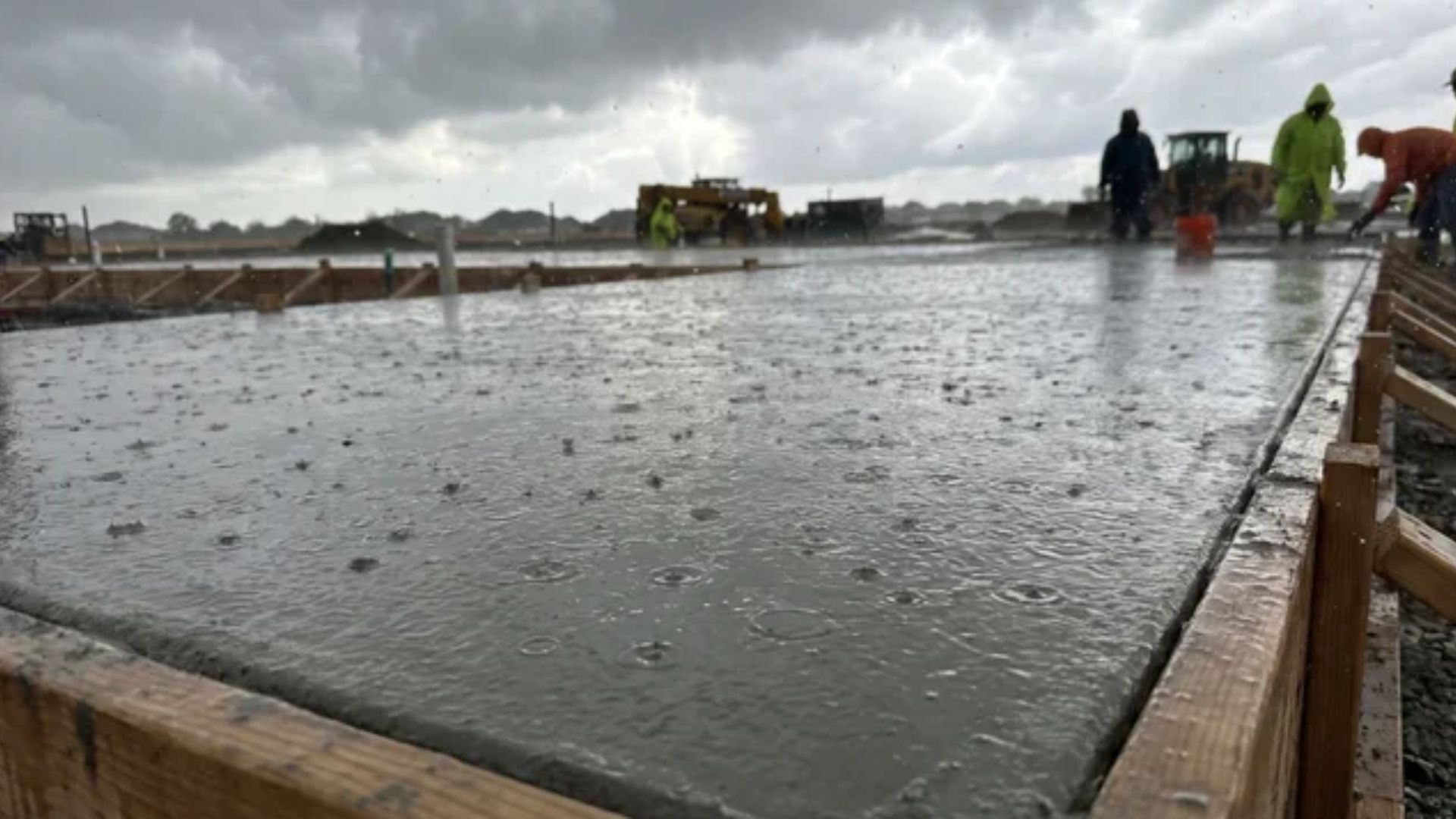
I once had a pour get hit by a sudden shower once, that wet cement smell coming up off hot concrete right as the drops started.
The crew just stopped and looked at me. Do we keep going or shut it down?
Now, here’s what most guys get wrong about it: it’s not really about whether it’s raining. It’s about how hard it’s coming down, and how far along that slab already is.
Get the timing wrong and you can lose hours of work right down the driveway.
Can You Pour Concrete in the Rain?
Yes, in light rain. Heavy rain, no. You don’t want to be out there in that.
A light drizzle won’t hurt a pour if you’re ready to cover it fast. I’ve finished clean slabs through a steady mist plenty of times, just needed a tarp on standby.
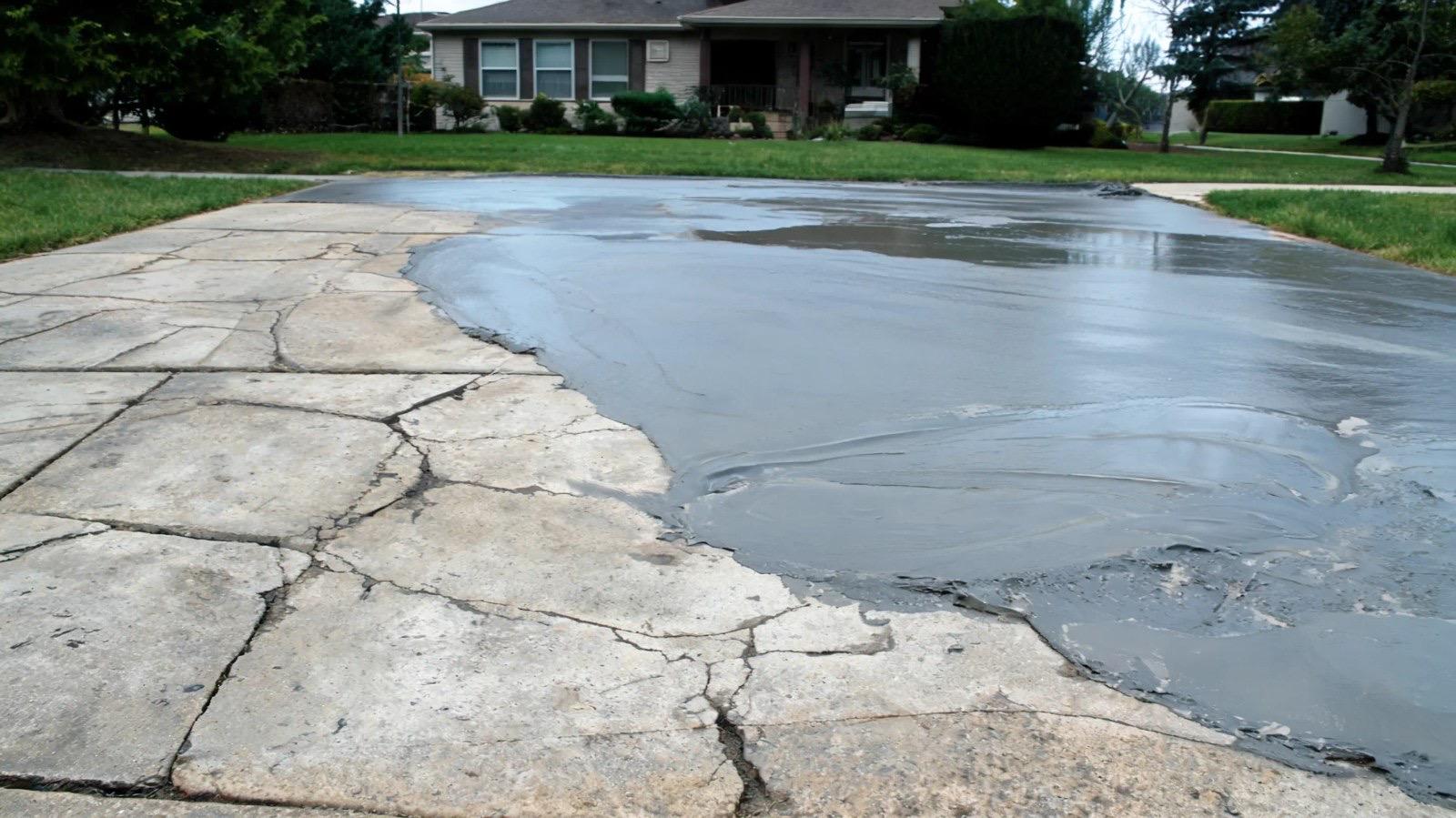
Heavy rain is where it goes bad. I’ve seen a slab wash out in under an hour because a crew tried to push through instead of pulling off and covering up.
So that’s the real question. Not because it is raining, but how hard, and how fast you can react to it.
Why Rain Damages Fresh Concrete
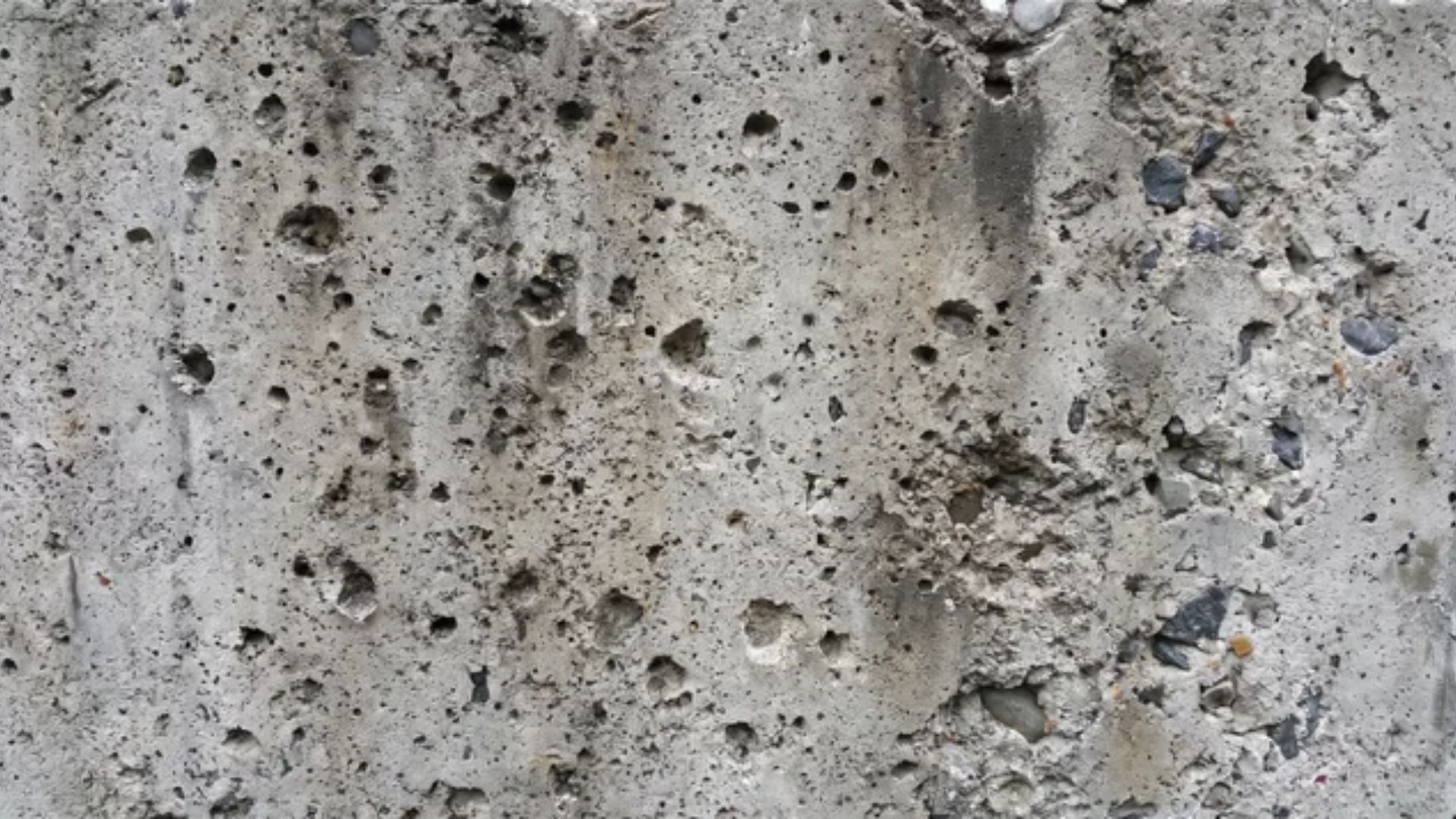
Rain doesn’t just mess up the top of the slab. It can hurt it three different ways, and only one of those is cosmetic.
Start with the mix. Every batch gets measured to a specific water-to-cement ratio, and that ratio is what gives you your strength number.
Add rainwater on top of that and you’re diluting the mix, weakening the bond as it cures. You end up with a slab that’s softer and more brittle than what you ordered.
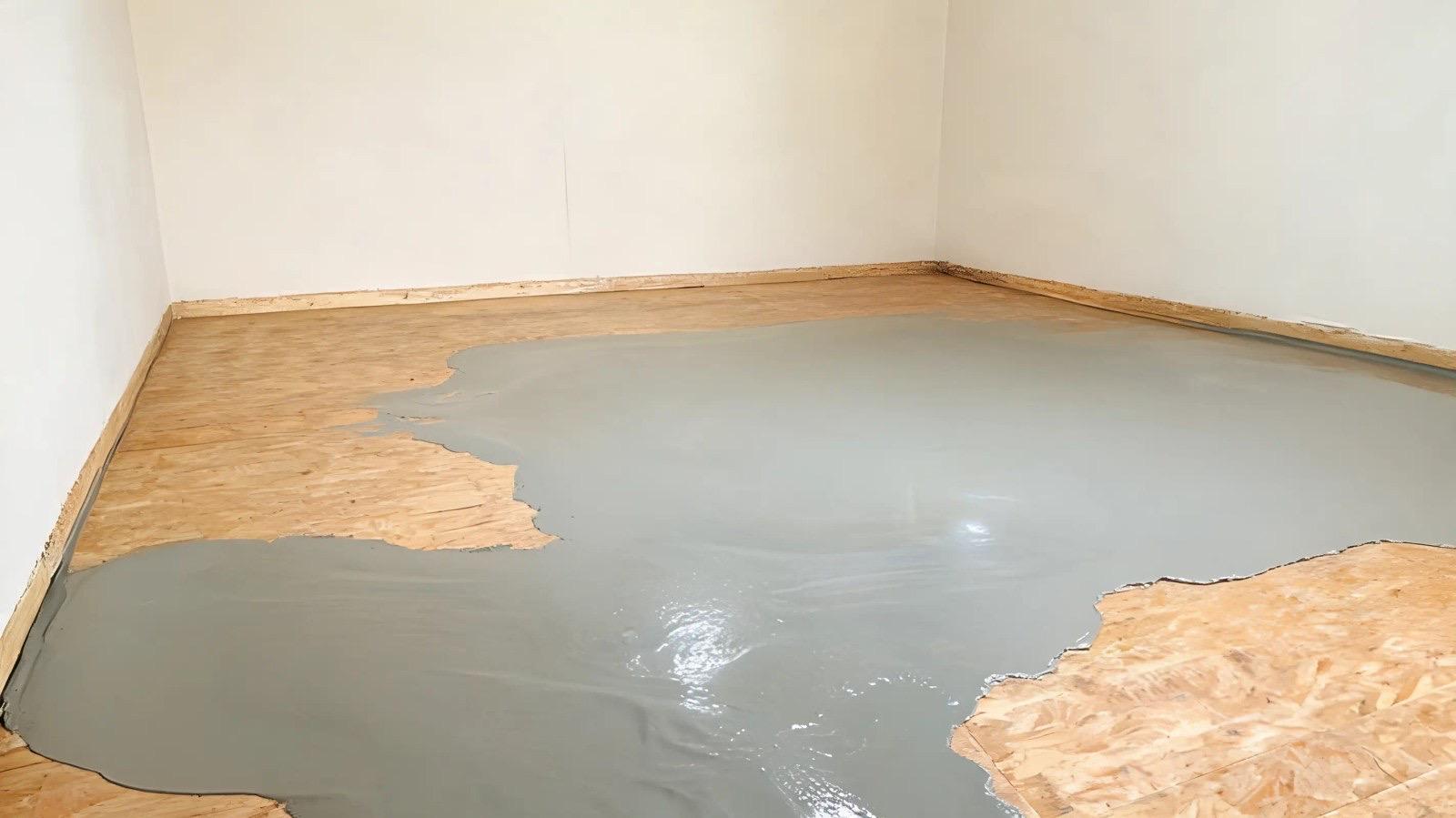
Then there’s the surface. Heavy drops will pit and dimple the paste while it’s still soft, and a real downpour can wash it off completely.
And don’t forget the ground underneath. Pour onto a wet or waterlogged base and you’re undermining the subgrade, trapping moisture under there.
That’s a separate problem from anything happening on top of the slab.
How to Protect New Concrete From Rain
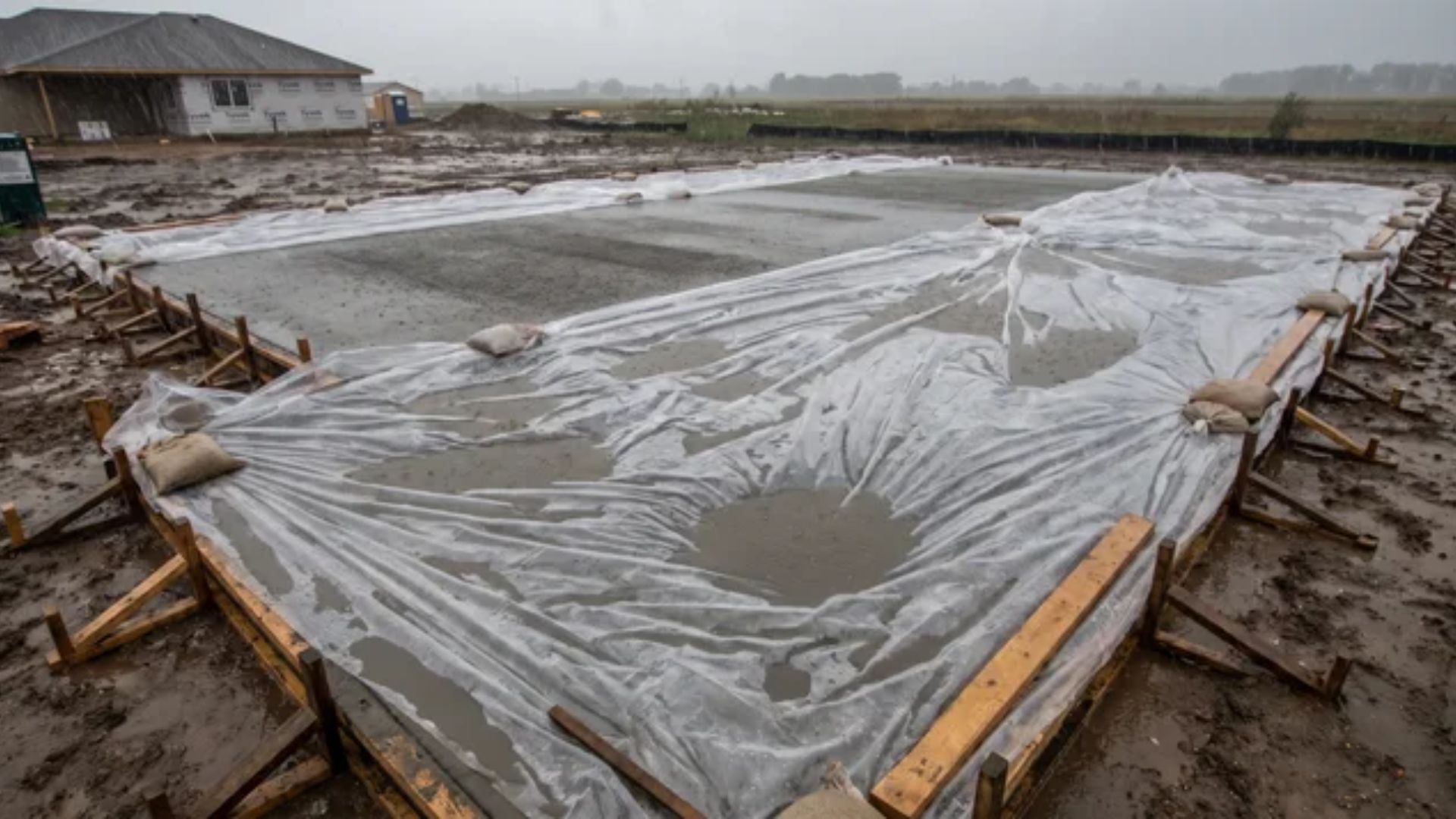
If rain starts mid-pour, how fast you move matters more than anything else. Two mistakes make it worse than the rain itself.
Here’s your sequence if rain catches you during or right after a pour:
Stop pouring when the second heavy rain starts. Don’t try to finish out the section you’re on.
Cover the fresh concrete with plastic sheeting or tarps right away. Keep that cover from touching or dragging on the wet surface, or it’ll mark up your finish.
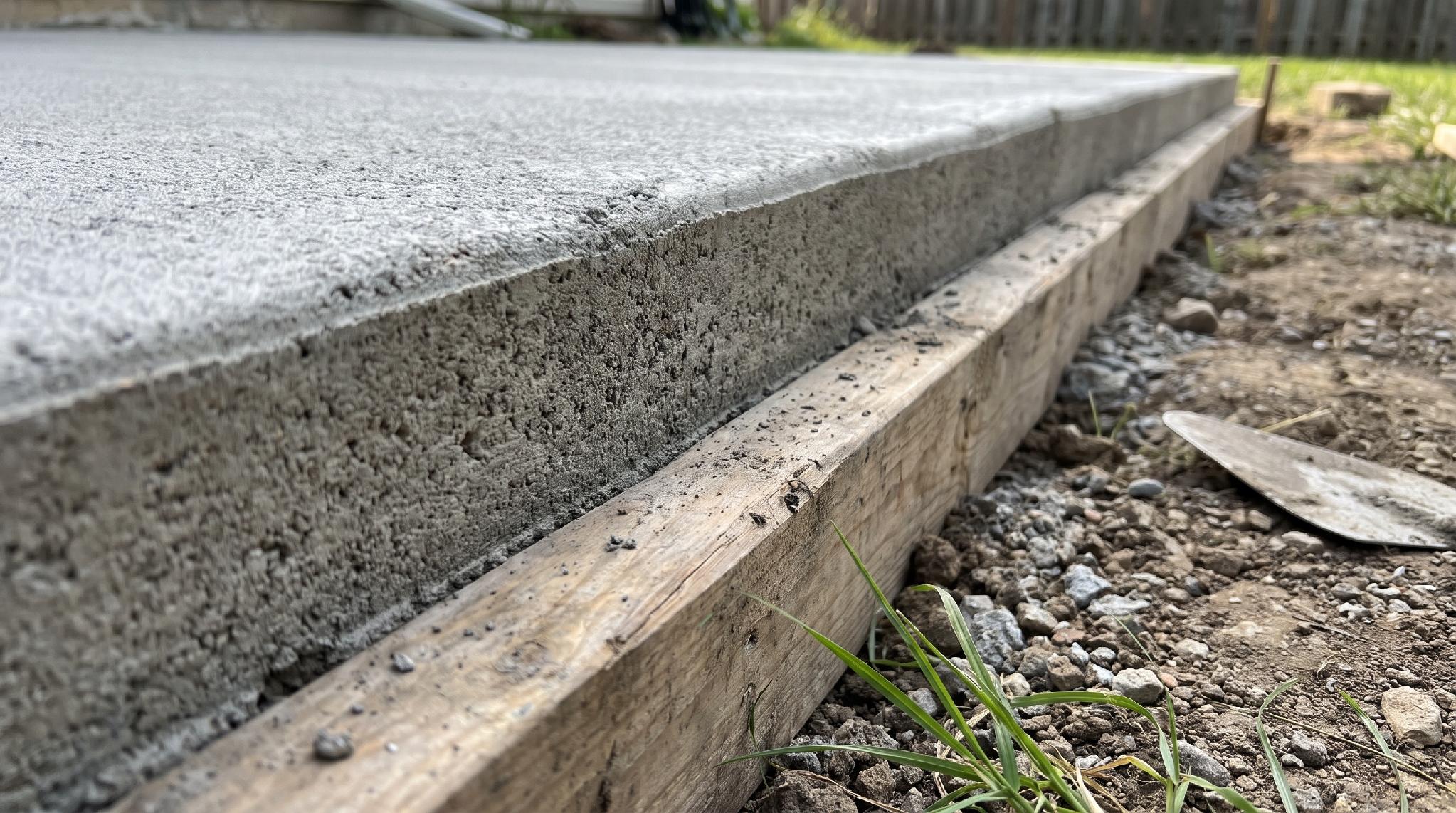
Cut a small channel, or slice the form edge, so standing water has somewhere to go.
Never trowel rainwater into the mix. Never throw dry cement on top to soak up a puddle either. Let that water run off or push it away instead.
Follow that sequence and most pours come through a rain scare fine.
Once the rain clears, don’t rush into finishing. Check the slab for soft spots or weak, mushy paste before you float it or let anybody walk on it.
A few minutes checking here saves you from a slab that looks fine today and flakes apart on you later.
How Long Does Rain Affect Fresh Concrete?
It’s not about how long the rain lasts. It’s about where your slab is in the cure.
A five-minute shower at hour one can do more damage than an hour of drizzle at hour ten. The clock that matters is the concrete’s clock, not the weather report.
Here’s how that clock breaks down:
- 0-4 hours: Most vulnerable stretch there is. Even moderate rain can wash out the paste here, so this is the window you watch hardest.
- 4-8 hours: Mix has started setting up. Can usually take a light mist, though I’d still cover it if you’ve got the option.
- 8-10 hours and past it: Here’s a piece most people never hear: a gentle rain can actually help at this stage. Slows the cure down, keeps the surface from drying out too fast. That’s a good thing, as long as the water isn’t pooling up on you.
- 24-48 hours: Real resistance built in now. Rain almost never causes a problem at this point.
- 28 days: Full cure. Rain’s got no real effect on the slab at all once you’re here.
The Bottom Line
So, can you pour concrete in the rain? Light rain, yes, tarp close by. Heavy rain, no, not if you can help it.
The part to remember is the timing. A slab that’s been curing eight or ten hours can actually benefit from a gentle shower, and that same rain an hour into the pour could ruin the whole thing.
Watch the clock, not just the forecast. Keep tarps on hand, check the sky before you start, and you’ll stay out of most of the trouble rain causes on a pour.
Frequently Asked Questions
What is the 90-minute rule for concrete?
Concrete needs to be poured and finished within 90 minutes of the water going in, since the mix starts setting after that. Rain shortens that window further.
How much rain is too much for pouring concrete?
Light drizzle you can manage with quick coverage. Steady or heavy rain, you can’t. It dilutes the mix and can wash out the surface, so reschedule if heavy rain’s in the forecast.
Is it okay if it rains 12 hours after pouring concrete?
Yes. By 12 hours the slab’s usually hydrated enough to take light rain, and it can even help the cure, as long as water isn’t pooling.
How long does concrete need to cure before rain won’t damage it?
24 to 48 hours gets you real resistance, though the slab’s still gaining strength past that. Full protection comes around 28 days, when rain stops affecting it altogether.