
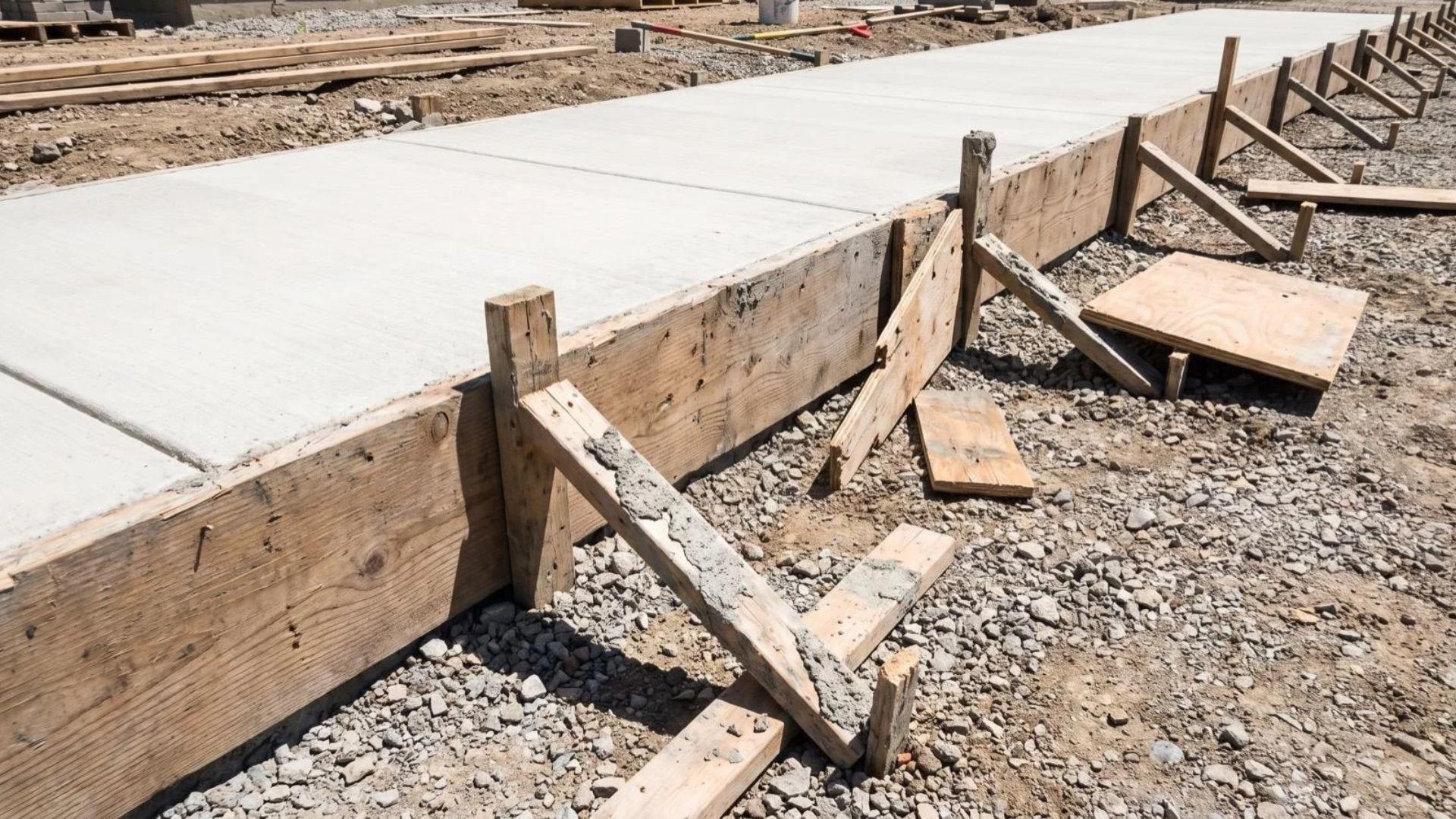
When to remove concrete forms depends entirely on what you poured. Some structures are ready for their forms to come off inside a day. Others need those forms staying put for weeks.
That gap’s bigger than most people expect. I’ve stripped a sidewalk form in under 48 hours and left a column form on the same job site for three weeks, both the right call.
You can typically pull forms 24 to 48 hours after pouring on standard side forms, walls, small slabs. That timeline moves a lot once you’re talking about anything load-bearing, and here’s exactly how.
General Removal Timelines by Project Type
24 to 48 hours for most side forms, once the concrete’s hard enough to resist edge damage and footprints. Anything carrying structural load needs a lot longer than that.
Here’s your breakdown by structure type:
- Sidewalks, driveways, patios (slabs): 24 to 48 hours. Concrete should be hard enough to walk on without leaving footprints or chipping the edges.
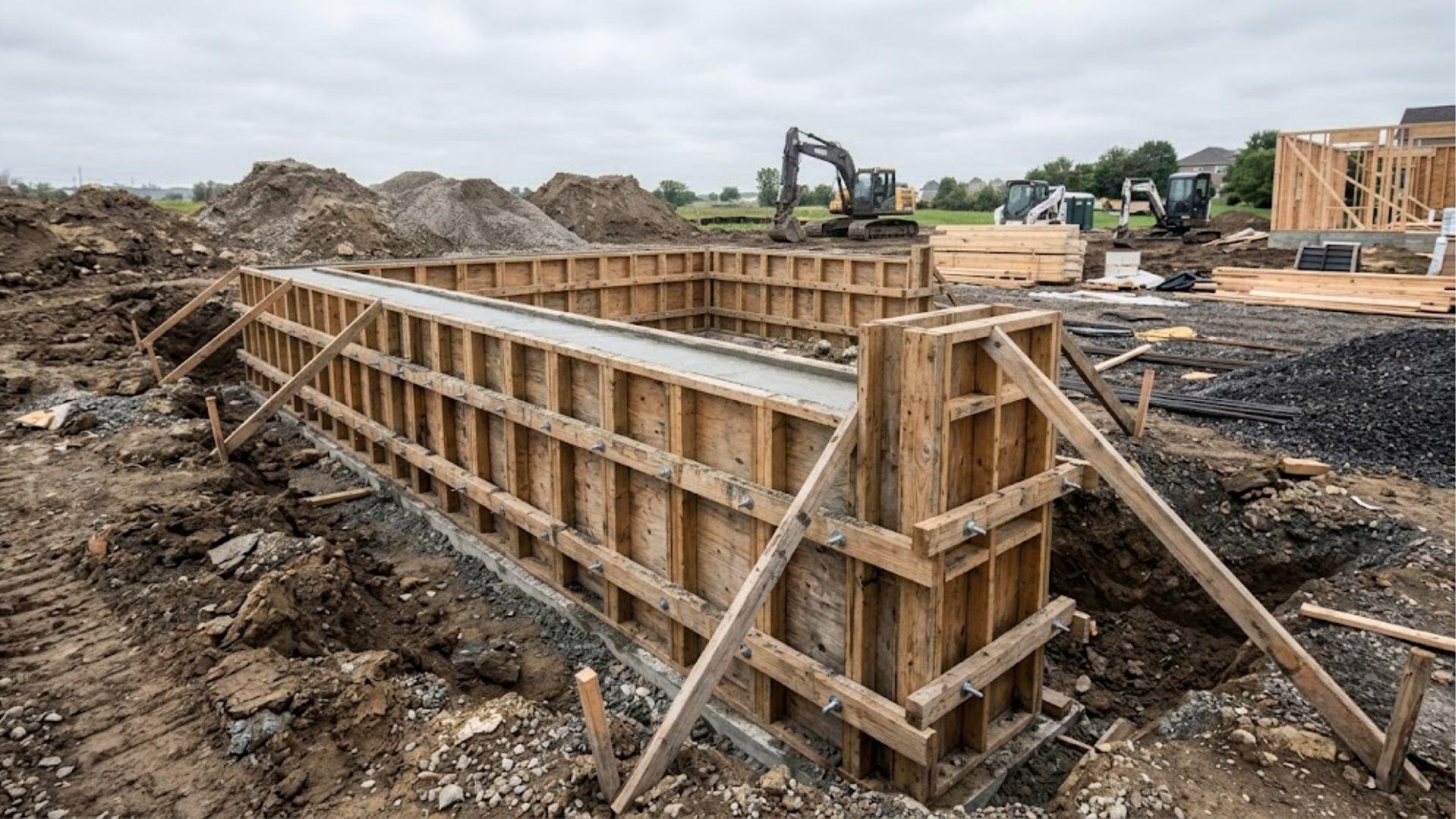
- Vertical forms (walls and columns): 24 to 48 hours. Vertical surfaces carry less bending stress, so they pick up early-age strength quick.
- Horizontal slabs and soffits, props left in place: 3 to 7 days, longer depending on the span. Forms themselves can often come off sooner, but the props holding things up need to stay till the concrete gains more strength.
- Beams and heavy load-bearing elements: 7 to 21 days. Shores and props often need to stay in place even longer than the forms do.
This is the category where rushing causes real structural risk. That’s exactly why the next part matters before you touch a pry bar.
What You Need Before Removing Forms
Don’t start pulling forms just because the clock says it’s time. Check the concrete itself first, and have the right tools on hand so you’re not chipping the edges on your way out.
Confirm the Concrete Has Reached Adequate Strength

The main rule for form removal is whether the concrete has reached enough compressive strength, typically around 70% of its design strength, to support its own weight and resist cracking.
Below that mark, pulling forms too early risks sagging, surface damage, or even structural failure.
For load-bearing elements, don’t rely on elapsed time alone. Confirm the concrete has reached the required strength before removing supports.
Gather the Right Tools

You’ll need a hammer, wooden wedge or pry bar, and tools to remove stakes and hardware, including nails, screws, and kickers holding the form boards together.
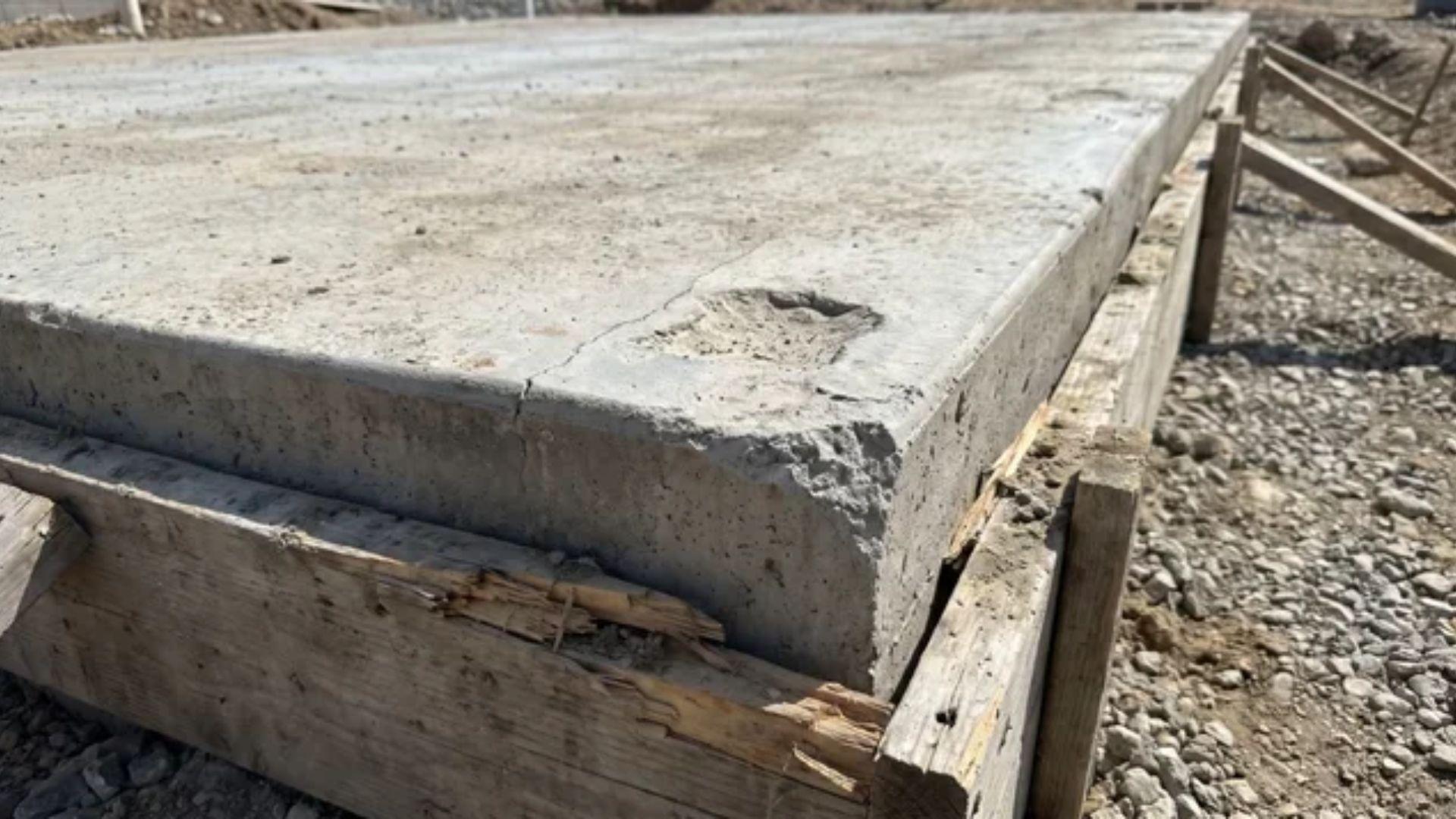
Avoid using heavy force or placing metal pry tools directly against the green concrete edge. Both can chip or damage the surface.
Having the right tools ready makes removal easier and helps protect the edges as you work.
Factor in Temperature
Temperature has a direct effect on how quickly concrete gains strength. Cold weather, particularly below 50°F, slows the curing process, while freezing conditions can delay strength development even further.
Forms may need to stay in place well beyond the standard 24-to-48-hour window. Warm weather generally speeds up the initial set, but don’t assume that means you can remove forms early without checking the concrete’s actual strength first.
How to Safely Remove Concrete Forms
Once the concrete’s had enough time and you’ve confirmed it’s ready, here’s your order of operations.
- Test the surface first. Press a finger in gently, or tap it with a hammer. Feels soft, crumbles, or indents easy? Leave the forms alone and check again later.
- Remove stakes and hardware. Pull every stake, kicker, nail, and screw holding the form boards together before you try moving the boards themselves.
- Loosen the boards gently. Use light taps with a hammer, or a wooden wedge or pry bar. Don’t use heavy brute force or metal pry tools right against the edge. That’s the fastest way to chip green concrete.
- Pull the boards straight back. Pull away from the slab clean rather than prying at an angle. That helps keep the edge from getting damaged too.
Where Form Removal Goes Wrong
Two mistakes account for most of the problems I see, and they pull in opposite directions.
Removing forms too early: Below that 70% strength mark, the concrete hasn’t built up enough internal strength to be self-supporting.
On load-bearing elements like beams and columns, that risks sagging or structural failure. On slabs and patios, more often you’re looking at chipped edges, footprints, and dents left in the surface.
Skipping the moisture step on early removal: Leaving forms on longer helps hold moisture in, which improves overall durability.
Pull forms early, say 12 to 24 hours, sometimes done for edging, and apply a curing compound or keep the concrete damp afterward. Otherwise, you’re risking cracks.
Using the wrong cement assumption: Standard Type I cement follows the full standard timeline.
Fast-setting Type III cures quicker and can let you pull forms earlier in some cases. But figuring every bag behaves the same is how people end up pulling forms too soon.
Verifying the Concrete Is Ready
Before you move on to finishing, including patching tie holes, applying a surface treatment, or backfilling the edges, confirm the concrete actually passed the test. Not just the clock.
Finger-press test is your main field check. If the press leaves an indent deeper than about 1/16 inch, or the surface crumbles, the concrete’s not ready, however many hours have gone by.
For load-bearing structures, that 70% compressive-strength benchmark is your real target. Temperature, cement type, and curing method all change how long it takes to get there.
Two jobs poured a day apart can still be ready on different days. One thing worth knowing: leaving forms on longer than necessary doesn’t hurt the concrete itself.
Only delays your finishing work. Unsure? Waiting costs you time. Pulling early can cost you the edge, or in the bad cases, the structure.
The Bottom Line
When to remove concrete forms depends on what the structure does. 24 to 48 hours covers most sidewalks, patios, and side forms, while anything load-bearing needs a week or more.
Check the temperature and cement type before you commit to a timeline. Test the surface rather than trusting the clock alone.
If unsure, wait a little longer rather than risk pulling forms too soon.
Frequently Asked Questions
Can you leave concrete forms on too long?
Leaving forms on longer than necessary generally isn’t harmful to the concrete itself, though it does delay finishing work like patching tie holes or applying a surface treatment. No real downside beyond the extra wait.
What happens if you remove concrete forms too early?
Removing forms too early risks chipped edges, footprints or dents in the surface, and in severe cases, structural failure if the concrete hasn’t reached enough strength to support itself. Risk’s highest with load-bearing elements like beams and columns.
How long does concrete need to cure before removing forms?
Standard side forms typically need 24 to 48 hours. Load-bearing supports need a lot longer, often 7 to 21 days, since they’ve got to reach a substantial share of the concrete’s design strength before removal’s safe.
When to remove concrete forms to finish sides?
Side forms on slabs, patios, and sidewalks are usually ready in 24 to 48 hours, once a finger press no longer leaves an indent and the edges won’t chip. Finishing work like patching tie holes can start once the forms are off.