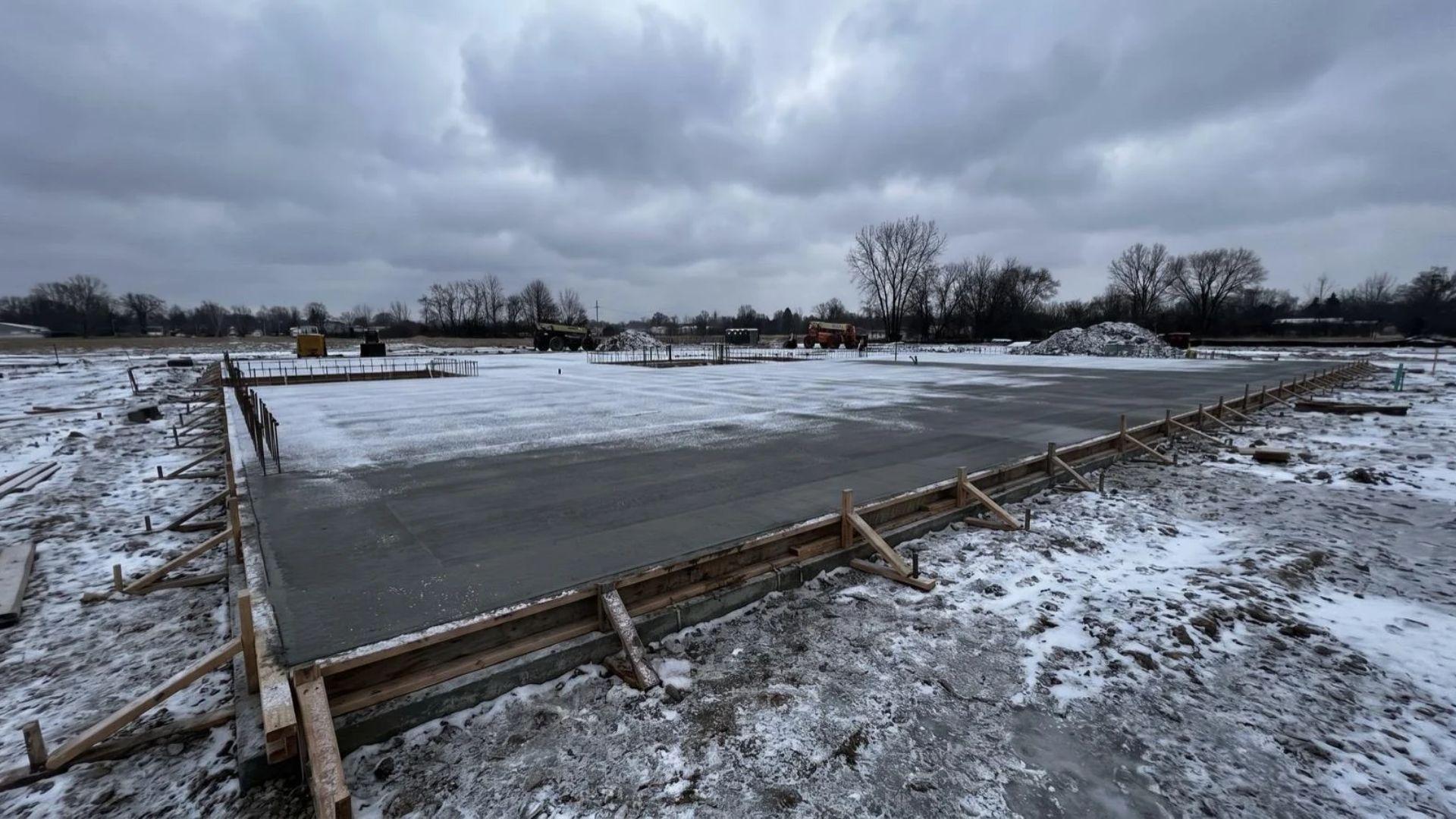
Can you pour concrete in cold weather? Yes, long as you take the right precautions to keep that mix from freezing before it cures.
A lot of guys figure cold weather just rules out pouring altogether. It doesn’t. The catch is “right precautions” means something specific. Not just throwing a tarp over it and hoping it works out.
Here’s your real temperature threshold, why freezing actually does damage to concrete, and the rules that separate a cold pour that holds up from one that cracks on you.
Can You Pour Concrete in Cold Weather?
Yes. Cold-weather concreting kicks in whenever the average air temperature drops below 40°F for more than three days running. That’s the ACI’s own definition.
Once you’re in that range, the process needs some extra steps built in. Still a completely normal part of the job in colder climates. Nothing unusual about it.
How Cold Is Too Cold to Pour Concrete?
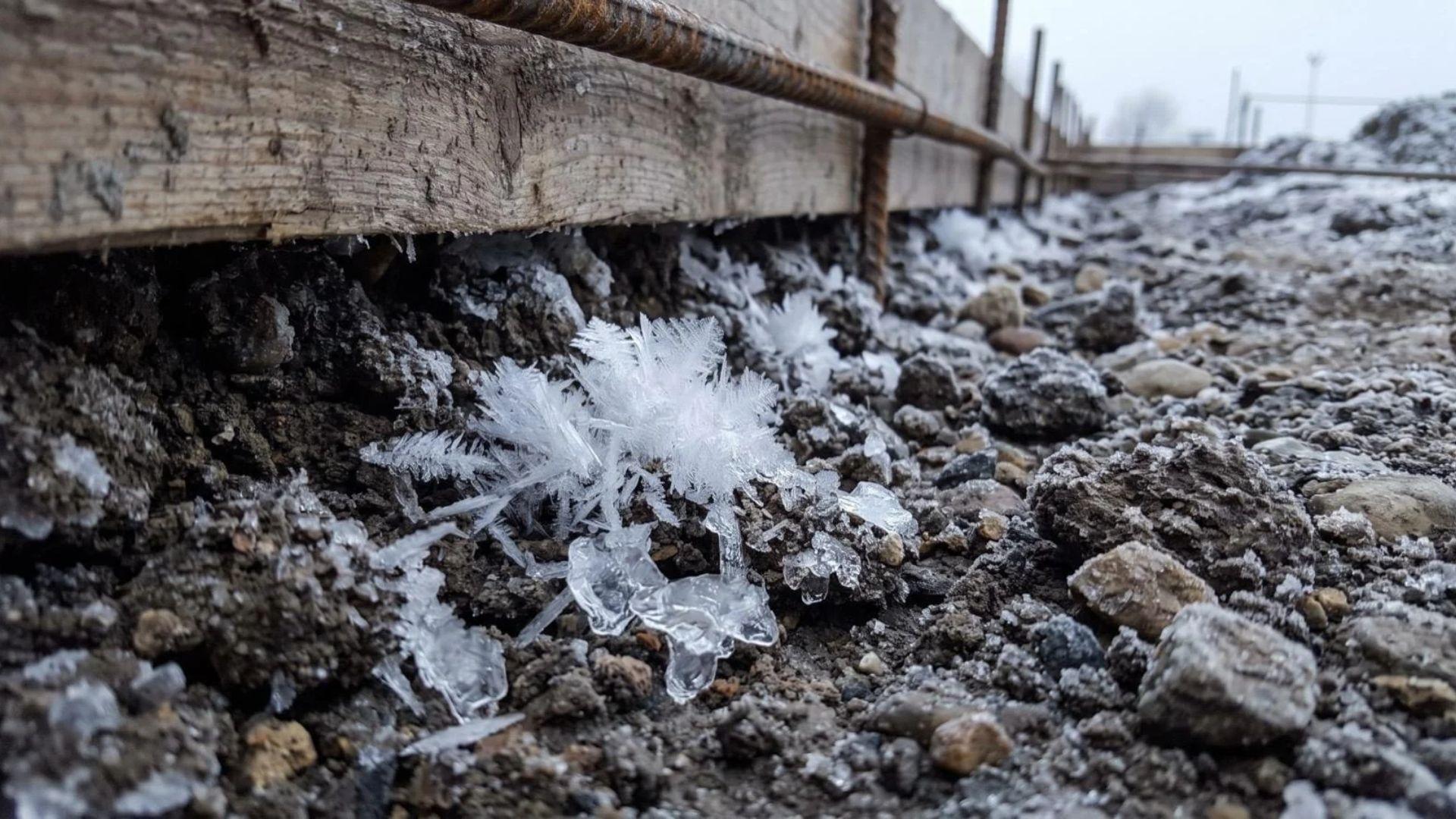
There’s no hard cutoff where pouring just becomes impossible. But the risk climbs fast once you’re below freezing.
The real danger point is fresh, unhardened concrete freezing before it’s built up enough strength to handle the cold.
Fresh concrete needs to stay above freezing until it hits at least 500 PSI of compressive strength.
Here’s what happens if it doesn’t make that mark. Water inside the still-curing mix freezes up and forms ice crystals.
Those crystals expand and tear up the hydration structure, which is the chemical bond cement and water form as they harden together.
Once that structure breaks this early, the concrete doesn’t get that strength back. That damage is permanent, even after the slab finishes curing out.
What Happens If Concrete Freezes Too Early
Freezing fresh concrete before it cures doesn’t just slow the job down. It does damage you can’t fix later. Three problems show up most:
Lost strength. Mix freezes within the first 24 to 48 hours, those ice crystals can cut your final strength by up to 50% or more.
Delayed curing. Cold slows the chemical reaction between cement and water, so the slab takes longer getting to a safe strength.
Cracking and scaling. Pour over frozen ground and the subgrade settles unevenly once it thaws out. That settling causes cracking later, sometimes months after the pour looked fine.
7 Rules for Pouring Concrete in Cold Weather

Few non-negotiable rules here, and they’re the difference between a cold pour that holds up and one that cracks and ruins the slab.
- Check the forecast first: Know your expected high and low for the next several days, not just pour day. A cold snap 24 hours after placement can undo an otherwise good pour.
- Never pour on frozen ground: Ice, snow, frozen soil underneath that slab, it’s all going to thaw and settle eventually. That settling causes cracking later, sometimes months down the line.
- Request a heated mix: Ask your ready-mix supplier for warm or hot batch water, often 100°F to 140°F, so the concrete shows up on-site around 50°F to 65°F instead of near-freezing.
- Use a non-chloride or calcium-based accelerator: Speeds up your set time, gets the concrete past its most vulnerable stage before the cold has a chance to slow curing down.
- Protect fresh concrete from freezing: Mix has to stay above freezing until it hits that 500 PSI mark. Single most important rule on this whole list.
- Cover and insulate right after placement: Insulated curing blankets, plastic sheeting, heated enclosures, whatever you’ve got. Traps the heat curing generates and keeps the surface from losing it to the cold air.
- Maintain curing temperature for the first several days: Keep the concrete above roughly 40°F to 50°F for 3 to 7 days after the pour, depending on your mix design and what the air’s doing.
I’ve seen contractors skip the accelerator on a marginal-temperature day and get away with it. But that’s a bet, not a method. Not one worth making on a job that matters.
Final Verdict
So, can you pour concrete in cold weather? Yes. Doesn’t rule out the pour, but it does raise the stakes.
Keep the ground unfrozen, request a heated mix, protect the fresh concrete from freezing until it hits 500 PSI, and hold your curing temperatures through those first critical days.
Skip any of that, and cold weather stops being a condition you manage and starts being the reason your slab cracks.
Frequently Asked Questions
Is It OK to Pour Concrete in the Cold?
Yes, pouring concrete in cold weather is fine as long as you follow cold-weather concreting practices, avoiding frozen ground, protecting the mix from freezing, and maintaining curing temperatures until the concrete reaches adequate strength.
What Temperature Is Too Cold to Pour Concrete?
Cold-weather precautions become necessary below 40°F. Real risk kicks in once fresh concrete’s at risk of actually freezing before reaching 500 PSI.
Can You Pour Concrete If It Freezes at Night?
Yes, if the fresh concrete’s protected before nightfall. Insulated blankets or heated enclosures keep the slab above freezing while temperatures drop outside, which is why covering the pour right after placement matters more in cold weather than almost any other step.
Does Cold Weather Affect the Strength of Concrete?
Cold weather can affect strength if the fresh concrete freezes before curing enough. With proper protection, including insulation, heating, or accelerators, concrete poured in cold weather reaches the same final strength as concrete poured in warmer conditions.