
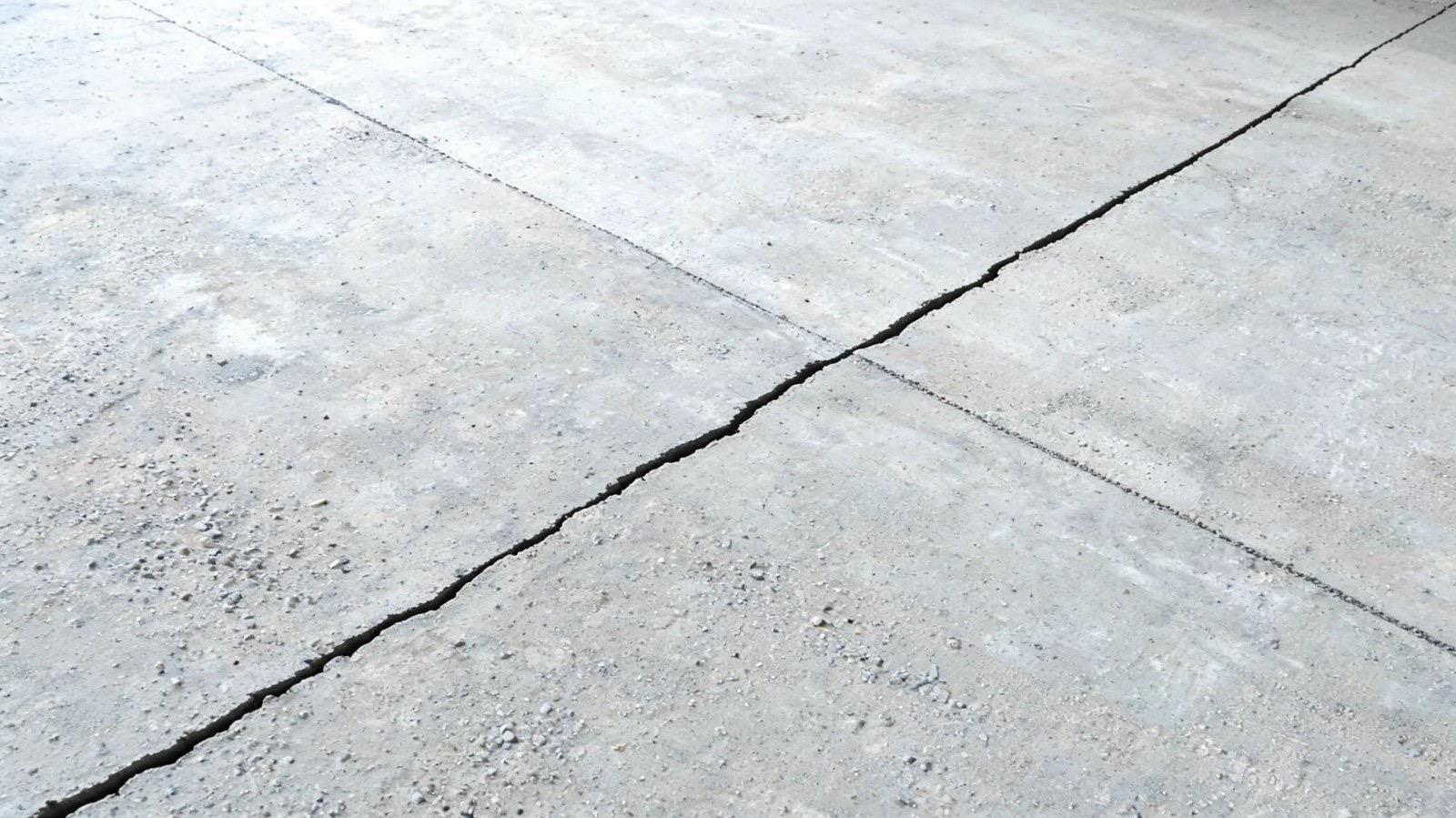
Why does one crack get sealed with a tube of filler and another gets a structural engineer?
Because the crack itself is never the whole story. It’s a surface symptom, and the mechanism underneath it, whether that’s ordinary shrinkage or active soil movement, is what actually decides how worried you should be.
Most slab cracks are harmless. A hairline crack from normal curing isn’t the same thing as a wide, growing crack that’s shifted the slab underneath it, even though both can look alarming the first time you notice them.
This guide walks through the causes, the red flags, how to verify whether a crack is still active, and what to do about each type.
Read it before you panic, and before you ignore something that actually needs a second look.
Is a Crack in a Concrete Slab Foundation Serious?
Most of the time, no. Cracks thinner than about 1/16 inch are typically shrinkage cracks, which happen as the concrete cures and loses moisture. That’s a surface-level process, not a structural one, so these are cosmetic.
Width is the first thing to check.
Cracks wider than 1/8 inch, horizontal cracks, or cracks that step in a pattern are worth a professional look, because those shapes don’t come from curing. They come from the slab or the ground underneath it actually moving.
Two other signs carry as much weight as width.
An offset, where one side of the crack sits higher than the other, means there’s active movement happening right now, not movement that has already finished.
And if the crack shows up alongside sticking doors or new cracks in the drywall, that’s the slab talking to the rest of the house. That combination is a good upfront reason to get it checked, not a reason to wait and watch.
A measurement only tells you where the crack stands today, it doesn’t tell you whether it’s still moving. That’s a separate check, and it matters more than the width by itself.
What Causes Concrete Slab Foundation Cracks
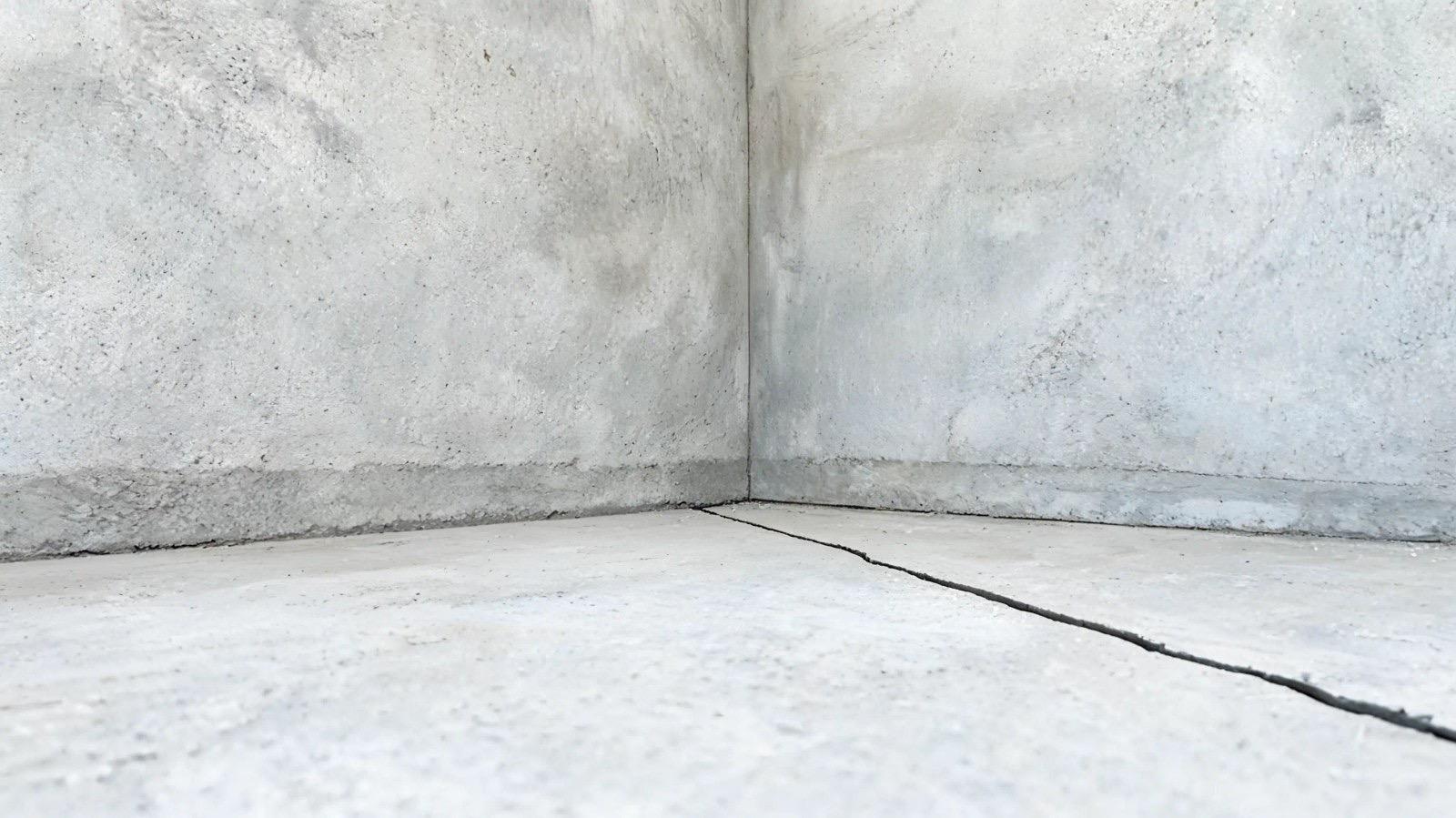
Slab cracks trace back to one of two things: the concrete itself, or the ground underneath it. Knowing which one you’re dealing with tells you how serious the crack actually is.
Shrinkage Cracks
Shrinkage is the routine, expected process. As concrete cures, it loses water and contracts slightly as it hardens.
That contraction doesn’t happen evenly across the whole slab, so the surface develops thin, shallow lines to relieve the stress rather than cracking unpredictably somewhere worse.
These form in the first few weeks after the pour. They’re shallow, they’re narrow, and once the concrete finishes curing, they stop. Once that process stops, so does the risk.
Soil Settlement
This one is a structural issue, not a cosmetic one. Slabs sit on compacted soil or fill dirt, and that ground is rarely packed with perfect uniformity across its whole footprint.
So when loose backfill or shifting earth settles unevenly under one section of the slab, that section loses support it was relying on.
The unsupported concrete cracks under its own weight, because nothing underneath it is holding it up anymore.
Expansive Soils
Clay-heavy ground is the one cause that keeps working year after year. It swells when it’s wet and shrinks when it dries out, and that cycle repeats every season rather than resolving once.
That repeated push and pull stresses the slab over time. Houses on clay soil often show more cracking in dry summers, then settle back slightly once the rain returns.
If a crack seems to open and close with the weather, expansive soil is almost always the cause, not settlement.
How to Tell If a Slab Crack Is Serious
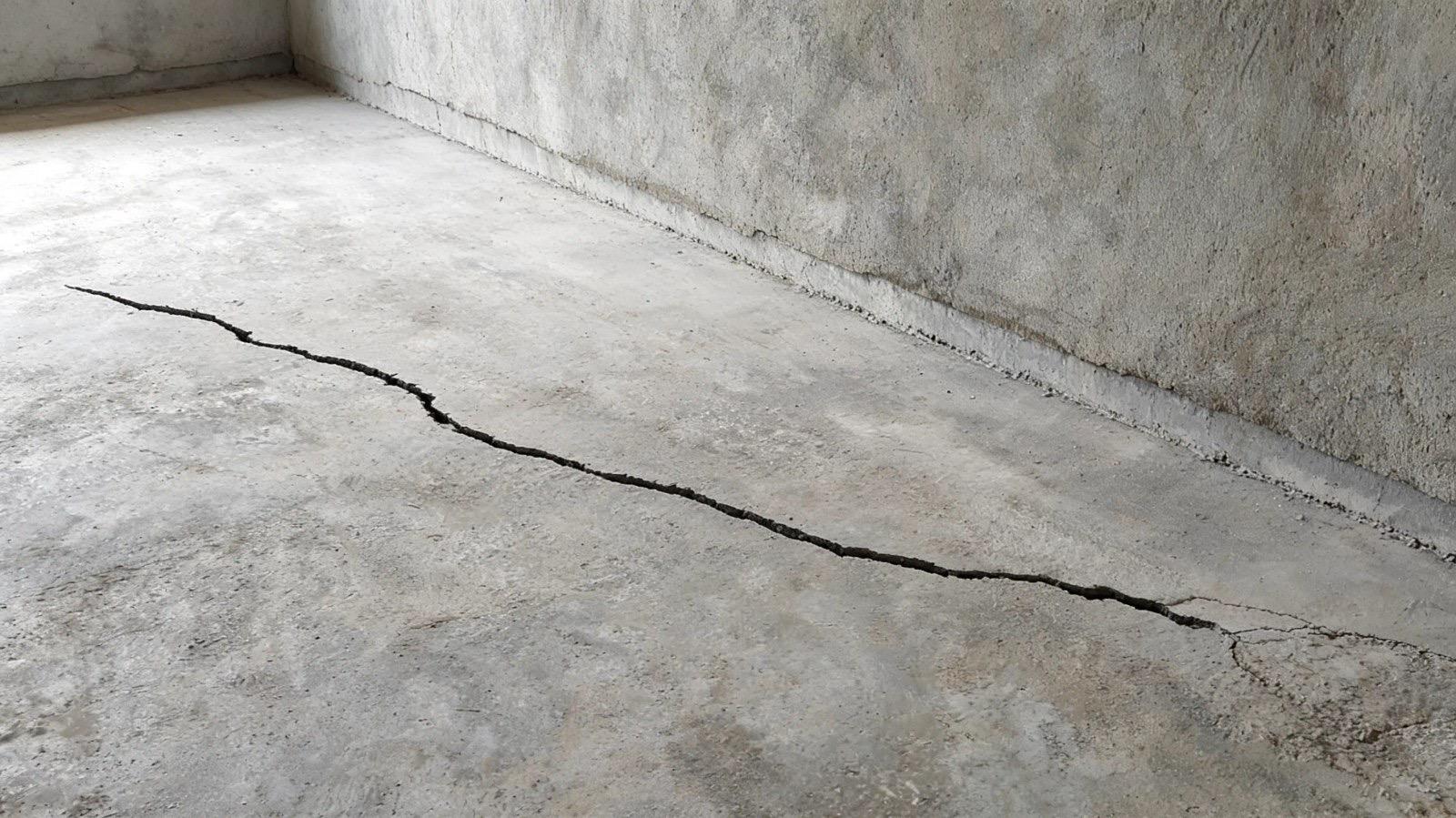
A single look at a crack only tells you so much, because width alone doesn’t tell you whether the cause behind it is still active.
A wide crack that stopped moving months ago can actually be less urgent than a narrow one that’s still spreading. So here’s how to test for both.
Check Whether the Crack Is Still Active
The check itself takes a few minutes, and it tells you more than a visual inspection ever will.
Mark both ends of the crack with a pencil or a piece of tape. Note the width at two or three points along its length, and write the date next to each mark. That’s good upfront verification, not extra work.
Come back in three to four weeks and compare. If the crack has grown past your marks, widened, or the edges have shifted out of alignment, that crack is active, which means the underlying cause is still at work.
An active crack belongs in the “get it checked” category, even if the width alone looks mild, because the number on its own doesn’t tell you the movement has stopped.
A crack that hasn’t moved at all in that window is very likely old shrinkage. It’s reached its final size, and a crack that’s done moving isn’t one you need to keep tracking.
Check for House-Wide Warning Signs
A crack rarely acts alone when something structural is actually happening. The rest of the house tends to show the same movement in its own way.
Watch for these together. Any one of these on its own might be nothing, right, but several at once point to real movement:
- A crack wider than 1/4 inch, or one that’s still growing in your active check.
- An offset or lip, where one side of the crack sits higher than the other.
- Diagonal cracks in drywall, especially above doors and windows.
- Doors and windows that stick or won’t close cleanly anymore.
- Gaps opening up around window and door frames.
If you’re seeing several of these together, don’t just seal the crack and move on. Get the cause identified first, because sealing treats the symptom, not what’s causing it.
What to Do About a Slab Foundation Crack
Your next step depends on which cause you’re actually dealing with. Match the response to the cause, not just to how the crack looks.
For a thin, stable hairline crack, sealing it yourself is a reasonable fix. A concrete crack filler keeps water and pests out, and it cleans up the appearance.
If part of the slab has sunk or settled, sealing the surface doesn’t touch the actual problem, because there’s a void underneath that sealant can’t reach. Foam injection or mudjacking fills those voids and lifts the slab back into position.
For a crack that’s wide, offset, actively growing, or paired with the warning signs above, the foundation itself needs support, not a patch. Helical piers are driven down to stable soil to stabilize and lift the structure permanently.
I think it’s important to note the trap here. Filling a structural crack hides the symptom while the problem underneath keeps working: the slab keeps shifting, just out of view instead of out of existence.
The Bottom Line
A crack in a concrete slab foundation is, most of the time, harmless shrinkage, not a crisis.
The ones that matter are wide, growing, offset, or showing up alongside sticking doors and drywall cracks. A quick active check, done right, tells you which kind you’re looking at.
Seal the thin, stable cracks and keep watching the rest. When the warning signs stack up, bring in a specialist before small movement becomes an expensive repair. Test it, watch it, document it. That’s the proof you’re dealing with what you think you’re dealing with.
Frequently Asked Questions
Are Hairline Cracks in a Slab Foundation Normal?
Yes. Cracks thinner than about 1/16 inch are typically shrinkage cracks from the concrete curing, and that’s a surface mechanism, not a structural one. They’re cosmetic and common in slab foundations. Sealing them keeps water out, but on their own they don’t signal a structural problem.
When Should You Worry About a Foundation Crack?
Worry when a crack is wider than about 1/8 inch, keeps growing, or has one side sitting higher than the other, since that offset means active movement. Also watch for sticking doors, gaps around windows, and diagonal drywall cracks. Those signs together point to a slab that’s still moving, and that needs a professional look.
Can You Fix a Concrete Slab Foundation Crack Yourself?
Thin, stable cracks, yes, a concrete crack filler or sealant handles those fine. Wide, offset, or growing cracks need a foundation specialist, because sealing them only hides movement that keeps going underneath, where you can’t see it anymore.
Do Foundation Cracks Mean the House Is Sinking?
Usually not. Most slab cracks come from harmless shrinkage, not sinking. Settlement becomes the likely cause only when cracks are wide and paired with uneven floors, sticking doors, or offset crack edges. Those combined clues, not the crack by itself, are what actually point to a foundation that’s moving.