

A concrete block foundation sits under more houses than most people realize, and as one of the most misunderstood types of concrete foundations, it rarely gets explained well.
Why does that matter? Because most explanations are warnings with nothing behind them, and a warning on its own doesn’t tell you what to actually check.
So let’s start with what’s actually holding that wall up.
What Is a Concrete Block Foundation?
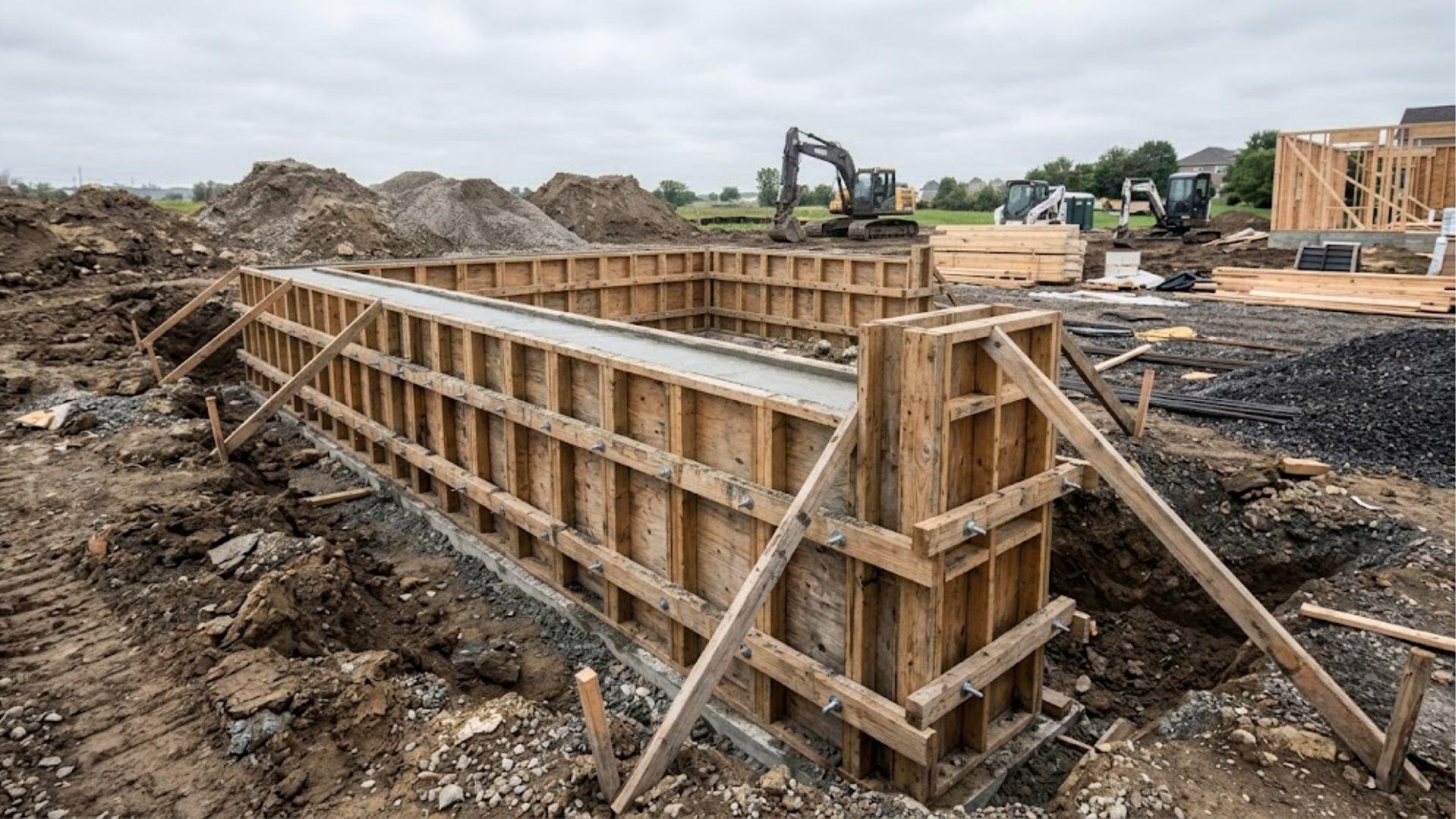
A concrete block foundation is a foundation wall built from CMUs, stacked on a poured footing. CMU stands for Concrete Masonry Unit, that’s the hollow concrete block you’ve probably seen staged on a job site before the walls go up.
Builders lay these blocks in a running-bond pattern, like bricks, and bond them with mortar. Here’s the thing though, that’s not the same as piling blocks on top of each other.
It’s an assembled wall system, and every part of that system has a job to do. Miss the job one part is doing, and the rest doesn’t matter.
Block size matters too. You’ll usually see 6″, 8″, or 12″ blocks, and the choice comes down to wall height and the load the foundation needs to carry. That’s an engineering decision, not a preference, because the soil behind that wall doesn’t care what looks right.
What a Concrete Block Foundation Includes
A working block foundation is four parts, not one: the footing, the blocks, the mortar, and the reinforcement. Miss one, and you don’t have a foundation.
You have a wall that looks finished but isn’t, and those are two very different things to be standing next to.
Footing
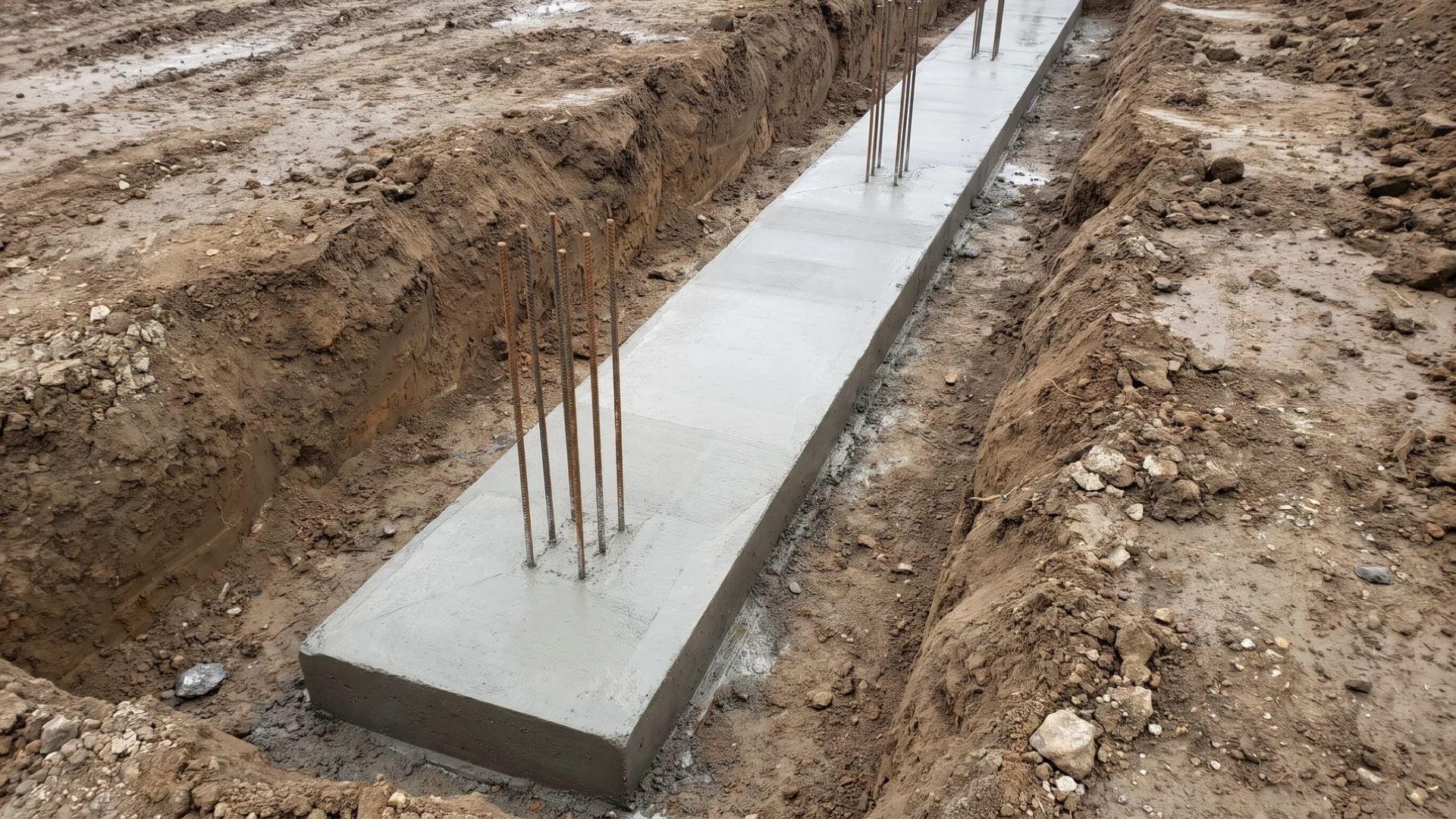
The footing is the concrete base the blocks sit on. It spreads the building’s weight into the soil below. Without a proper footing, the whole wall above it is unstable, no matter how well the blocks are laid.
You can execute the masonry perfectly and still have nothing to stand on, because the footing’s job and the block’s job aren’t the same job.
Blocks and Mortar
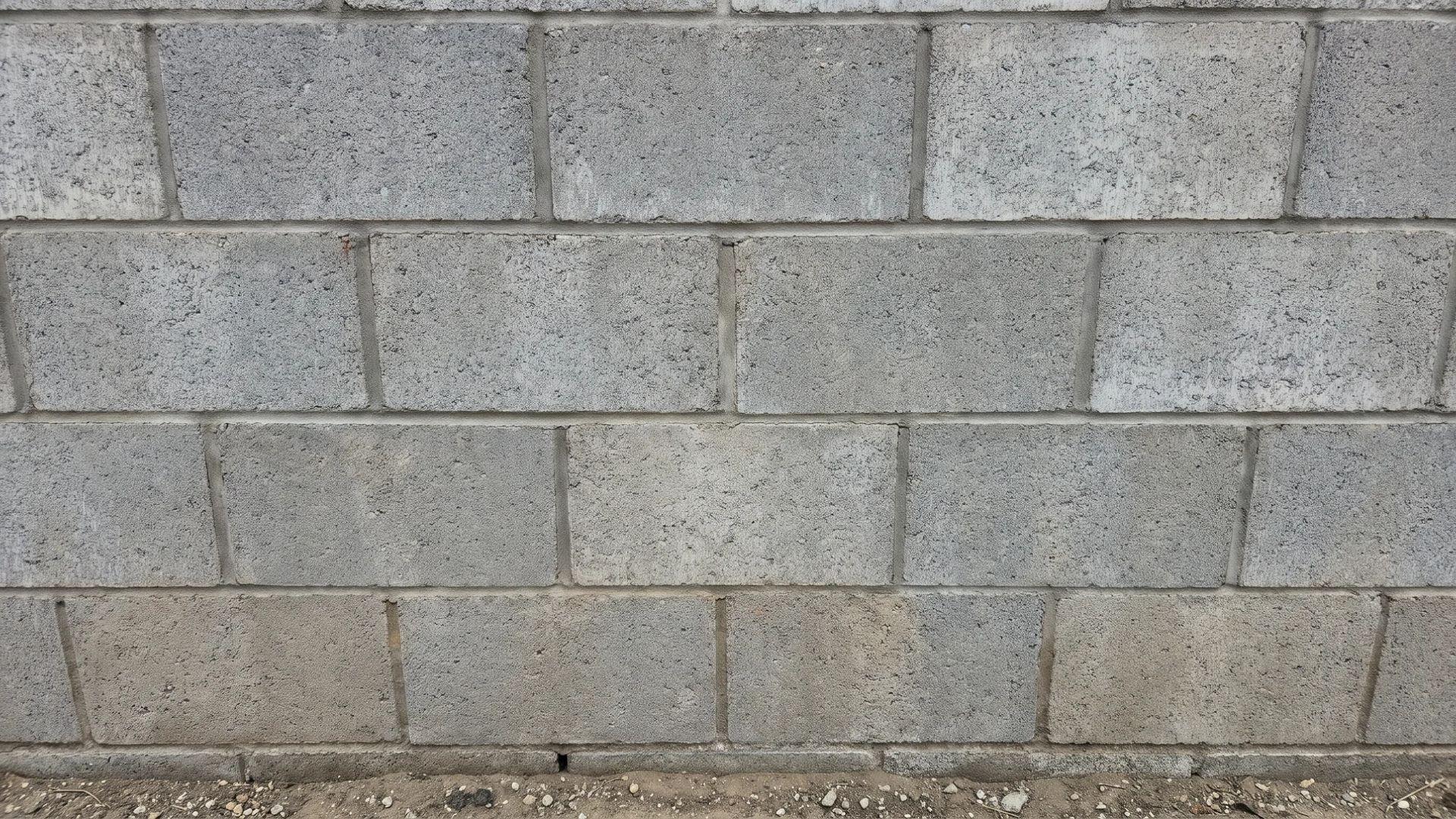
The blocks stack in a running-bond pattern, each row offset from the one below it. Mortar bonds them together and seals the joints.
This is the part most people picture when they hear “block foundation.” Right, that’s the visible layer. It’s also the least of your worries structurally.
Rebar and Grout
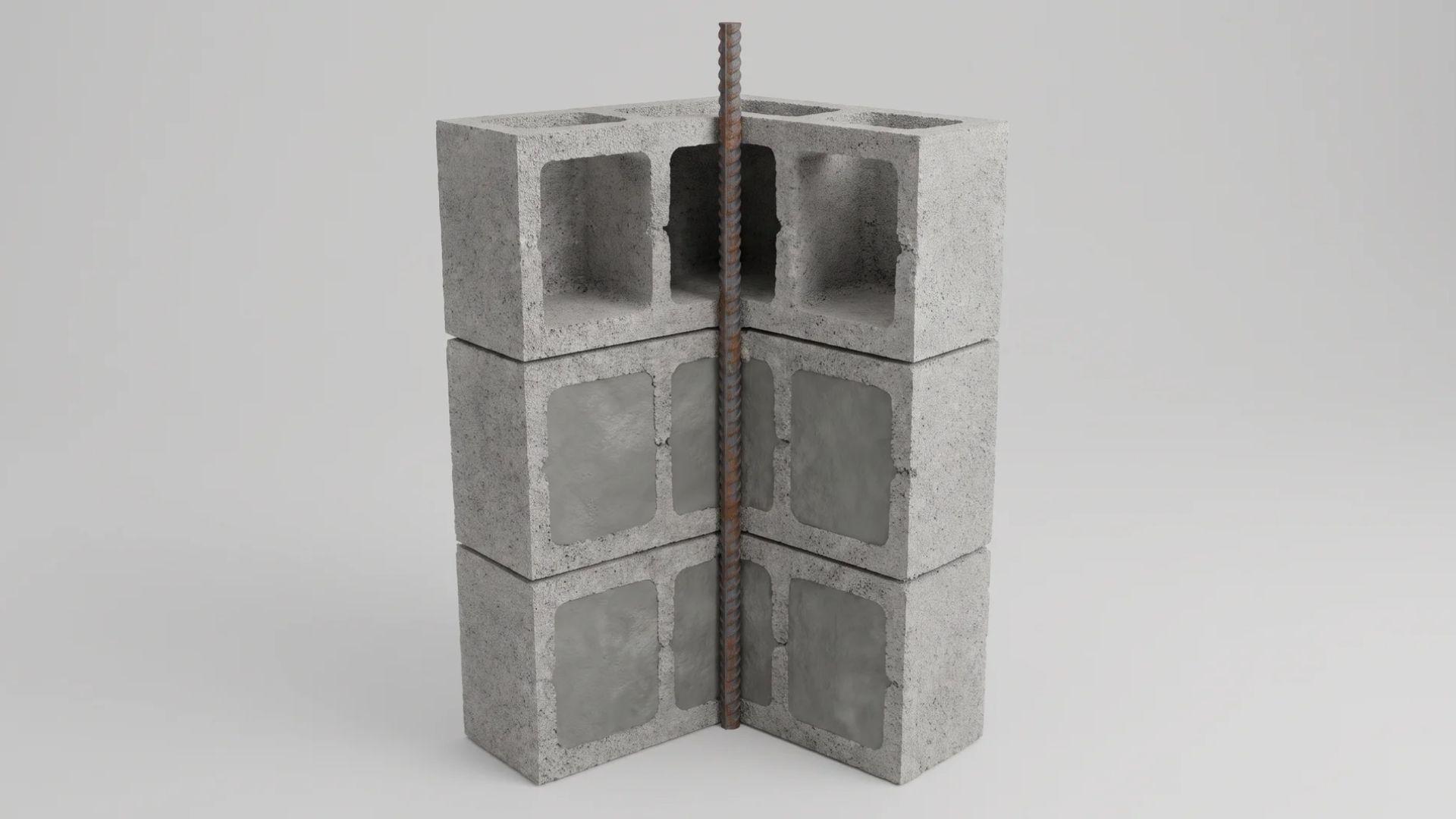
Here’s what actually makes the wall work: rebar and grout.
The blocks are hollow. Builders run vertical and horizontal rebar through those hollow cores, then fill them with grout.
That combination is what lets the wall resist lateral soil pressure pushing in from outside, meaning the force of wet soil leaning on the wall after every rain.
I’ve seen foundations fail not because the blocks were wrong, but because the cores were never filled. Empty cores mean no real strength, even when the wall looks solid.
So that changes what “looks finished” actually tells you, which is not much on its own.
Spacing changes too. Taller walls and harsher soil or frost conditions need tighter rebar spacing and more grout. Skip this step, and you’re looking at cracking, bowing, or worse, down the line.
What a Concrete Block Foundation Is Not
A concrete block foundation isn’t the same thing as a cinder block foundation. It’s also not a poured concrete foundation.
People use these terms like they mean the same thing, so here’s where they actually differ.
- Cinder block vs. CMU: Cinder block uses cinder as the aggregate material. It was common decades ago and is largely phased out now. Modern CMU blocks use concrete aggregate instead, built to different standards.
- The reputation problem: Older cinder block foundations had a rough track record, from poor material and poor reinforcement over decades.
That reputation stuck, but it gets applied to modern CMU construction, which isn’t the same material, isn’t built to the same standard, and doesn’t deserve the same assumption.
- Block vs. poured concrete: A poured foundation is one continuous pour, no blocks, no joints. A block foundation is masonry, assembled piece by piece. Knowing which one you’re dealing with changes what you should actually expect from it.
Why the Difference Matters
Choosing between block and poured concrete isn’t about picking the “better” option. It’s a trade-off, and I think it’s important to note that both sides of that trade-off are real.
Block foundations carry high compressive strength. That part isn’t in question.
Where they get vulnerable is at the mortar joints. Water finds its way in there before it finds its way through the block itself.
So the real performance of a block foundation doesn’t come down to the material, it comes down to the work: proper core-filling and solid exterior waterproofing. Skip either one, and you’ve built in a weak point, no matter how strong the blocks are.
Poured concrete skips the joints entirely, but it comes with its own demands around equipment and timeline.
In practice, the choice often comes down to three things: local moisture levels, budget, and how fast the project needs to move.
Budget isn’t just the per-block price; blocks themselves run about$1.71 to $5.16 each, but that number barely moves the final cost once labor, rebar, and waterproofing are in the mix.
There’s no universal right answer here. There’s just the right fit for your site and your constraints.
What It Comes Down To
At the end of the day, a concrete block foundation is only as good as the details nobody sees once the house is built. The blocks get the attention, but the rebar, grout, and waterproofing are doing the real work.
You can’t see the cores once the wall is finished. That’s exactly why it’s worth confirming before you buy, not after.
If you’re evaluating a home or planning new construction, walk through this with a foundation professional first. A short inspection now can save you a much bigger decision later.
Frequently Asked Questions
Is a block foundation the same as a slab foundation?
No.A slab foundation is a single flat concrete pad poured directly on the ground, with no basement or crawl space underneath. A block foundation builds actual walls, creating a basement or crawl space below the house.
Do concrete block foundations need special maintenance?
Yes, mainly around drainage. Keeping gutters clear and grading soil away from the foundation protects the mortar joints, which are the most vulnerable point long-term.
Can a concrete block foundation be repaired if it’s damaged?
Yes, in most cases. Cracked or bowing walls can often be reinforced with steel supports or carbon fiber strips, without replacing the entire wall.