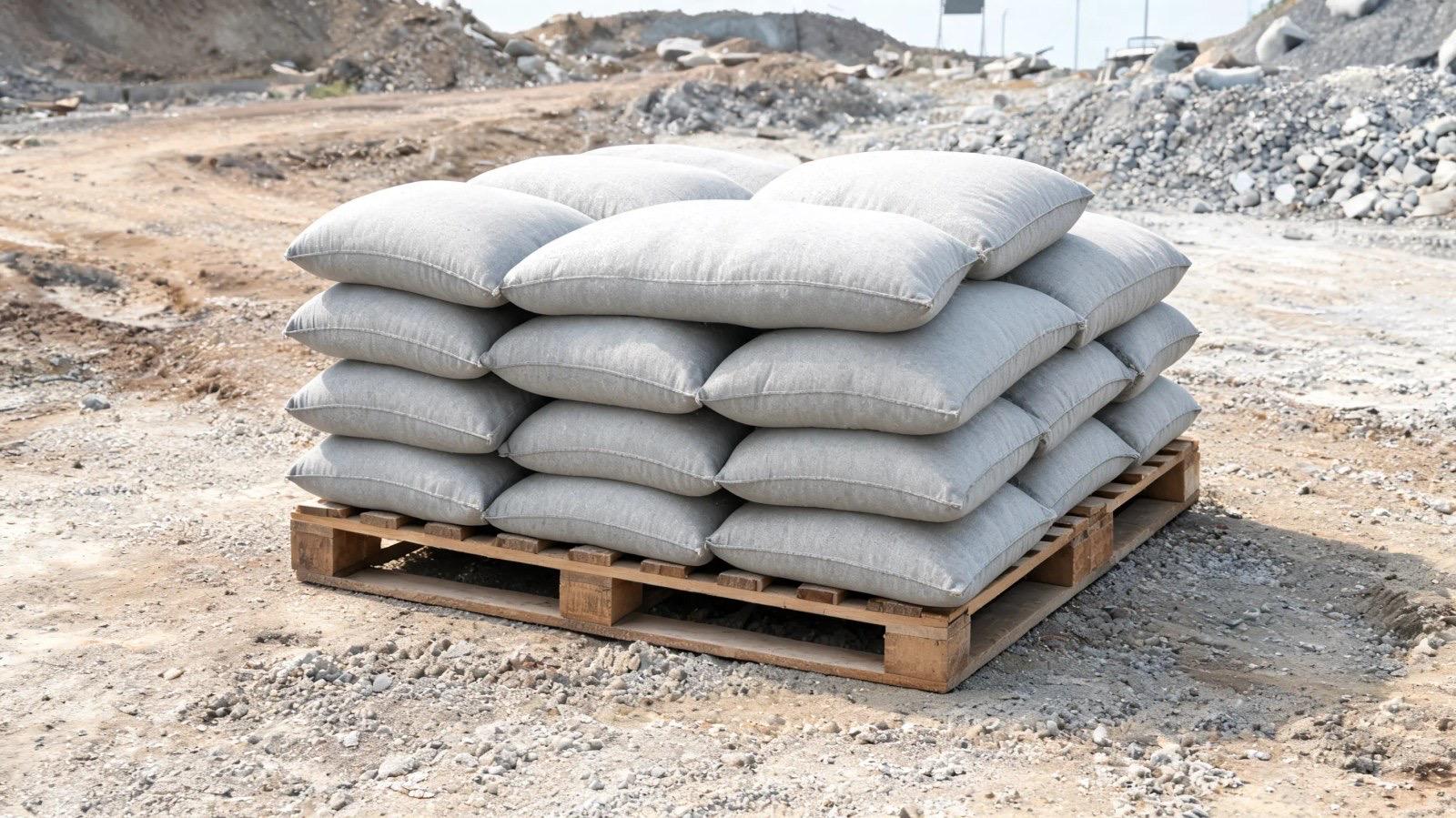
Here’s your number: 45 bags of 80 lb mix gets you one cubic yard. That’s the one to remember, and everything else in this article is just that same math wearing a different bag size.
Drop down to a smaller bag and the count climbs fast, because you’re not changing how much concrete you need, you’re just changing how many sacks you’re hauling to get there.
A full yard comes in around 3,600 pounds of dry mix no matter what size bag it’s sitting in, and that number is the thread that ties the whole chart together.
How Many Bags of Concrete in a Yard?
Here’s the breakdown by bag size.
| Bag Size | Bags per Cubic Yard |
| 80 lb | 45 bags |
| 60 lb | 60 bags |
| 50 lb | 75 bags |
| 40 lb | 90 bags |
So 80 lb bags of concrete in a yard is 45, and 60 lb bags of concrete in a yard is 60. Those numbers aren’t random.
A cubic yard needs roughly the same total weight of dry mix no matter how you slice it up, so forty five 80 lb bags and ninety 40 lb bags both land close to that same 3,600 pounds.
That’s a decent sanity check too. Bags times bag weight should land near 3,600, and if it doesn’t, go back and recount.
The 50 lb figure runs a little heavier than that math alone would suggest. Bag yield shifts some by brand and formulation, so it doesn’t always divide as clean as the others do.
That’s a serious pile of bags for one yard. First sign that bags aren’t always the right call once a pour gets big.
How to Figure Out How Many Bags You Need
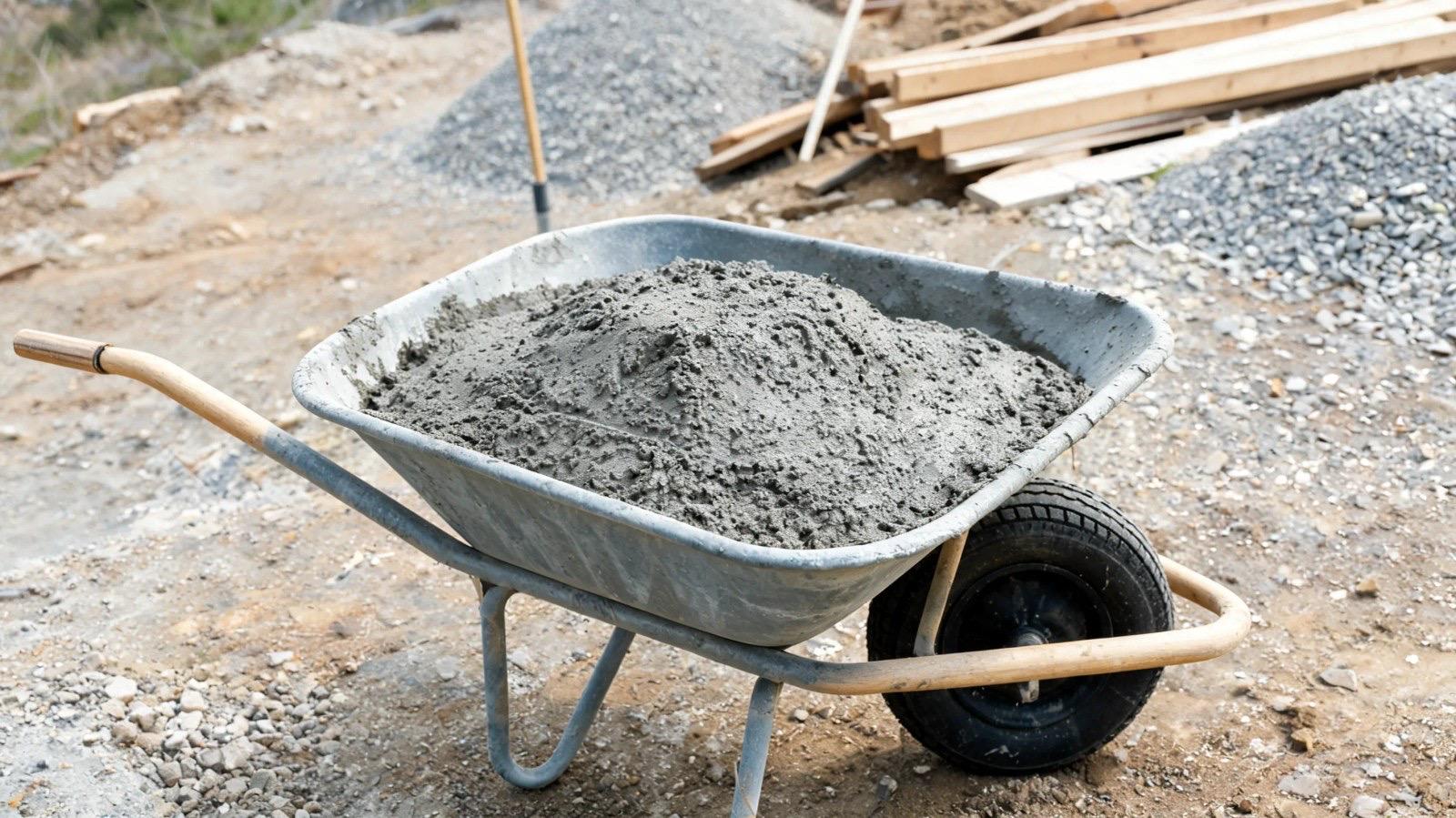
You rarely need a full yard on a residential job. Start with your project’s actual volume, then run it against the chart above.
Here’s the sequence:
- Measure length, width, and depth in feet. A 4 inch slab is 0.33 feet, not 4 feet, and that’s where people trip up first.
- Multiply length by width by depth to get cubic feet.
- Divide by 27to convert cubic feet into cubic yards. A cubic yard is always 27 cubic feet, no matter the project.
- Multiply the cubic yards by the bags-per-yard number for your bag size.
- Add 5 to 10 percenton top to cover spills, uneven ground, and mixing mistakes.
That last step matters more than it looks like it should. Half a yard in 80 lb bags is about 23 bags before you even add the buffer.
QUIKRETE and Sakrete both run calculators that’ll check your math if you want a second opinion, but I do it by hand first, every time. A quick gut check catches a typo before it turns into a second trip to the yard.
I always round up. Coming up short in the middle of a pour is the one mistake on this list you can’t undo clean.
Converting Dimensions to Cubic Yards
Inches trip people up more than any other step in this process. A 4 inch slab is 0.33 feet. Get that wrong and every number after it is wrong too, so check your depth before you multiply anything else.
Worked example: a 10 x 10 foot slab at 4 inches thick is 10 x 10 x 0.33, or 33 cubic feet. Divide by 27 and you get 1.23 cubic yards. Enough to trip up the bag count if you’d used 4 feet instead of 0.33.
Adding a Waste Buffer
The ground doesn’t stay flat once you start digging in it. That 5 to 10 percent buffer is there for the dips, the low spots, the scoop that misses the wheelbarrow.
Skip it and you’re the one running back to the store mid-pour.
On a half-yard pour in 80 lb bags, that’s roughly 2 extra bags. Cheap insurance against a mid-pour run to the store.
Should You Use Bags or Ready-Mix?
Bags and ready-mix each have a job they’re good at. Knowing where that line sits saves you a wasted afternoon.
Bags make sense small. Setting posts, a few footings, a tiny slab, mix what you need when you need it.
Once you’re past roughly half a yard, bags start working against you. Mixing that much by hand is slow, and the early batches can start setting up before the later ones are even mixed.
I’ve seen a weekend post-setting job turn into a scramble because somebody tried to stretch bags past that half-yard mark.
First batches were already going off while the last ones were still in the wheelbarrow.
Past that point, a ready-mix truck usually costs less per yard once you count your own time; an 80 lb bag takes 3 to 5 minutes to mix by hand, so a half yard is over an hour of mixing before you’ve poured anything.
A truck pours it all as one consistent batch, which bags just can’t do.
Tips Before You Buy
A few habits that’ll save you a second trip and a sore back:
- Mind the weight. Forty five 80 lb bags runs about 3,600 pounds, so know what your vehicle can actually carry.
- Split the trips if you need to.A full yard of bags can run past what a lot of trucks are rated for.
- Check your mix type. Fast-setting and standard behave differently once water hits them.
- Confirm your bag countagainst the chart before you load the cart, not after.
Get that part right and the buying’s the easy half. The mixing is where the real work starts.
The Bottom Line
How many bags of concrete in a yard comes down to bag size. 45 for 80 lb, 60 for 60 lb, 75 for 50 lb, 90 for 40 lb.
Figure your volume, multiply by the right number, add your buffer.
Once you’re near half a yard, price out a ready-mix truck before you haul home a ton and a half of bags in the trunk.
Frequently Asked Questions
How many 60 lb bags of concrete are in a yard?
One cubic yard needs about 60 bags of 60 lb mix. A yard runs roughly 3,600 to 4,050 pounds of dry mix total, commonly rounded to around 4,000, and 60 bags at 60 pounds each gets you there, just split into smaller units than the 80 lb size.
How many 80 lb bags of concrete are in a yard?
About 45 bags. It’s the bag size most DIY slabs and footings get built with, because it’s the best balance between a manageable count and a weight a person can still lift and pour by hand all day.
How many bags of concrete do I need for a 10×10 slab?
A 10×10 foot slab at 4 inches thick runs about 1.23 cubic yards. That’s roughly 56 bags of 80 lb mix or 74 bags of 60 lb mix, buffer included for spillage and uneven ground.
Is it cheaper to mix your own concrete or buy ready-mix?
For a small pour, bagged concrete usually comes out cheaper and easier to control. That changes once your own labor and time get counted. Past about half a yard, hand-mixing bags takes real time, and a ready-mix truck typically runs less per yard at that point, poured as one batch instead of forty five separate ones.