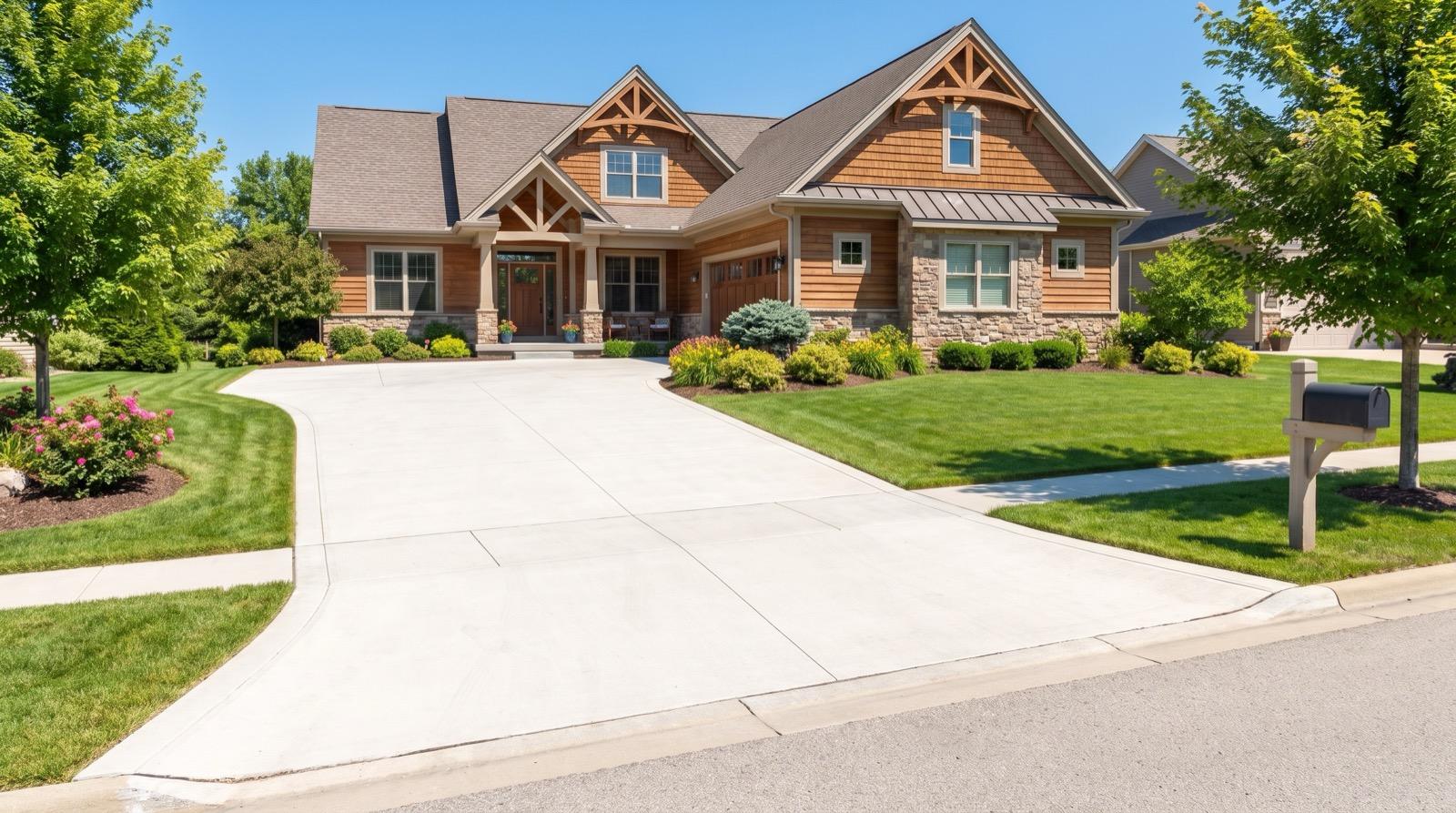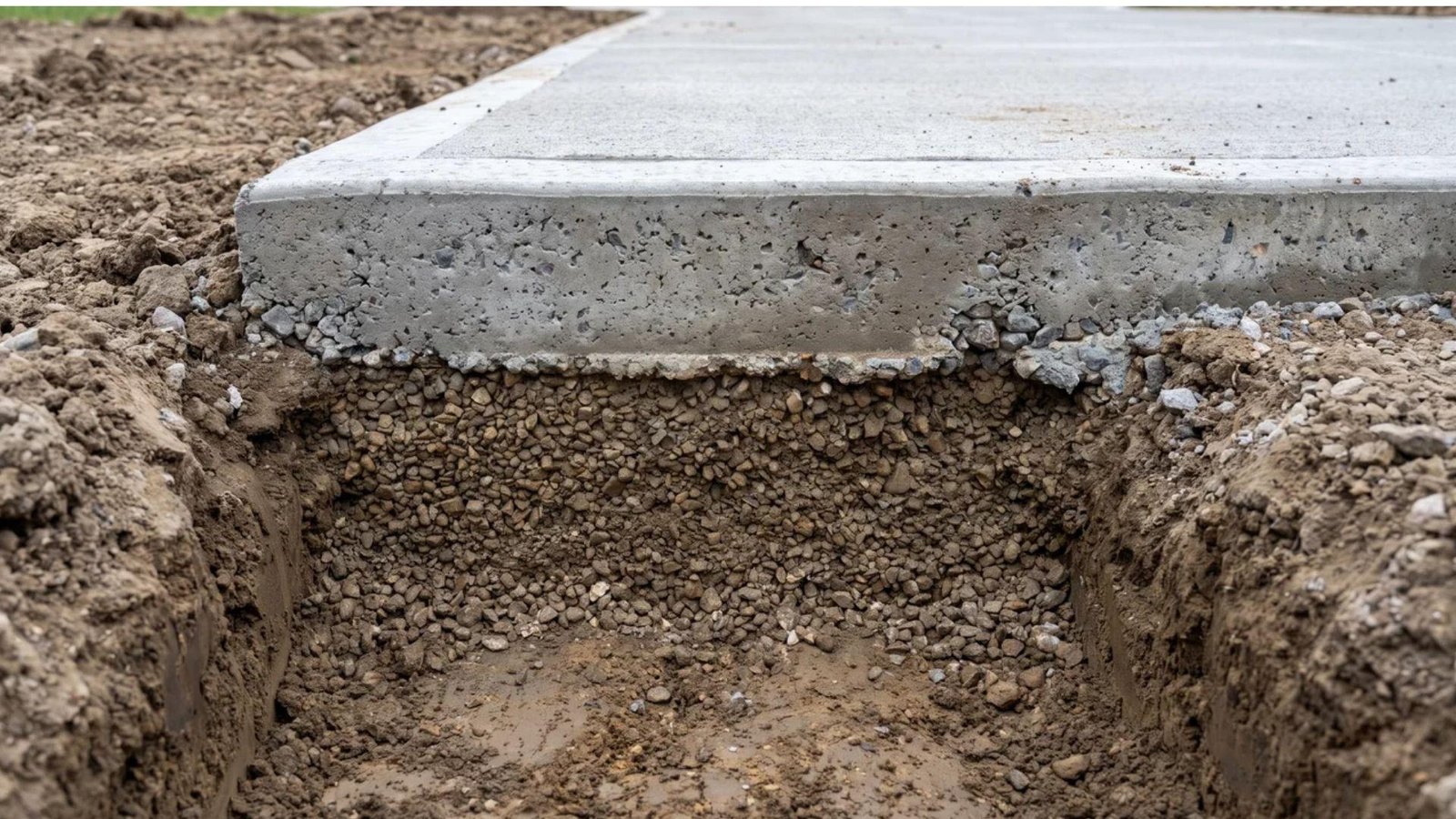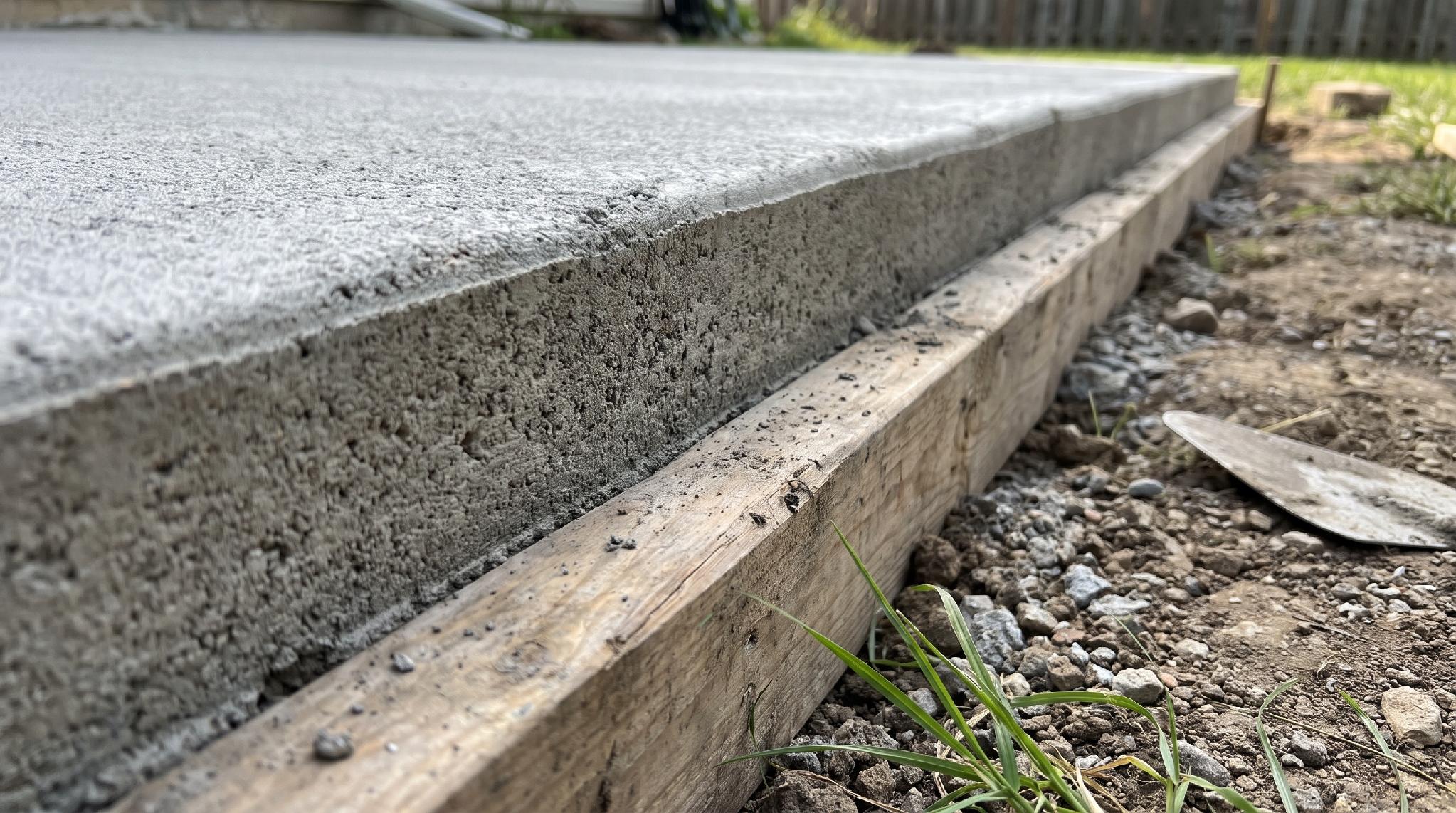
I’ve seen a concrete driveway last forty years. I’ve seen one start chipping apart in ten. And here’s the thing, most of the time that’s got nothing to do with the mix they poured.
It comes down to the finish, how it went on, and whether anybody stopped to think about the conditions it was going to sit in for the next few decades.
Now, folks pick a finish off a photo they saw somewhere. I’ll tell you that’s backwards every time. What you want to know is how that surface behaves under tires, under water, through a freeze-thaw winter, year after year.
So let me walk you through all seven types of concrete driveways, not just the two or three everybody shows you.
What Are the Main Types of Concrete Driveways?
The mix underneath is pretty much the same no matter which way you go. What changes is what they do to the surface. That’s broom finish, exposed aggregate, stamped, colored or stained, rock salt, polished, and ribbon or grasscrete. Seven types, and I’ll tell you, seven different ways they wear.
1. Broom (Brushed) Finish
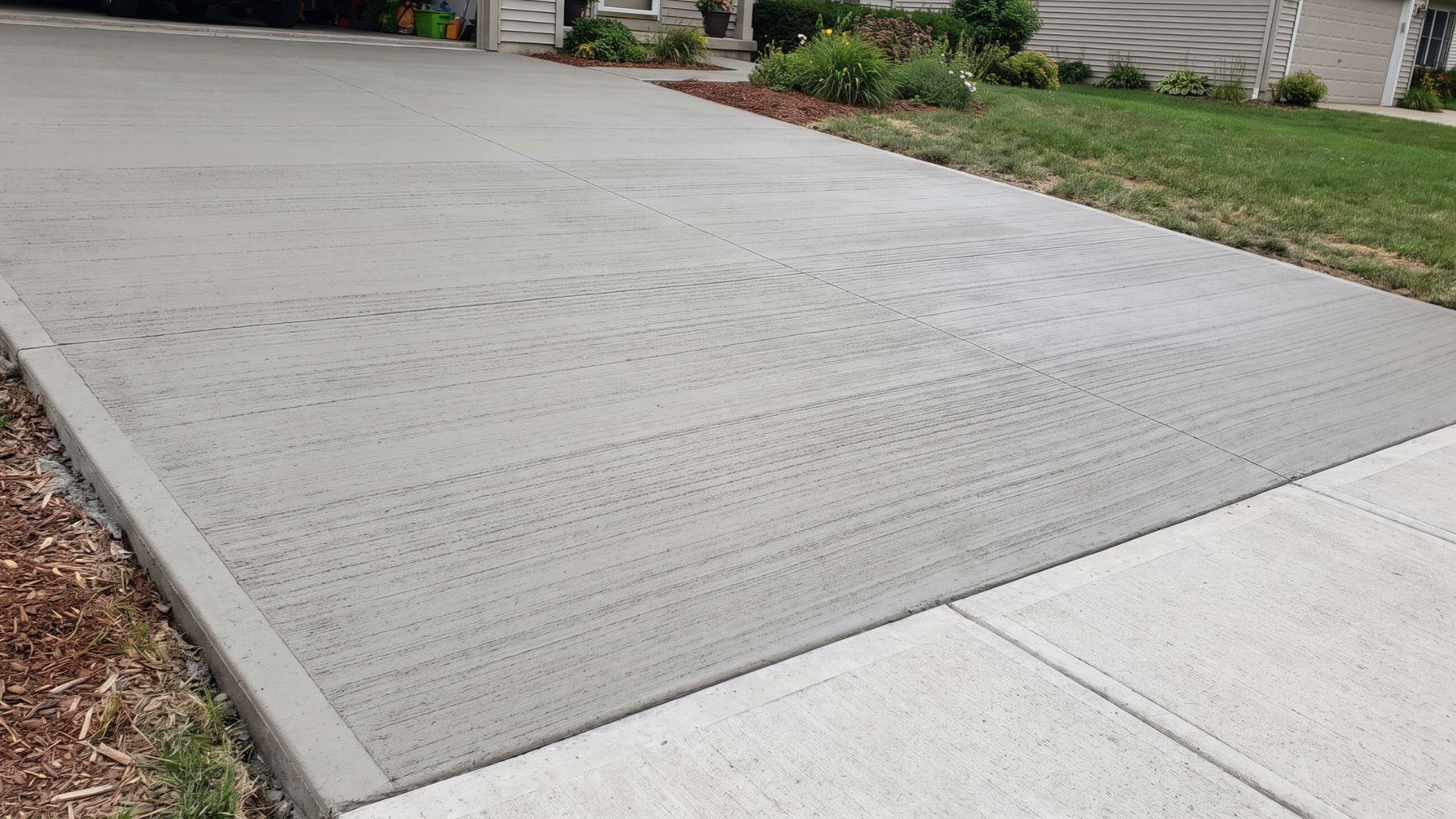
This is the one you’ll see on nine out of ten driveways out there. While the slab’s still workable, a crew drags a stiff-bristled broom across it, one direction, all the way through.
That leaves shallow parallel grooves behind. Those grooves aren’t just for looks now, they give your tires and your boots something to grip, and they give water somewhere to go instead of just sitting there in a sheet.
Plain, honest finish. No tricks to it. And that’s exactly why it’s the one that gets poured the most.
2. Exposed Aggregate
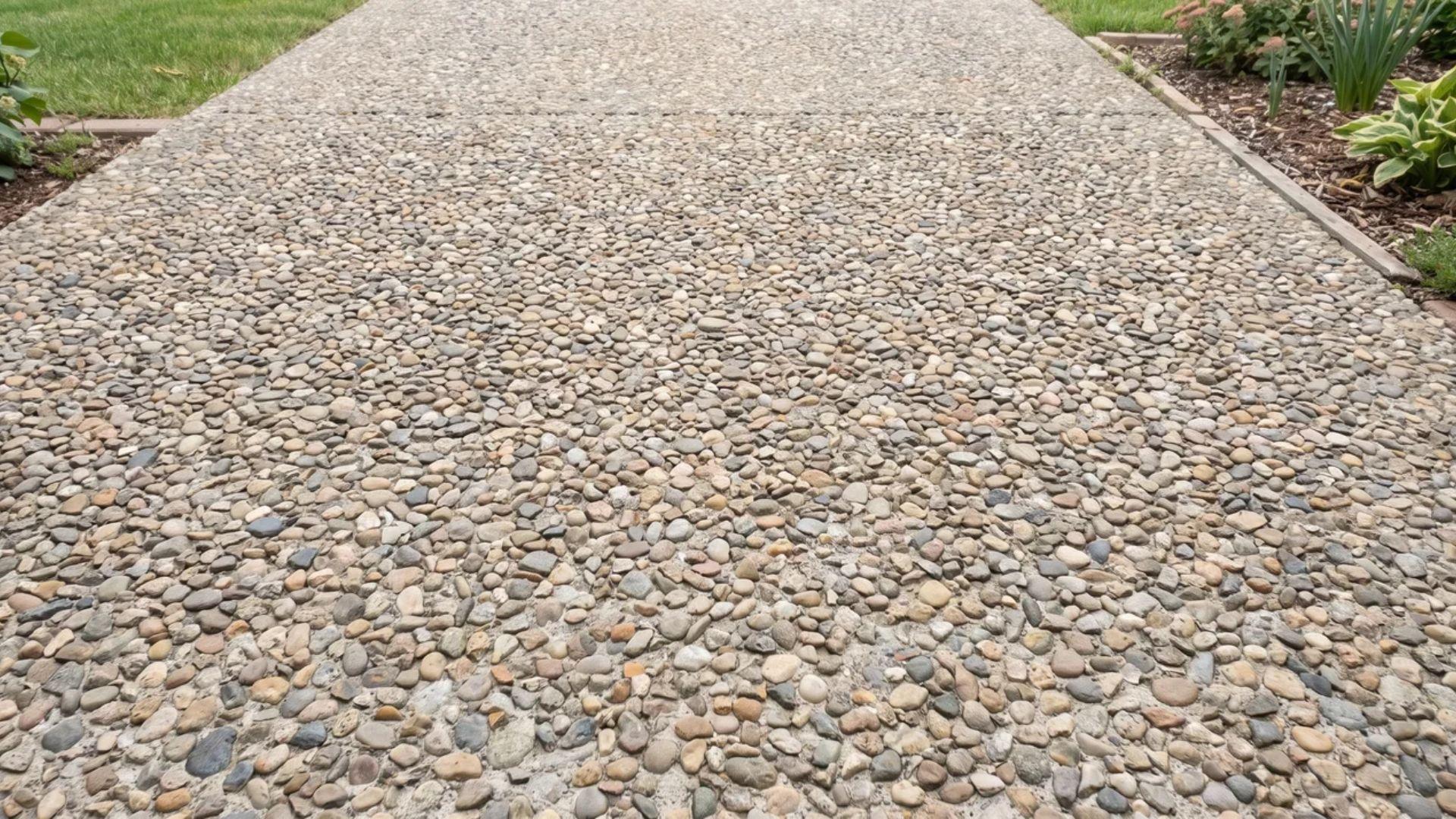
Here’s how that one goes: you pour it like any standard slab, and before it’s fully set, you put a chemical retarder down on the top layer only.
That retarder slows the curing right at the surface while the body of the slab is hardening up underneath it. Once that slab’s solid, you pressure-wash the top.
That washes off the soft cement paste and uncovers the stone and gravel that was sitting in the mix the whole time, you just couldn’t see it.
So now what you’ve got wearing on top is stone, not paste. And stone doesn’t wear down the way cement paste does.
Plain concrete gives out because that top layer of paste erodes away. Exposed aggregate holds up a lot longer, because that stone takes a beating a lot better before it ever gives.
3. Stamped Concrete
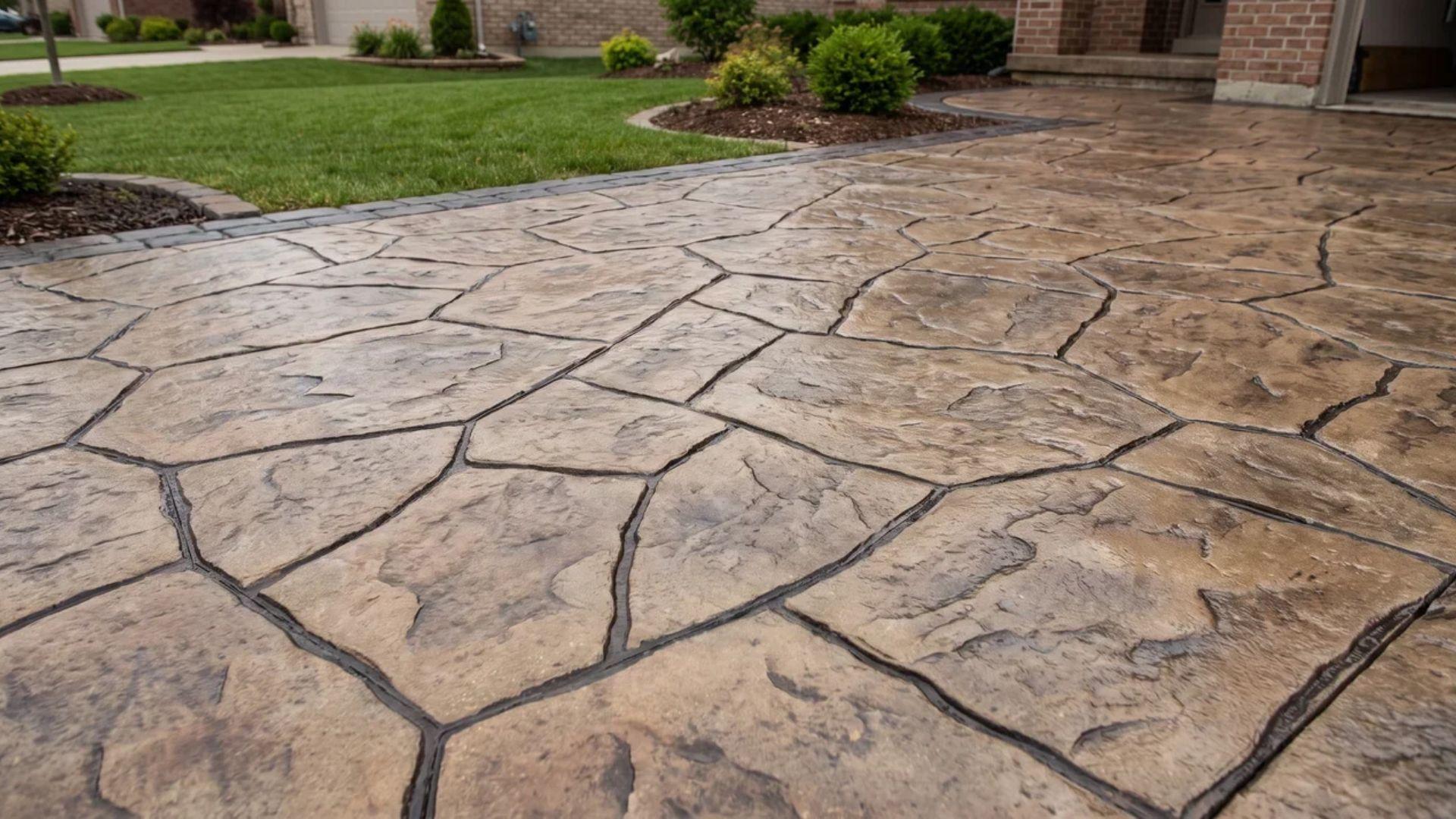
Timing’s everything on this job. You pour it, color it, and stamp it all in the same session, and the window you’ve got to do it right is narrow, usually somewhere between 20 and 40 minutes after the pour, depending on the mix and the weather that day.
Too soft, and the pattern won’t hold its lines. Let it start stiffening up, and those mats will crack the surface instead of pressing into it. Neither one of those is what you want.
The mats themselves are rigid, or semi-rigid, and they get pressed down into that wet concrete under weight.
Before they ever go down, a release agent goes on first, powder or liquid, so the mat lifts back off clean instead of sticking to the slab. That’s the difference between a sharp imprint and a torn-up mess.
Color goes in two ways on a job like this. Integral pigment gets mixed into the concrete before the pour, so it runs the full depth of the slab. Broadcast color goes down across the wet surface and only gets into that top layer.
4. Colored and Stained Concrete
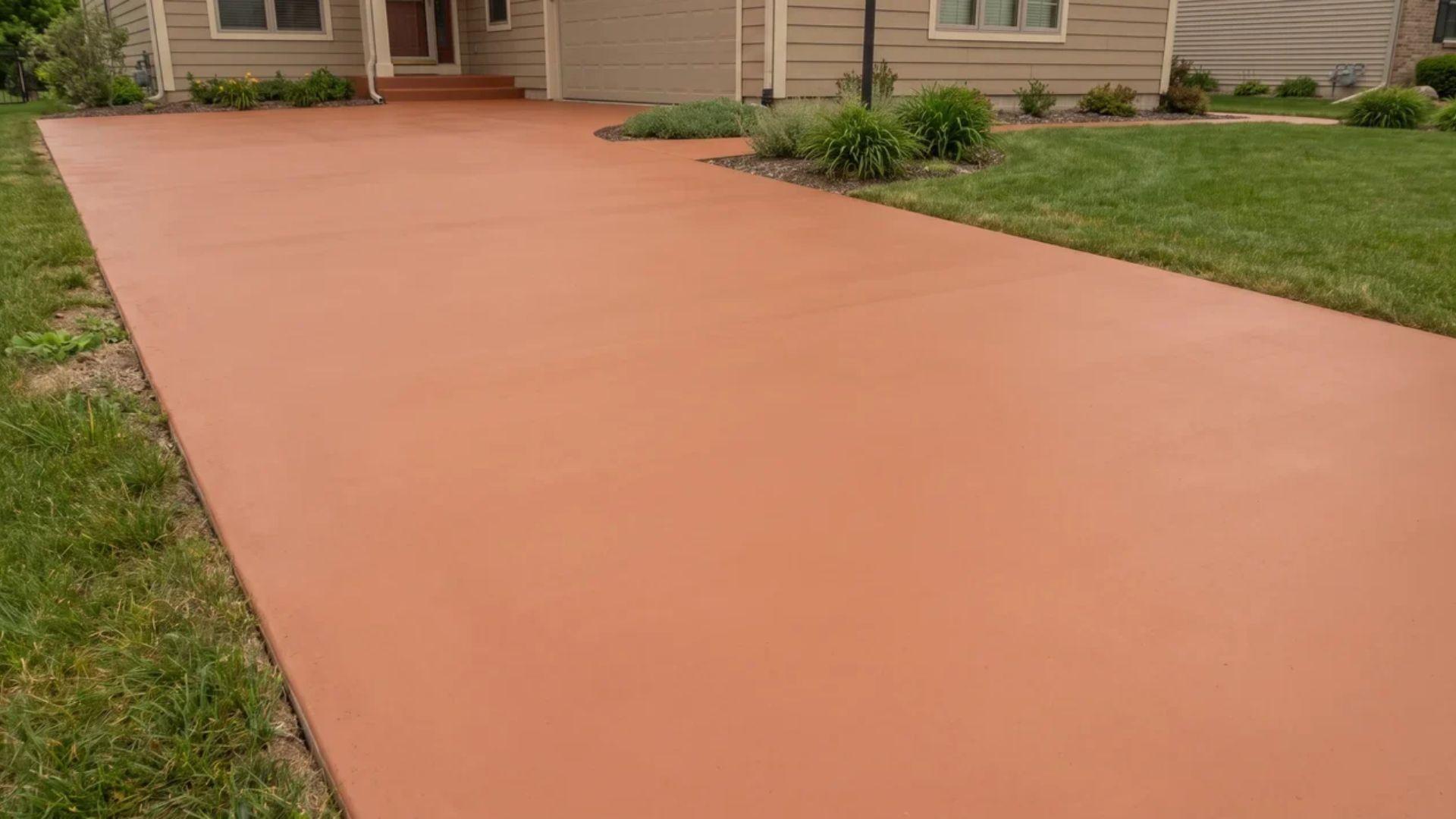
Now, people lump these two together all the time. They’re not the same process, not even close.
Integral color is pigment mixed in before you ever pour. Full depth, so that color’s still there even once the surface has worn down some over the years.
Staining happens after the concrete’s already cured. A chemical stain reacts with the minerals that are already sitting in that surface, and that’s why you get that mottled, uneven look instead of a flat color.
Penetration depth isn’t consistent either, so the color can read a little different patch to patch. Now here’s the upside though: a stained finish can be stripped and done over again if it fades on you.
Integral color doesn’t give you that option. Once that slab’s poured, that color is what it is for the life of the thing.
5. Rock Salt Finish

Coarse rock salt gets pressed right into the wet surface, then washed out once the slab’s cured up. What’s left behind is a whole field of small, shallow pits.
That gives you a light, dimpled texture. Reads more like depth than any real pattern, and it sits a lot closer to plain concrete than to anything you’d call decorative.
Those pits do the same job as those broom grooves, too, they give water somewhere to collect instead of sheeting clean across a flat slab.
6. Polished Concrete
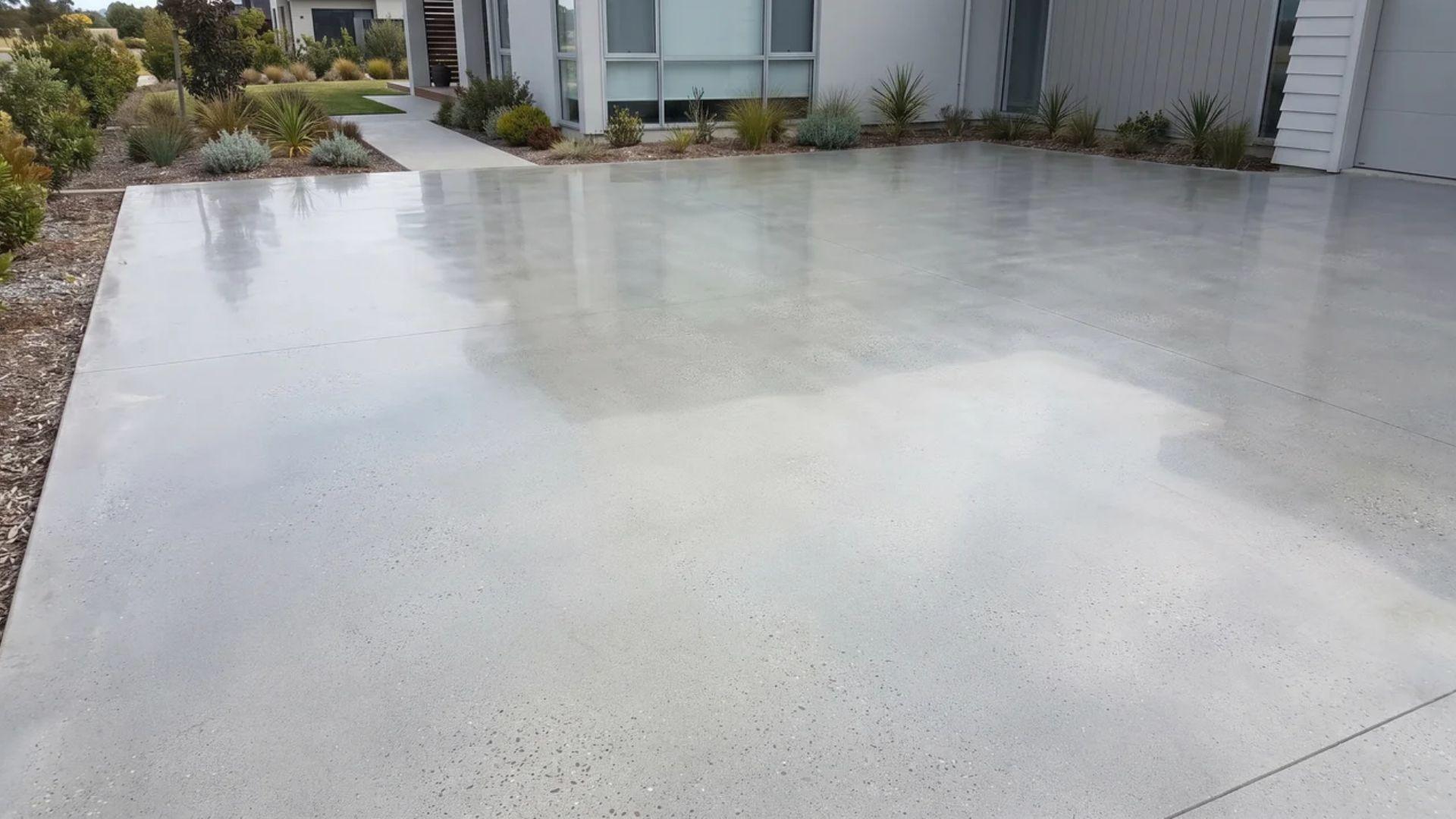
This is the only one on the whole list that happens entirely after the slab’s already cured. No wet work in it at all.
A crew runs it through a sequence of diamond grinding pads, starting coarse around 50-grit and stepping up past 800-grit, each one finer than the last, until that surface comes up smooth and reflective.
Every pass is just cleaning up the scratches the last pass left behind. Slow work, but that’s how you get there.
You don’t see this much on a residential driveway, not around here anyway. But I’ll tell you, it’s showing up more on the newer builds, where the owner wants that minimal look carried straight on through to the outside.
7. Ribbon and Grasscrete Driveways

Different animal entirely, this one. These aren’t surface finishes at all, they’re a whole different layout.
A ribbon driveway is two parallel concrete strips, one under each wheel track, and ground cover, gravel, or turf filling in the gap between them.
Grasscrete’s a permeable concrete grid poured across the full width, with planting or gravel filling in the voids in that grid.
Both of them let water drain straight through the driveway instead of running off it.
How Do the Types Compare on Cost, Durability, and Maintenance?
Now, the real question isn’t what it costs you on pour day. It’s what it costs you over thirty years, counting every reseal and every repair along the way.
| Finish Type | Approx. Cost (per sq ft) | Durability | Sealing Frequency |
| Broom / Brushed | 14- 18 | Good – paste surface wears gradually | Every 3-5 years |
| Rock Salt | 14 – 18 | Good – similar wear profile to broom | Every 3-5 years |
| Exposed Aggregate | 16- 22 | High – exposed stone resists wear better than paste | Every 3-5 years |
| Colored / Stained | 17- 22 | Moderate – color fades before the slab degrades | Every 2-3 years |
| Stamped Concrete | 18- 25+ | Moderate – pattern detail wears before structural decline | Every 2-3 years |
| Polished Concrete | 18- 25+ | High surface hardness – grinding removes weak paste layer | Every 2-4 years |
| Ribbon / Grasscrete | Varies by layout | Structural strips are durable; fill material needs periodic replacement | Strips: every 3-5 years |
Now those numbers are a starting point, not a bid. Labor costs swing by region, so don’t hold me to it — check with a local contractor before you budget off a chart like this one.
How Do You Choose the Right Type of Concrete Driveway?
Not the one that photographs the best. I’ll tell you that much. The one that holds up in your climate, fits what you’ve actually got budgeted, and matches the maintenance you’re really going to keep up with, not the maintenance you tell yourself you’re going to keep up with.
Budget
- Broom and rock salt: solid performance, no decorative upcharge
- Exposed aggregate and colored concrete: middle of the range if you want a little more visual interest
- Stamped and polished: top of the range, and only worth it if the budget’s actually got the room
Climate
- Cold climate with a real freeze-thaw cycle, I’d steer you away from stamped concrete. Water gets down into those pattern lines, freezes, and wears that surface faster than you’d expect.
- Broom and exposed aggregate handle the cold a lot better. No pattern joints sitting there for water to collect in.
- Warm, stable climate, stamped concrete holds up just fine and keeps its look.
Maintenance Preference
- Broom and exposed aggregate need sealingevery 3 to 5 years. Low effort, low risk; about as easy as this gets.
- Stamped and colored finishes need sealing every 2 to 3 yearsto hold onto their color and pattern. Skip a cycle on a decorative finish and that fading shows up fast, I’ll tell you.
A Driveway That Fits Your Needs
You’ve got more say over how long a driveway lasts than most folks realize. The finish isn’t just the look of the thing.
What actually matters is what your climate demands, what your budget allows, and how much maintenance you’re honestly going to keep up with. Get those three right and the finish pretty much picks itself.
A well-matched driveway holds up for decades and doesn’t ask much of you. A mismatched one, now, that starts showing it early, and I don’t want to be the guy fixing that later.
Get at least three local quotes before you commit. And ask every one of them straight out how their recommendation holds up in your climate.
Frequently Asked Questions
What is poor man’s concrete?
It’s crushed limestone and rock dust, compacted down into a firm surface. Looks like concrete for a fraction of the price, but it’s not permanent, it shifts over time and needs topping up.
How much would a 20×20 concrete driveway cost?
That’s 400 square feet. At $14 to $18 a square foot for a standard finish, you’re looking at $5,600 to $7,200. Go decorative, stamped concrete especially, and that number climbs, sometimes past $10,000 depending on the design.
What is exposed aggregate concrete?
It’s made by washing off that top cement layer after the pour so the stone underneath shows through. Textured, non-slip, and it outlasts plain concrete because exposed stone wears a lot slower than cement paste does.